Whom the gods would grant immortality, they sometimes destroy instead.
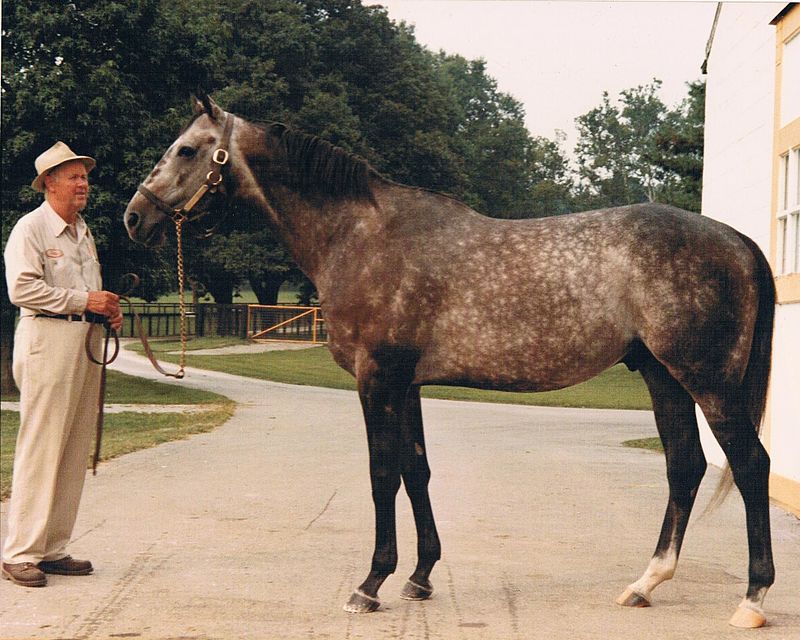
Ronnie Franklin almost made the grade. So did Spectacular Bid, with the teenage Franklin aboard. The two of them came pounding down the home stretch of racing’s final Triple Crown test when someone, the gods or racing luck or fate itself, snatched away their dream.
Now, the real story of their famous ride is finally told, after years of whispers and false accusations, in Jack Gilden’s “The Fast Ride: Spectacular Bid and the Undoing of a Sure Thing” (University of Nebraska Press.)
Gilden, who last gave us “Clash of Wills,” the story of the John Unitas-Don Shula Baltimore Colts, has separated hoary legend from truth in his new book. It’s a great story, terrifically reported, of a time when thoroughbred horse racing still seemed a vital part of America’s sporting culture, back when the daily newspaper sports pages were covered with handicappers’ insights and detailed charts and afternoon odds.
Gilden brings us back to that time, not just to re-create a fabled horse race but to bring us the era’s Baltimore and its characters, equine and otherwise.
At the emotional core of it is the teenage Franklin, the tough little high school dropout who rode Spectacular Bid to heart-thumping victories in the 1979 Kentucky Derby and Preakness Stakes, when Franklin became the darling of the thoroughbred racing world.
And then, in a matter of minutes, he lost it all — the Belmont Stakes, the big money, the racing crowd’s adoration — leaving behind questions of doping and race fixing and animal manipulation.
Franklin’s in “The Fast Ride,” and so is the veteran trainer Buddy Delp, and the legendary Latino jockeys of the era such as Angel Cordero Jr. and Jacinto Vasquez, and the Meyerhoff family members who owned Spectacular Bid when the great horse seemed utterly unbeatable.
But “The Fast Ride” is gripping reading even if your interest in racing goes no further than gawking at the Pimlico infield excesses on Preakness Day.
Gilden takes us to the heart of Franklin’s working-class Dundalk, whose people “lived in little houses and worshipped under low-slung steeples. … They manned assembly lines or lifted and loaded crates and canisters, and they transported things. They had job titles like steelworker and stevedore, truck driver and longshoreman and heavy machine operator. … They posted for long, grueling shifts, working beside hellish fires.”
Franklin, one of eight family members living in a two-bedroom, one-and-a-half bathroom rowhouse, had a chance to escape all of that.
For a few thrilling heartbeats, he did.
But Gilden brings us the details on what went wrong. And then he gives us the post-script as well, with the diminutive Franklin not only unfairly carrying the public shame over losing the Belmont Stakes but, on the big race’s anniversary 25 years later, he’s found doing “grunt work, lugging heavy supplies and tools to a worksite where he was breaking up concrete, mixing mortar, and laying bricks and blocks on the site of an old gas station.”
Whom the gods would make heroes, they sometimes turn into ordinary laborers.
Michael Olesker’s newest book, “Boogie: Life on A Merry-Go-Round,” will be published this spring. It’s the life story of Baltimore legend Leonard “Boogie” Weinglass, an original “Diner” guy who grew up to create the Merry-Go-Round clothing chain and contribute millions to charity.
What does it mean to be fully present with each other and the sacred, asks Maryland-born cultural anthropologist Alanna E. Cooper.
As millions mourn the passing of Stephen Colbert from the airwaves, Michael Olesker looks back on the "institution" of late-night TV.

As he gets ready to leave for California, Rabbi Daniel Cotzin Burg looks back on his time in Baltimore and his 10 years writing for Jmore.