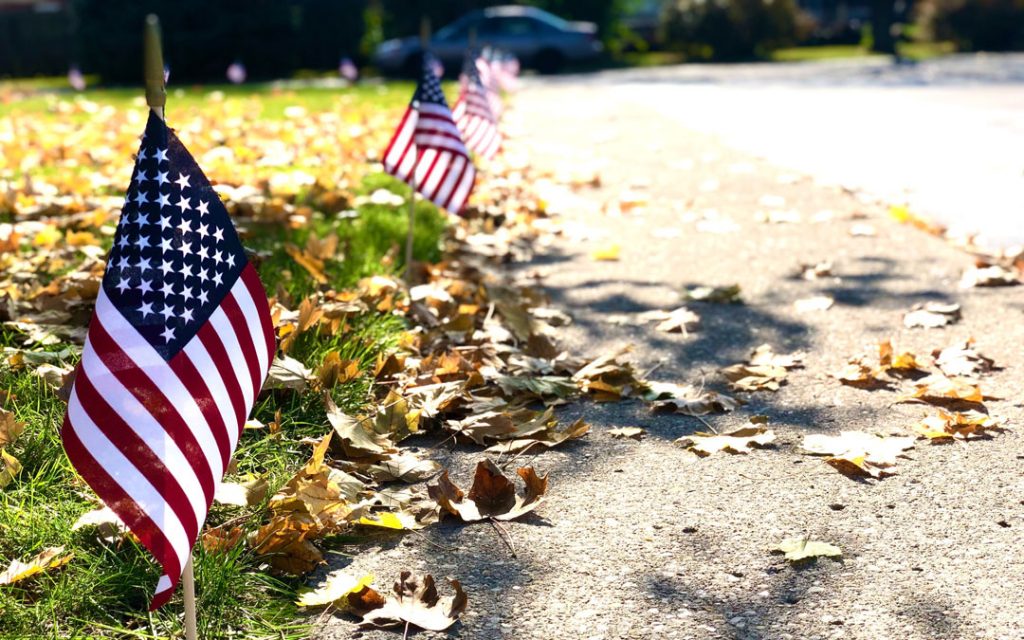
I’ll match my patriotism with anybody’s. I see the Statue of Liberty, I’m thinking, “There’s my girl.” I hear “This Land is Your Land,” I’m reaching for my hankie. I get a lump in my throat just saying, “America.”
But I’ve never felt as depressed about my country as I did on this past Fourth of July holiday. We want to believe in America the way we always have, but reality keeps getting in the way. Who let all these crazy people into our home? And by “crazy people,” I refer of course to the U.S. Supreme Court.
Who are these justices, to tell half the country that they no longer control their very own bodies? Who are these justices, who fail to hear the cries of schoolchildren and instead make it easier to carry guns? Who is this Justice Clarence Thomas to tell us the new abortion ban may only be a beginning, and that gay marriage and contraception may be next on the agenda?
And who are these other crazy people — the ones who stormed Capitol Hill on that awful January 6 and still haven’t begged forgiveness from the entire country? It’s not as if these people came out of nowhere. Hate groups have always been part of America.
But it was Donald Trump who gave them legitimacy and allowed them to crawl out from under their rocks and strut their stuff in public in such numbers.
They believed him when he said the election had been stolen. They believed him despite every single fact that made it clear Trump was lying. They believed him because they wanted to believe him.
That’s the disturbing thing about Trump, who refuses to go away: It’s not just that he was president. It’s that half the country’s bought into his madness. And Trump not only gave them safe ground, he also opened the door for the rage that infects the country on this national holiday.

I remember long-ago Fourth of July holidays. I remember crowds at a vanished place called Gwynn Oak Park, gathered in the dark under an orchestration of fireworks, and everybody saying, “Ah,” in a kind of collective sigh.
But it wasn’t the fireworks exactly, so much as the implied meaning of it all. It was the Fourth of July, so you belonged in such a place. The sky was all lit up, and later a band would play patriotic songs, so this must be the America they kept telling us about ever since we were children.
No one questioned whether it was an America that was still worth celebrating. Whatever our differences were, this holiday told us the sum of our ideals was still greater than the slivers of our differences.
And you showed up because you heard everybody else — your neighbors, your countrymen — would be there, and you wanted to be like them, showing your belief in the innocence of our fundamental national beliefs.
You know who caught that innocence the best? Ronald Reagan.
Well, not Reagan himself, but the folks who gave us Reagan’s great “Morning in America” campaign commercials: shots of happy, muscular steel workers, farmers with leather faces growing their crops.
They never mentioned the steel industry shutting down, or farmers going under. America imagined it saw itself in those ads. It didn’t take long to figure out we were sold a bill of goods. But it gave us a nice, sunny vision of who we still thought we were, and who we wanted to be. We looked at our neighbors and imagined we saw variations of ourselves.
In the modern America, we look around for someone to blame. We see such people everywhere now. They’re half the country, and they think we’re as crazy as we think they are. It’s the one thing we still have in common.
Hope you had a happy holiday, neighbor.
Michael Olesker’s newest book, “Boogie: Life on A Merry-Go-Round,” was recently published by Apprentice House. It’s the life story of Baltimore legend Leonard “Boogie” Weinglass, an original “Diner” guy who grew up to create the Merry-Go-Round clothing chain and contribute millions to charity.
What does it mean to be fully present with each other and the sacred, asks Maryland-born cultural anthropologist Alanna E. Cooper.
As millions mourn the passing of Stephen Colbert from the airwaves, Michael Olesker looks back on the "institution" of late-night TV.

As he gets ready to leave for California, Rabbi Daniel Cotzin Burg looks back on his time in Baltimore and his 10 years writing for Jmore.