

It’s not news that the mental health crisis affecting young people in the United States has increased significantly during the COVID-19 pandemic.
Arguably, students with learning differences have faced the greatest challenges.
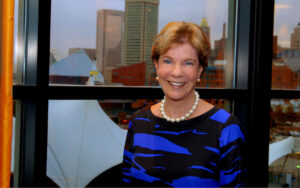
As CEO of the local nonprofit Dyslexia Tutoring Program — which offers free tutoring to low-income children and adults with dyslexia and other language-based learning disabilities — Marcy K. Kolodny has watched students and their families struggle on a daily basis.
“Everybody has been suffering from the pandemic, and I feel [DTP] children were suffering even more,” she says. “Being in a virtual school is different than receiving one-on-one attention, and our students have enough trouble learning as it is.”
Since the pandemic began, DTP – which was founded in 1985 — has made virtual learning more accessible to its students and tutors by providing free iPads. This summer, the program has sent students to Camp Jemicy and Camp Odyssey, where they can enjoy traditional camp activities while receiving daily tutoring.
But Kolodny, a longtime lay leader of The Associated: Jewish Federation of Baltimore, believed her students needed even more support.
Kolodny is a past president of the Jewish Big Brother/Big Sister League, a founding agency of Jewish Community Services, and also served as a JCS board member. She reached out to Jacki Ashkin, director of community connections at JCS, to suggest a partnership between DTS and the Associated agency. Ashkin was all in and knew she had just the team to run the program.
“Jen Rudo and Brittni Barcase are health-and-wellness educators who have been doing programming for years in local schools and community organizations that are designed to enhance the mental wellbeing of children, teens and young adults,” says Ashkin. “The idea of presenting these kinds of programs was familiar and completely within our wheelhouse. It seemed like a wonderful opportunity to partner with the Dyslexia Tutoring Program to provide these programs to their students at this time.”
In May, Rudo and Barcase began meeting weekly with middle school students and their families for a pilot program known as Be Well. So far, the educators have met three times with students and the same amount of times with parents. They hope to serve other DTP families in the future.
While Rudo notes that every group is unique, common goals include encouraging members to share their feelings using age-appropriate techniques and activities.
“One of the things that Brittni and I did was to bring a cutout picture of a gingerbread house. We passed them out and the kids could draw a picture of how they felt,” says Rudo. “They could use different colored crayons, different words, and they could draw symbols. Then [the students] could share their pictures and talk about what was weighing on them. After that, we taught them some [coping] strategies.”
The strategies included mindfulness activities such as breathing exercises, dance and a “tapping series” that helped students to take “brain breaks,” says Barcase.
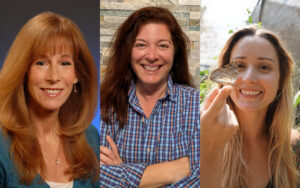
“Whatever’s happening in the mind, whatever we are ruminating on, [they learn how to] take a break from it,” she says.
The program helped students find healthy ways to express feelings such as anger, jealousy and sadness.
“Instead of naming an emotion, we have them name a color,” says Barcase. “[A student might say], ‘I’m feeling yellow today and I would rather feel blue.’ It gives them the starter tools to be able to recognize where they are and bring mindfulness into their day.”
In another activity, students were prompted to draw “something, someplace or multiple things that make them happy. At the end [of the group], they had the opportunity to share their drawings,” says Barcase, noting that hearing about what makes fellow group members happy may encourage their classmates to try similar activities.
After each session, participants provided written feedback about what they got from the group and what they hoped to learn in future sessions. Most students reported that they learned about coping skills, resiliency, relationships with family members and setting boundaries, says Rudo.
The groups Barcase and Rudo ran with parents provided opportunities for mutual support.
“The big thing with the parents is that they’re not just going through their own stressors, they’re also dealing with stressors with their children,” says Rudo. “We talked a lot about how to handle things in a household. Some of the kids live with grandparents, which changes the whole family dynamic. They really just need a place where they can share their feelings with other people in the room who get it.”
Kolodny encourages individuals seeking a rewarding volunteer opportunity to contact DTP. Prospective tutors receive free training in the Orton-Gillingham Approach to teaching students with dyslexia, which typically costs more than $1,000 for 30 hours.
“There are many children, many parents that can’t read,” says Kolodny. “Many times, people think these kids [and parents] are stupid and they’re not at all. They’re very bright, they’re very artistic. They need to be taught to read in a different way than you and I were taught to read. But once you give them those tools, we have kids in college, out of college, in graduate school. It’s a wonderful organization.”
For information, visit dyslexiatutoringprogram.org.
The 16-year-old sophomore succumbed to injuries sustained in a car crash last week in Cockeysville.
Schools in Montgomery County have recently experienced a wave of antisemitic incidents.
CCBC Honors scholars are discovering a level of academic rigor and opportunity typically associated with elite four-year institutions.
Filmmaker Justin Schein looks at wealth and inequality through the very real story of his late father.