

As a rabbi, mystic and poet, Mark Elber is unafraid to tackle life’s most complex and daunting issues, even if it means digging deep into a difficult past.
The spiritual leader of Temple Beth El in Fall River, Massachusetts, Rabbi Elber is the author of “Headstone,” a poetry collection examining his own past and the Jewish experience in general. “Headstone,” which was published by the Baltimore-based Passager Books, won the 2022 Henry Morgenthau III Poetry Prize.
A son of Holocaust survivors and native of Queens, New York, Rabbi Elber will speak Sunday, Oct. 30, at Baltimore Hebrew Congregation, 7401 Park Heights Ave. He is also the author of “The Everything Kabbalah Book” (Everything) and “The Sacred Now: Cultivating Jewish Spiritual Consciousness” (Wipf & Stock).
How did ‘Headstone’ come about?
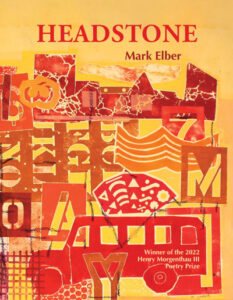
I’ve been writing since I was in high school, starting around the age of 14. My father’s death on Shemini Atzeret in 1987 had a huge impact on me, but I wasn’t able to write about it for about five years.
I was accepted to the Millay Colony for the Arts in May 1992 for a month-long residency, and during the time there I had the conditions of solitude and freedom from most external obligations under which to get the basic framework of the poem down. A few months later, I was accepted to the first cohort of the Arad Arts Project in Israel and was given a six-month residency beginning in late October 1992, during which I rewrote and rewrote the title poem among many other poems and began to assemble a manuscript which I have been reworking ever since, until the great fortune of it being accepted by Passager Books.
Why is examining the past so crucial?
No one is born in a vacuum and without understanding one’s past, it’s very difficult to understand who we are. During the more than 30 years that I trained bar/bat mitzvah students, I would occasionally find myself saying that the fact that the two of us were sitting in this room studying this material together was because each of us was the product of a long series of events that brought us to this location and time.
There is so much wisdom to be gained from our past and the experience of those who preceded us, it’s a great loss to ignore it. This doesn’t mean that everything uttered in the past was a gem and we certainly have to learn to study the past and its sources critically, but I find it very nourishing.
How did growing up as the child of Holocaust survivors impact you?
Among my earliest memories was the awareness of my parents being Holocaust survivors, although no one used that term back then. The absence of close family was very present in my childhood. Additionally, virtually all my parents’ friends were also survivors from Poland, and hardly anyone of my generation had a grandparent.
Even though I’ve been steeped in American culture, I’ve always felt like an outsider at the same time. Part of this may be related to the fact that my parents rarely spoke to each other in English but primarily spoke Polish and Yiddish. I believe my background also made me very sensitive to antisemitism, however subtly expressed, and to prejudice of any kind.
I should add that growing up as a child of survivors gave me a very strong connection to Israel. Of the family that I have, most of it is in Israel. My father’s father was one of eight children, four of whom survived because they made aliyah in the 1920s. I ended up visiting Israel many times and living there for five years all of which was, I believe, related to my parents’ background and had a huge impact on me as a person, a rabbi and a writer.
Why did you become a rabbi?
Becoming a rabbi was something I did relatively late in life. Until I started college, I thought I would become a doctor, but by the time I was in high school I already had developed a great interest in philosophy, literature and studying Jewish texts. During my freshman year of college, I thought I would become a philosophy professor. Then my focus shifted somewhat, and I spent four years in graduate school studying Jewish mysticism, mostly at Hebrew University in Jerusalem. Meanwhile, from high school on, I was very involved in writing poetry.
Does poetry have a future?
As long as language has a future, poetry has a future because poetry is the attempt and the art of trying to articulate in an aesthetic and powerful way the human experience in all its innumerable facets. As long as we are thinking, reflective and feeling beings, poetry will be in our lives. Every civilization, from oldest recorded history to the present, has had its poetry.
What was it like to study with such poetry giants as Allen Ginsberg, Yehuda Amichai and Philip Levine?
Ginsberg was the first poet that I deeply explored on my own beginning when I had just turned 17 in the middle of my first year of college. In the mid-‘60s, though I knew he was a poet, I essentially was familiar with him as a countercultural figure. However, in my first class of “Introduction to Poetry” in the spring semester of freshman year, the professor passed out a xeroxed copy of his poem “Supermarket in California” which I loved and which ignited my interest.
By the time I went to Naropa Institute to “apprentice” with him in the summer of 1981, I knew his work very well and he was no longer the same figure he had been in the 1960s. He had a wealth of knowledge of the poetic tradition from which he came, but a fairly narrow sense of what he appreciated in contemporary writing. I think he was instrumental in helping me find my own voice as a writer. Under his tutelage I began to slowly change and evolve my style.
Studying with Yehuda Amichai and Philip Levine a few years later was quite different, though equally important to me. I was deeply impressed with their life wisdom and loved their work very much. … To study with people whose work you admire so much and to benefit from their insights into your work and other people’s work is an incredible opportunity.
Why is Jewish mysticism such a major component of your life and rabbinate?
By the time of my senior year of high school, I began to have very powerful, life-changing spiritual experiences. Around that time, I was reading a lot of philosophy, basically Plato and Aristotle. I was a philosophically oriented kid and thought a lot about what these experiences implied which I articulated to myself. When I began to encounter Jewish mystical writings in my first year of college, I found aspects of it that contained a similar sensibility to how I experienced the world, to the way I understood Divinity. Though I find all different kinds of traditional Jewish literature very meaningful, it’s elements of our mystical tradition that resonate most with me.
How do you attract young Jews today to the spiritual side of Judaism?
Every generation has a need for meaning in their lives. What speaks to younger people in this generation will likely be somewhat different than what addressed the spiritual needs and concerns of earlier generations. I think there’s always a need for a balance between what has nurtured us for centuries and even millennia, and what needs to evolve. I think the need for community transcends generations.
I also believe, despite how materialistic our society is, people have a need for spirituality, for addressing the eternal questions about life and meaning. Those questions and concerns are perennial, even though people’s responses to them evolve over time. There must be something that speaks to their concerns and needs, whether spiritual or social.
Our society seems so fractured today. How can Judaism help guide people and bridge that chasm?
I think we first have to try to understand why our society and culture seem so fractured. What are the factors that have led to this condition? I see lines of communication increasingly closed. I also feel we need to ask ourselves who, if anyone, benefits from this situation and why and how.
Judaism is not a monolithic tradition. There is a broad spectrum of Jewish responses to various issues. … Our tradition is a vast culture and civilization. If one is willing to engage in it, I believe they will find great life wisdom. I find there are so many streams in the Jewish tradition, all of which have much to offer if we open ourselves to it.
Meaning comes with the depth of our commitment. It’s not an original observation to note that our society here is not only very materialistic, but also prizes easy, quick solutions. Slowing down to experience something in depth, allowing ourselves the rest that Shabbat affords, are very valuable ways to enrich our lives and give meaning to them.

Enjoy some live music this fall, with a range of performances from The Ultimate Prince Tribute to Journey, classical and more.

For Aja Cohen, founder and chief creative officer of Transcendent Active, a modest activewear brand, the company is a reflection of her entire journey -- fashion, faith, movement, motherhood and identity.
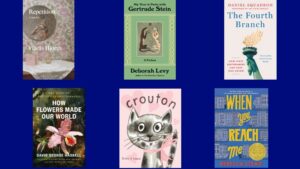
Emma Snyder, owner of The Ivy Bookshop, offers recommendations for must-read titles for adults and children.
Marc Terrill talks with Ken Muskat, President for Scenic Group USA and Latin America, about the evolution of the cruise industry, why curated cruise and yacht experiences have become the fastest growing segment of the leisure market, and more.