
Companion planting is a gardening technique that involves planting different types of plants together to achieve benefits such as pest control, nutrient enrichment and increased yield. By planting certain species next to each other, gardeners can create a symbiotic relationship between the plants, which can help to create a healthier, more
productive garden.
For example, planting marigolds alongside tomatoes can help repel nematodes, while planting beans alongside corn can help to fix nitrogen in the soil.
Similarly, growing herbs such as basil, rosemary or thyme with vegetables can help to deter pests and promote healthy growth.
Companion planting can also help to reduce the need for synthetic fertilizers and pesticides, making it a more sustainable and eco-friendly gardening practice.
Companion planting is not a new phenomenon. Between 5,000 to 6,500 years ago in Mesoamerica, pumpkins, corn and beans were domesticated. When the English settlers arrived in the early 1600s, the Iroquois and Cherokee called the cultivation of pumpkins, corn and beans the “three sisters.” The three plants nurtured each other: beans fixed nitrogen to the soil, the corn utilized the nitrogen, the corn trellised the beans and, with the pumpkins’ large leaves, prevented weed growth.
Tips:
If you are growing carrots, your plants are subject to the carrot fly. Likewise, the leek suffers from the onion fly and leek moth. However, if planted near one another, the smells emitted by the plants repel carrot and onion flies and prevent leek moths from laying their eggs on the neighbor plant.
Herbs are highly beneficial companions whether you plant flowers or vegetables in containers, raised or traditional beds. For example, culinary sage (Sage officinalis) protects variants of the cabbage family including cauliflower, Brussels sprouts, turnips and radishes from the white cabbage butterfly. The sage also makes the cabbage plants more succulent and tastier.
Lavender (Lavandula angustifolia), with its grayish to bluish green foliage, softens broadleaf evergreen leaves in the landscape. The flowers can be pink, blue, violet, or purple and bloom from June to August, and dried flowers can be made into a sachet. Lavender grown in hedges or moss is an effective deterrent against ticks and mice.
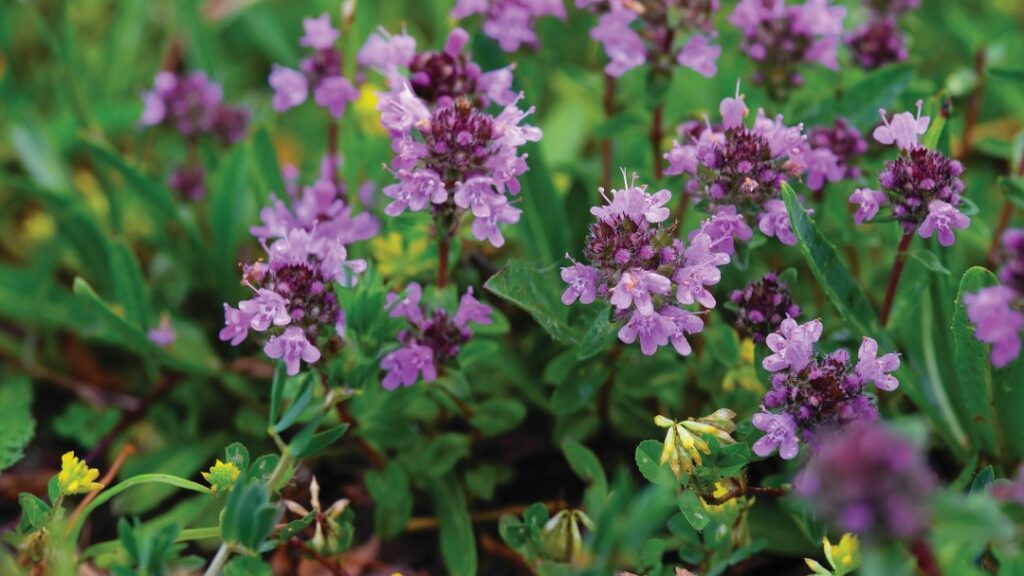
Thyme (Thymus vulgaris) has been cultivated for medicinal and culinary uses. The plant flowers are pink to purple from June to September, with gray/green foliage. The aromatic herb deters the cabbage worm and accents the aromatic qualities of other plants and herbs.
Mint (Mentha), an aromatic perennial herb, peppermint (Mentha piperita) and spearmint (M. spicata) are two of the many mints available. Mint is an excellent companion to cabbage and tomatoes, improving their health and flavor.
Mint deters the white cabbageworm by repelling the white cabbage butterfly from laying its eggs. Spearmint, in particular, repels ants and may repel aphids on nearby plants and black flea beetles on peppers. Dried mint leaves oils that repel rats and mice. Mints can be highly aggressive, so they are best planted in containers and placed near vegetables.
An excellent source of information on companion planting is author and lifelong gardener Louise Riotte’s classic, “Carrots Love Tomatoes: Secrets of Companion Planting for Successful Gardening” (Storey Publishing).
Rebecca Brown began her career as a horticulturalist more than 25 years ago and studied at the New York Botanical Gardens. She has been a University of Maryland-Baltimore County master gardener for eight years and is a backyard beekeeper.
Norman Cohen is a retired chemist. He has been gardening for 39 years and has been a UMBC master gardener for 13 years. Cohen also provides gardening education to the public at local farmers markets.

The BCO, founded in 1984, will perform the works of Frank Zappa, Beethoven, Mason Bates and Karena Ingram.

Led by local Israel-American cellist Amit Peled, the Mount Vernon Virtuosi aims to inspire people beyond musical enjoyment.

Container vegetable gardening is a terrific option for people with limited space and/or time. Rebecca Brown and Norman Cohen share some tips.

Filmmaker Justin Schein looks at wealth and inequality through the very real story of his late father.