
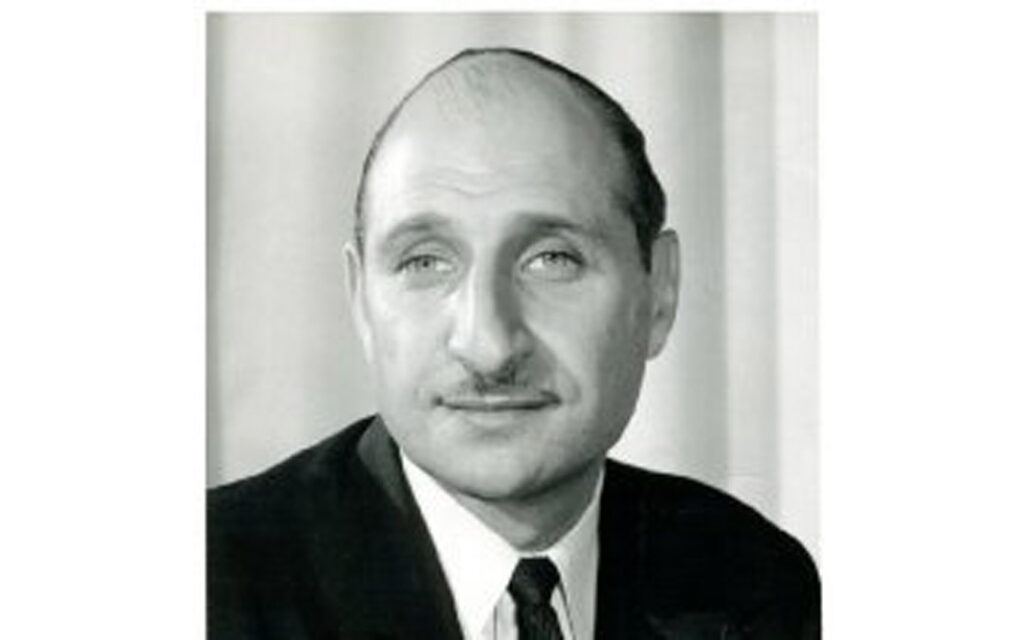
By Rabbi Avromi Mostofsky
My late grandfather, Rabbi Jacob S. Green, was the longtime and beloved spiritual leader of Baltimore’s Har Zion and Rogers Avenue synagogues. He performed hundreds of weddings, and prepared at least as many boys and girls to become bar and bat mitzvah.
Tonight, June 6, will be his one-year yahrzeit, or anniversary of his passing on the Hebrew calendar.
Over the past two years, I’ve been researching my grandfather’s life, particularly his time at Yeshivas Rabbeinu Yizchak Elchanan (now known as the Rabbi Isaac Elchanan Theological Seminary at Yeshiva University in New York), and as a rav in Baltimore. I was fortunate to share some of what I discovered with him before he passed away last June at the age of 98.
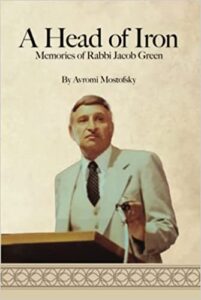
Growing up, my grandfather was my biggest role model, and his life always fascinated me. He could have been as famous as any of the great rabbis of his generation, but chose not to. Instead, he took on the heavy responsibility of serving as a pulpit rabbi. Indeed, as I wrote in my new book, “A Head of Iron: Memories of Rabbi Jacob Green,” his rebbe, Rav Joseph B. Soloveitchik clearly understood this.
At the time, my grandfather was known for wearing tefillin until lunchtime. After giving him smicha (ordination), the Rav gave my grandfather a bracha that he should always have time to put on tefillin once he becomes a pulpit rabbi. When recounting this story decades later, my grandfather told me that at the time it seemed like a strange bracha for a newly minted rabbi. But eventually, he understood. There were days throughout his career that he almost didn’t have time to put on tefillin since he was so busy dealing with the issues of his members.
Yet, until the end, he never once missed wearing his tefillin.
It was only in the last few years that I began to understand my grandfather’s true greatness. Growing up, he was just “Saba,” a brilliant, funny and loving man.
When my grandparents would visit, the two of us were inseparable. He would take me to play-group. We’d eat breakfast together at 5 a.m. while everyone else was fast asleep. He taught me silly songs.
It’s true that no man is perfect, but he was to me.
When I was much younger, there were times when it wasn’t always easy to buy a new knapsack or coat for school. Every birthday, he and my Savta would send me a check for my birthday. They would tell my mother that half is for a gift and half is for something new.
I doubt either of them knew, but it meant so much to me. Those years, I’d go with my mother to personally pick out my new coat from Saba and Savta, or perhaps new boots. And when I called to let them know what I chose, Saba would always say the same thing: “Use it well, bochural [young man], you hear me?! Use it well!”
I will never forget that, and hope one day to do the same for my grandchildren.
The love he had for my Savta was beyond words; his whole focus was on her. A few times in recent years, as the inevitable became more obvious, he would tell me, “Take care of her. You hear me? Take care of her!” That was his only concern, that when he was no longer be here to do it himself that I would make sure she was still loved and taken care of. (Not that my Savta has ever needed “taking care of.” She is the strongest and most independent woman I’ve ever known, and an example to our entire family.)
For a few years, I had the privilege of helping my grandparents travel to New York for the chagim (High Holidays). Watching my grandfather interact with the variety of employees we encountered was a master class in ethics and humanity. Every person got a huge smile and thank-you. On our final trip to New York, he gave every person in the first rows of the plane an individual blessing for a long life.
This was the man he was, a true rabbi until the very end. Always thinking about others and their happiness.
I am fortunate that he got to spend time with my oldest son. While COVID prevented him from ever meeting our youngest in person, they did meet over Zoom. He had such pride in all of his grandchildren and great-grandchildren.
In 2020, we all met with grandparents on Zoom. In what was to be his last instructions to the entire family, he encouraged us to stick together. He told us that striking out is to be expected, and that he did so many times in his life, both while playing baseball and as a rabbi. Yet he would tell Hashem, “Please help me stick it out.”

And he did. From his first public appeal at the age of 17, he would inspire thousands for another eight decades!
My Saba was a great man. He revered his rebbeim and had a connection with G-d that few will ever attain. But he never lost focus on what really mattered most: his family.
In his final words to the family, he told us that all one has to live for is their family because once you’re gone, there’s nothing else that remains. Then, when you’re up there with G-d, you can turn and point and say, “Hashem, look — that one’s mine, that one’s mine, that one’s mine.” And then you can ask Him to bless them.
May our Saba indeed beseech Hashem on our behalf and on behalf of the thousands of his flock. As we approach his first yartzeit, may he have a continued aliya.
Rabbi Avromi Mostofsky lives in Brooklyn, New York, with his wife and two children. His newest book, “A Head of Iron: Memories of Rabbi Jacob Green,” is now available on Amazon,

Filmmaker Justin Schein looks at wealth and inequality through the very real story of his late father.

This year’s Community Block Party at the JCC of Greater Baltimore will feature classic cars, giant inflatables, games, a rock-climbing wall and roller skating rink, and strolling entertainers.

For 35 years, the late Deborah Brodie, aka Bubbie Cookie, amassed a collection of over 200 Jewish ritual objects, which she used to teach her Hebrew school students with special needs.

In a recent talk at Beth Tfiloh, Elisha Wiesel called on Jews to cultivate joyfulness in their faith and sense of community.