At the first of my weddings, in the summer of 1967, my bride’s parents hired a woman to sing “Sunrise, Sunset,” the wedding song from “Fiddler on the Roof.” The tiny young soprano gazed down from the balcony at Baltimore Hebrew Congregation, and she might have been serenading us from heaven itself.
It’s what the Jews did back then. They had somebody sing “Sunrise, Sunset” as jittery wedding couples everywhere prepared to march down the aisle. It was automatic. If somebody didn’t sing “Sunrise, Sunset” at a Jewish wedding, what did you want them to sing? “Get A Job?” Of course not.
So they played the song, and everybody reached for their hankies and commenced mass kvelling. It’s a beautiful song. But the choice was more than musical. In that distant era (and maybe still) it was an identity badge at weddings, a show of religious pride and a connection with our yesteryears.
Also, in that post-war era, with the Holocaust still fresh in our minds and with Israel embattled as usual, it was a reminder that “Fiddler on the Roof” was making the whole world fall in love for a few hours a night with a bunch of irrepressible Jews.
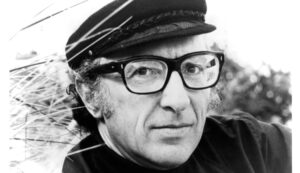
Because the show, with its songs by Sheldon Harnick and Jerry Bock, wasn’t just for weddings, and it wasn’t just for Jews. As it turned out, it was for everyone.
When lyricist Harnick left us last Friday, June 23, at age 99, all the obit writers took note of “Fiddler” and of his other musical smash, “Fiorello!”
They also pointed out that the two Jewish composers, Harnick and Bock, were pulling from their ethnic roots but reaching for a more far-flung audience.
As The Forward noted in its obit, “Harnick’s words to ‘Sunrise, Sunset’ quickly became a hallmark of Jewish life cycle events — but was also so thoroughly embraced by non-Jews that it was featured in a Lawrence Welk Easter special.”
You need more evidence of the universality of “Fiddler”? The show opened in the 1964-65 theater season and won nine Tony awards. It ran for more than 3,200 performances, at that time the longest-running Broadway musical in history (and later became a hit movie.)
Big deal, said the early doubters, New York’s got lots of Jewish theatergoers to keep the show going.
But within a couple of years of its opening, “Fiddler” was also packing theaters in London, Paris, Amsterdam, Copenhagen, Denmark, Tokyo, Norway and West Berlin.
“Japanese ‘Fiddler’ Welcomed by Tokyo Audience,” read a New York Times headline back then, noting that audiences listened to the newly translated Japanese lyrics and “laughed heartily and repeatedly applauded.”
Audiences everywhere understand that “Fiddler” is about Jews, but the show’s themes are universal. They’re about family, about tradition, about love and loss and the pain of prejudice. And they bind us across all religious and racial divides.
You can say the same about the Harnick-and-Bock show “Fiorello!” about the Italian Jewish mayor of New York, Fiorello LaGuardia, who sings to campaign crowds in both Yiddish and Italian. That show won the Pulitzer Prize for Drama.
It’s a comic-romantic look at LaGuardia, and the political corruption he faced. It’s not exactly a choice for weddings, but it’s wonderful anyway.
Michael Olesker’s latest book, “Boogie: Life on A Merry-Go-Round,” was recently published by Apprentice House. It’s the life story of Baltimore legend Leonard “Boogie” Weinglass, an original “Diner” guy who grew up to create the Merry-Go-Round clothing chain and contribute millions to charity.
What does it mean to be fully present with each other and the sacred, asks Maryland-born cultural anthropologist Alanna E. Cooper.
As millions mourn the passing of Stephen Colbert from the airwaves, Michael Olesker looks back on the "institution" of late-night TV.
As he gets ready to leave for California, Rabbi Daniel Cotzin Burg looks back on his time in Baltimore and his 10 years writing for Jmore.