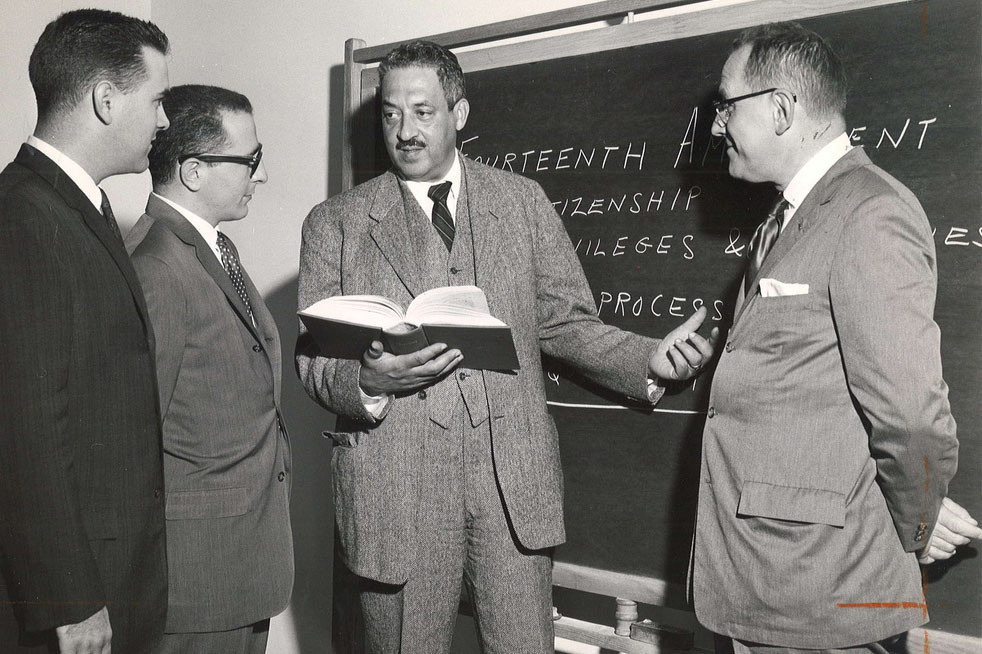
For his naked hypocrisy, Justice Clarence Thomas seems to be catching much of the flak for the recent Supreme Court decision ending affirmative action in college admissions.
That phrase — affirmative action — still provokes contentiousness across the whole country. But there’s no denying it was Clarence Thomas’s ticket into Yale and the start of his journey to the nation’s highest court.
Now he practices political amnesia. He votes with the court majority to end the attempt America made to un-do generations of college policies that turned a cold shoulder to smart students whose great handicap was their skin color.
Here’s a painful reminder of life before affirmative action. The man Thomas replaced on the high court was Thurgood Marshall, the only Black person who’d ever served there.
We remember Marshall around here. He’s the one whose statue stands outside the U.S. Courthouse in downtown Baltimore. He came out of West Baltimore and the segregated Colored High and Training School, later named Frederick Douglass High School. Nobody looked at him and saw a future giant of the law.
But the school principal saw potential. Every time Marshall got into trouble — which was frequently, since he enjoyed playing the class clown — the principal would hand Marshall a copy of the U.S. Constitution, with orders to memorize a section of it. Then he’d send him to the furnace room in the school basement.
“Before I left that school,” Marshall said, “I had had whole thing memorized.”
But others did not. In that segregated era, he went to Pennsylvania’s Lincoln University, which some called “the Black Princeton.” Then he tried to get into the University of Maryland Law School.
That school said no.
From his parents’ home around Druid Hill Avenue, Marshall could have walked to the downtown Baltimore law school. But the school’s policy was clear: It had never opened its doors to Blacks and would not do it for Marshall or any other Black person.
So he had to make other plans. He’d awaken at 5 every morning and walk to Baltimore’s Penn Station, loaded with books, and take the train to Washington, where he’d walk to the Howard University School of Law.
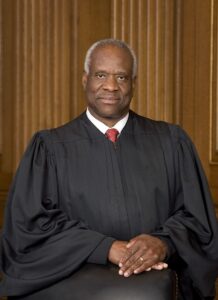
Every penny counted. His mother pawned her wedding ring for cash. Then, her engagement ring. A friend, the local civil rights pioneer Lillie Carroll Jackson, heard about the struggle and sent money to help with tuition.
Affirmative action was America’s attempt to balance the books. We can argue the particulars forever — should the gesture be based strictly on race, or on economic factors to help poor white kids? — but the impulse behind affirmative action is clear.
It was an attempt to reflect the country’s racial composition as a whole, to show not only legal interpretation but moral understanding.
America has always had “affirmative action.” But it was affirmative action for white students, who came out of school systems that were preposterously labeled “separate but equal” and had better connections, and more money, and arrived when colleges were still finding ways to exclude minorities.
To put it comically, there’s a line from the old TV sitcom “Taxi” where the cabbies ask the dissolute Rev. Jim Ignatowski, played by Christopher Lloyd, how in the world he got accepted into Harvard.
“Simple,” says Jim. “First, have your father finance a gymnasium.”
In casting his vote against affirmative action, Justice Thomas cited colleges’ “rudderless, race-based preferences designed to ensure a particular racial mix in their entering classes. These policies fly in the face of our color-blind Constitution, our nation’s equality ideal. In short, they are plainly — and boldly — un-constitutional.”
Thurgood Marshall saw it another way.
“During most of the past 200 years,” he wrote years ago, “the Constitution as interpreted by this Court did not prohibit the most ingenious and pervasive forms of discrimination against the Negro. Now, when [the United States] acts to remedy the effects of that legacy of discrimination, I cannot believe that this same Constitution stands as a barrier.”
That rumbling you just felt was Marshall spinning in his grave.
Michael Olesker’s latest book, “Boogie: Life on A Merry-Go-Round,” was recently published by Apprentice House. It’s the life story of Baltimore legend Leonard “Boogie” Weinglass, an original “Diner” guy who grew up to create the Merry-Go-Round clothing chain and contribute millions to charity.
What does it mean to be fully present with each other and the sacred, asks Maryland-born cultural anthropologist Alanna E. Cooper.
As millions mourn the passing of Stephen Colbert from the airwaves, Michael Olesker looks back on the "institution" of late-night TV.

As he gets ready to leave for California, Rabbi Daniel Cotzin Burg looks back on his time in Baltimore and his 10 years writing for Jmore.