

By Hannah Paperno
Is there anything better than curling up with a warm slice of banana bread topped with a slab of butter?
Turns out, yes! My desire to combine some of my favorite American classics with Jewish confections led to the creation of banana bread babka.
The exact origins of banana bread are unknown, but it is believed to have gained in popularity during the Great Depression as a way to decrease food waste from tossing overripe bananas, though some would argue it was developed to sell more baking soda.
This might explain why it became the quintessential at-home treat at the start of the COVID pandemic, when people were limiting their visits to the grocery store and spending lots of time indoors. While I baked my fair share of loaves during the pandemic, as the world began to open up I wanted to elevate banana bread. The fluffy texture of the babka dough and ribbons of cinnamon-spiked brown sugar running through this banana bread babka are a definite upgrade, but still honor the original recipe.
While babka is more time-consuming and complex than banana bread, the two have a lot in common. They’re both cakes with a long history that have risen to fame in the U.S. in the past decade, and they both use yeast as a leavening agent. This dough needs to rise for at least eight hours; you can also make it the day before and leave it to rise overnight.
Serve this banana bread babka alone, topped with butter or jam, or my personal favorite: topped with caramelized banana slices.
Note: As this recipe makes two loaves, I like to keep one for myself and give one to a friend as a gift. You can also freeze the second loaf while you make your way through the first. Store in the freezer for up to a month. To thaw your frozen loaf, allow it to defrost on its own by letting it sit out on the counter overnight.

Caramelized Banana Bread Babka

Ingredients
For the babka dough:
- 1 cup milk
- 1 packet (or 2 1/4 teaspoon) active dry yeast
- 1/4 cup sugar
- 1/4 cup canola oil
- 2 overripe bananas, mashed
- 4 cups bread flour
- 1/2 teaspoon salt
- 1 teaspoon vanilla extract
- 1 teaspoon cinnamon
For the filling:
- 1 1/2 cups dark brown sugar
- 3/4 cup butter, softened
- 3 teaspoons cinnamon
- 1 teaspoon vanilla extract
For the topping:
- 1 egg
- 1 Tablespoon water
- coarse sugar
For the caramelized bananas:
- 2 bananas, sliced
- 2 Tablespoons brown sugar
- 2 Tablespoons butter
- dash of cinnamon
Instructions
- Start by making the babka dough. Heat milk to 100-110°F (about 30-90 seconds in the microwave). Stir in yeast and allow to sit for 10 minutes. Yeast will activate and become foamy.
- Add remaining dough ingredients and milk/yeast mixture to a mixer fitted with a dough hook. Mix until combined and then allow the mixer to continue kneading for a further 10 minutes.
- Transfer dough to a greased bowl and cover with a towel or plastic wrap. Leave to rise in a dry place for 8 hours or overnight.
- Once the dough has risen, remove from the bowl and divide the dough (it will be sticky) into two equal halves. Prepare two loaf pans with parchment paper.
- Mix the filling ingredients together and set aside.
- Flour your work surface and rolling pin generously. Roll out half of the dough to about 16×10 inches and spread with half of the filling, leaving about ½-inch of dough bare on one of the short ends. Wet the bare dough with water and then roll the dough into a log starting on one of the longer sides.
- Using a sharp knife, cut the log in half lengthwise. Pinch both halves together at one end, then cross one side over the other repeatedly until you reach the other end. Pinch that end together and fold the pinched end under the loaf to neaten it before carefully transferring it to one of the prepared loaf pans.
- Repeat steps 6 and 7 with the remaining half of the dough.
- Preheat the oven to 350°F and allow the 2 loaves to rise for 30 minutes.
- After the dough has risen, whisk together the egg and water and brush over the tops of each loaf. Sprinkle tops with coarse sugar before putting in the oven for 40 minutes. Allow to cool before eating.
- To make the caramelized bananas (optional, but encouraged): In a small pot over medium-low heat, melt butter with the sugar and cinnamon. Place banana slices in the mixture and use a fork to gently toss them until they’re fully coated. Cook for 4 minutes each side before removing and putting on top of your banana bread slices.
Hannah Paperno is a Washington, D.C.-based marketer and events planner who spends her free time visiting thrift stores and baking. For more articles like this, visit MyJewishLearning.com/The-Nosher/
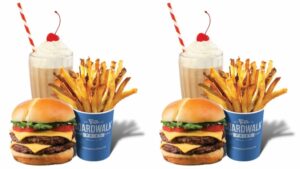
While Philly cheesesteaks invade Charm City, Boardwalk Fries opens in Middle River. Randi Rom shares a roundup of local restaurant news and notes.
Dara Bunjon talks with Dr. Lucy M. Long, author and director of the Center for Food and Culture, about her latest book, "Sweet, Tart, and Golden: Apples in the Midwestern Imagination," and other projects.
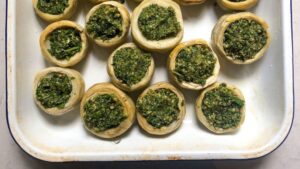
Stuffed vegetables invite creativity, but there are some "rules" when it comes to cooking. Vered Guttman shares six veggie-stuffing tips.

On this episode of "The Food Enthusiast," Dara Bunjon talks with Anne-Marie Bonneau, author of "The Zero-Waste Chef."