
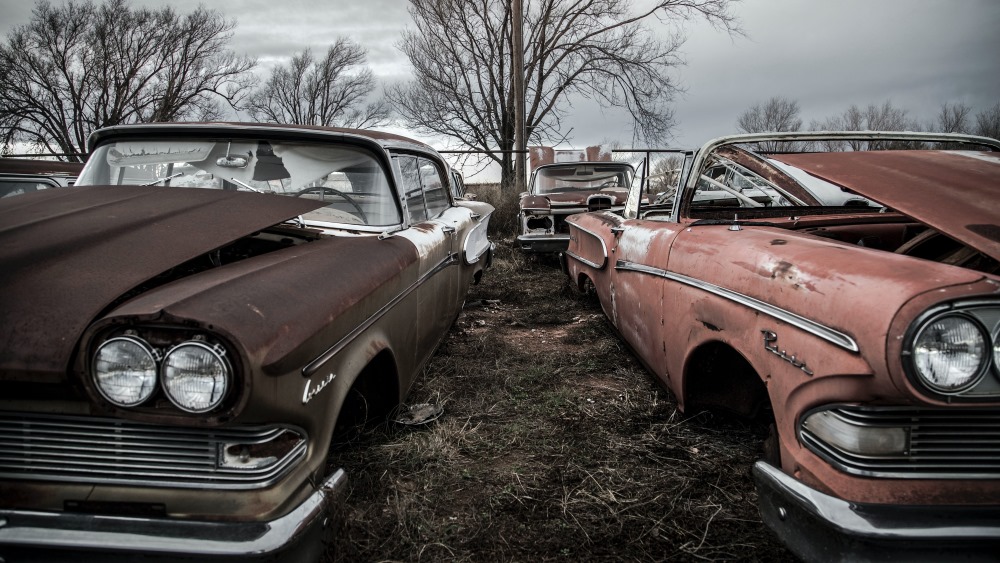
Back in August, my family and I took a vacation. The trip was fantastic but when we returned, our minivan was missing. It turns out the city of Baltimore towed our car. I contend it was towed erroneously, but that’s not the point of this story.
What happened next, while far from the worst thing that has ever happened to me, highlights a system failure that adversely impacts dozens of Baltimoreans every day, hundreds per year.
It took a while to locate our minivan. I was told to call 311, the city’s one-call center. The operator found the car in their system and said I should go to Fallsway, under the JFX.
It was a Friday morning, and my wife Miriam drove me down to retrieve the car. At the lot, the attendant chuckled through the plexiglass, “311 always sends people down here ‘cause they don’t look closely at the system. Your vehicle isn’t here. You need to go to Pulaski Highway.”
The website for Baltimore Department of Transportation reads the following: “The city’s main impound facility located at 6700 Pulaski Highway is not open to the public for walk-in customer service.”
A number is listed to call, but call that number and an operator reveals that the only way to retrieve a vehicle at Pulaski is to walk in. Miriam drove me to the main impound lot and, soon after left to retrieve our daughter for an appointment.
The lot is a dusty expanse with a few picnic tables crammed under repurposed white canvas tents. Temperatures maxed out at 95 degrees that day. There was no water, no bathrooms.
Twenty-odd people from across Baltimore huddled in the shade waiting. New arrivals took a number from an old deli-style dispenser. Business was conducted from a trailer. Two DOT employees occasionally shouted the next number through two of three thick plexiglass windows, each with a single plastic chair chained outside the window to a wooden platform.
The assembled helped each other out by loudly repeating the numbers over the traffic’s din. Someone said they’ve been in this trailer setup for three years.
I sat and tried to read. Then talked to the people at my table. A woman, with two kids beside her, was doomscrolling on her phone. Another man was a tow truck driver waiting for a customer’s car to be released. One man, presumably an auction house lawyer, sat for nearly an hour at a window with a binder full of vehicle details. Each time he finished negotiating over one page, he would pull out another. The rest of us waited.
After an hour-and-a-half, my number was called. I ascended the few stairs to the window. The attendant took my details and confirmed there were no outstanding liens on the vehicle. I had watched as a woman before before me settled unpaid parking tickets in order to retrieve her stolen and abandoned car.
After about 10 minutes at the window, the sun beating down and other customers shifting uncomfortably in the partial shade below, I was told I should return to my seat. “Someone will call you in 5-10 minutes to take payment.”
There was no payment at the window. “Can’t we just go on the website and pay?” someone asked. “No, the website takes three weeks to process payment. We require the funds now to release the vehicle.”
The woman whose car had been stolen overheard and got worried. “My phone is dead! How will they call me?” She asked a beefy security guard if he had an iPhone charger in his truck. He did. Later, he accidentally drove off with her phone.
Twenty minutes passed and no one called. I gingerly approached the window and asked if they had the right phone number. The employee confirmed they did. When I approached again after another 15 minutes, I was scolded for being impatient but the attendant grudgingly checked with their off-site collection center.
The cashier who had my number had gone home for the day but didn’t tell anyone. The one remaining cashier finally called after 50 minutes. We all had to shout our credit card numbers (in front of the others) over the roar of passing trucks. There was no way to pay with cash or check.
Two-and-half-hours after arriving at the Pulaski impound lot, a filthy white van, the interior of which apparently hadn’t been cleaned in years, shuttled me to my vehicle. They located my car (the other occupant of the shuttle wasn’t so lucky) and escorted me out of the lot.
As I grabbed a very late lunch — tired, slightly dehydrated and $282 poorer — a few realizations rattled around in my head. I was alright, I thought, I could manage the fine. My Shabbat sermon was written; I could manage a half-day off work.
My family had another car; I didn’t need to take the city bus to Pulaski Highway. My kids were old enough to stay home. I had had half a bottle of water with me; I was parched but OK. My credit card worked. My phone was charged.
But what if any of these things had not been true? What is the definition of systemic failure? It’s these hypotheticals that for too many Baltimoreans are just facts of life.

Rabbi Daniel Cotzin Burg is spiritual leader of Beth Am Synagogue in Reservoir Hill. This column and others also can be found on his blog, The Urban Rabbi.

Jmore Publisher Scott Rifkin, M.D., reacts to President Donald Trump's latest poll numbers and the real force behind the growing decline of the Trump movement.

Last weekend's Flower Mart once again demonstrated that there's nothing to fear about downtown Baltimore, writes Michael Olesker.
A junior at Roland Park Country School, Katie Grossman writes about a recent experience that spurred her to take action to fight antisemitism.

At a time when many Jews fear appearing Jewish in public, seeing Judaism depicted correctly onscreen is reassuring, writes Jewish content creator Rabbi Yael Buechler.