
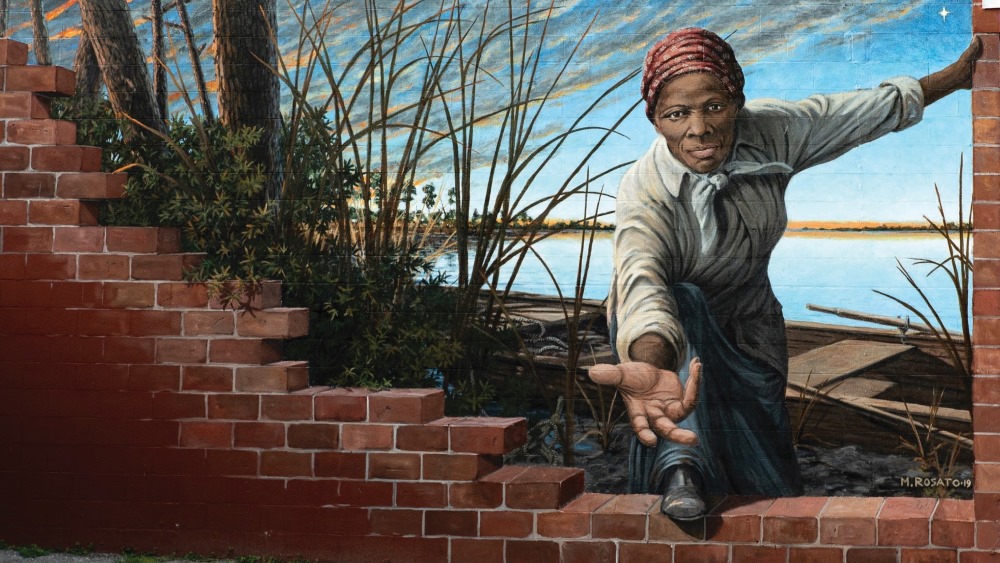
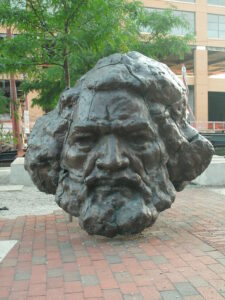
Thurgood Marshall. Harriet Tubman. Frederick Douglass. Gloria Richardson. Clarence Mitchell Jr.
The list goes on.
These Black Americans are just some of the civil rights icons who lived and worked in Maryland. Their contributions changed Maryland and the state of the world.
On Tuesday, July 2, Americans celebrated the 60th anniversary of the Civil Rights Act of 1964, a landmark piece of legislation prohibiting discrimination on basis of race, color, religion, sex or national origin.
In recognition of this milestone, Gov. Wes Moore has proclaimed 2024 “the Year of Civil Rights in Maryland.”
As a result, the Maryland Office of Tourism is providing resources to help tourists experience the many civil rights sites throughout the state.
“We wanted to recognize, honor, commemorate that significant piece of legislation by inspiring people to travel in Maryland and to Maryland to discover our story of the civil rights movement,” says Marci Wolff Ross, senior assistant director for tourism development for the Maryland Office of Tourism.
“We have two itineraries on our website, one focusing on Annapolis and one focusing on Baltimore. As the year progresses, we’ll continue to roll out new itineraries for Prince George’s County and the Eastern Shore. … Our map and guide have a list of 80-90 sites. It’s an ever-growing list.”
Here in Charm City, highlights include the Baltimore Museum of Industry’s exhibition “Forging Progress: Civil Rights, Labor Rights and Black History in America;” the Eubie Blake National Jazz Institute and Cultural Center, the Lillie Carroll Jackson Civil Rights Museum and the National Great Blacks in Wax Museum; and the Thurgood Marshall Tribute event at Baltimore/Washington International Thurgood Marshall Airport.
In Annapolis, tourists can visit sites like the Banneker-Douglass-Tubman Museum; the Rep. John Lewis Mural; and the Coretta Scott King Memorial Garden.
On the Eastern Shore, visitors can see the African American Schoolhouse Museum in Darlington and tour the Harriet Tubman Underground Railroad Byway in Church Creek. In Central Maryland, they can visit the restored Ellicott City Colored School, the Havre de Grace Colored School Museum and Cultural Center, and the Howard County Center of African American Culture. Harford County organizers have even created an app that visitors can use to find civil rights sites throughout the area.
The Maryland Office of Tourism has also included some D.C. sites in its itineraries.
“We had people coming through Maryland, and Marylanders leaving Maryland, to go [to the March on Washington in 1963],” says Ross. “So connecting with those stories and visiting the Martin Luther King Memorial and the National Museum of African American History and Culture are also great places to visit while people visit Maryland.”
Ross says women civil rights activists figure prominently in Maryland’s civil rights story.
“People often think of Thurgood Marshall and Martin Luther King, but Maryland’s women in the civil rights movement were really incredible,” she says. “Some of them, like Lillie Carroll Jackson and others, have small museums and exhibits, which showcase what they did.”
Ross encourages visitors to learn about the student protests that took place at Maryland’s historically Black colleges and universities, such as the University of Maryland Eastern Shore, and to discover the important story of the Somerset County town of Princess Anne (aka “Little Birmingham”).
“That was the nickname for Princess Anne because the similarities of the demonstrations and the government’s responses were so much like what happened in Birmingham, Alabama. It’s tragic and really powerful,” says Ross. “There was also a tremendous amount of courage and perseverance [from demonstrators].
Ross notes that “the way we’re structuring our itineraries is not all museums, historic places and markers because we know that people don’t necessarily travel that way. When we make these trip suggestions through our itineraries, [we recommend] taking in a civil rights site, and then doing something else like going to Elktonia Park and Carr’s Beach or getting out on a kayak and paddling in the Chesapeake Bay. You get a sense of the waters, a sense of the land and then have a really great dinner in, say, downtown Annapolis or Eastport.
“We share the story of the civil rights front and center, but we also make suggestions for doing other things, too,” Ross says. “We want everybody to feel like they belong here in Maryland. And that means going beyond the history and also having a little bit of fun.”
For information, check out visitmaryland.org/article/civil-rights-central-maryland.


Enjoy some live music this fall, with a range of performances from The Ultimate Prince Tribute to Journey, classical and more.

For Aja Cohen, founder and chief creative officer of Transcendent Active, a modest activewear brand, the company is a reflection of her entire journey -- fashion, faith, movement, motherhood and identity.

Emma Snyder, owner of The Ivy Bookshop, offers recommendations for must-read titles for adults and children.

Marc Terrill talks with Ken Muskat, President for Scenic Group USA and Latin America, about the evolution of the cruise industry, why curated cruise and yacht experiences have become the fastest growing segment of the leisure market, and more.