
Did You Know that Maryland has 23 counties?
In honor of that mildly interesting tidbit, we offer 23 random and little-known facts about “the Free State” or “the Old Line State” — or whatever you want to call it!
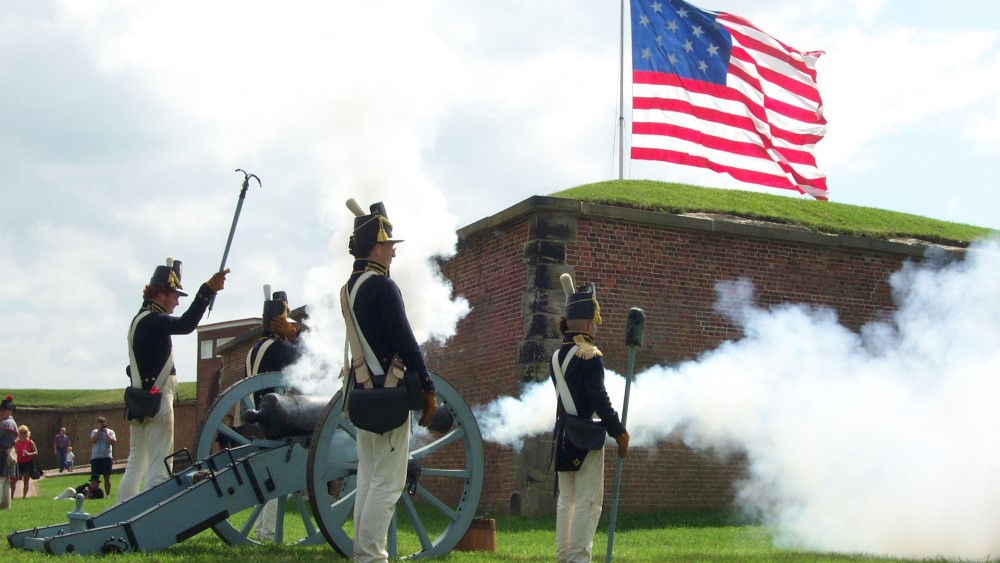
✽ Fort McHenry is best known as the place where Francis Scott Key was inspired to pen the stirring words of our national anthem during the Battle of Baltimore in the War of 1812. But decades later during the Civil War, the fort in South Baltimore’s Locust Point community served as a military prison for Confederate soldiers and state politicians suspected of being Southern sympathizers. Among them were Baltimore Mayor George William Brown and members of the Maryland General Assembly, as well as Key’s own grandson, journalist and newspaper editor Frank Key Howard.
✽ The first people to inhabit the region now known as Maryland came to the area at the end of the last Ice Age, more than 12,000 years ago. They were nomadic hunter-gatherers who originally crossed the Bering Strait from Russia to North America and made their way to “Merlin,” to borrow from the current local parlance.
✽ The state’s former official song, “Maryland, My Maryland” by James Ryder Randall, refers to Abraham Lincoln as a “tyrant” and the Union states as “northern scum.” On Mar. 29, 2021, the Maryland legislature passed a bill to discontinue having “Maryland, My Maryland” as the state’s official song after more than eight decades. Gov. Larry Hogan signed the bill into law that May.
✽ The nation’s first umbrella factory opened in Baltimore in 1828. The Beehler Umbrella Company’s motto was, “Born in Baltimore, raised everywhere!”

✽ Maryland’s official state insect is the Baltimore Checkerspot Butterfly because its black and gold repeat the family colors of George Calvert, the first Lord Baltimore.
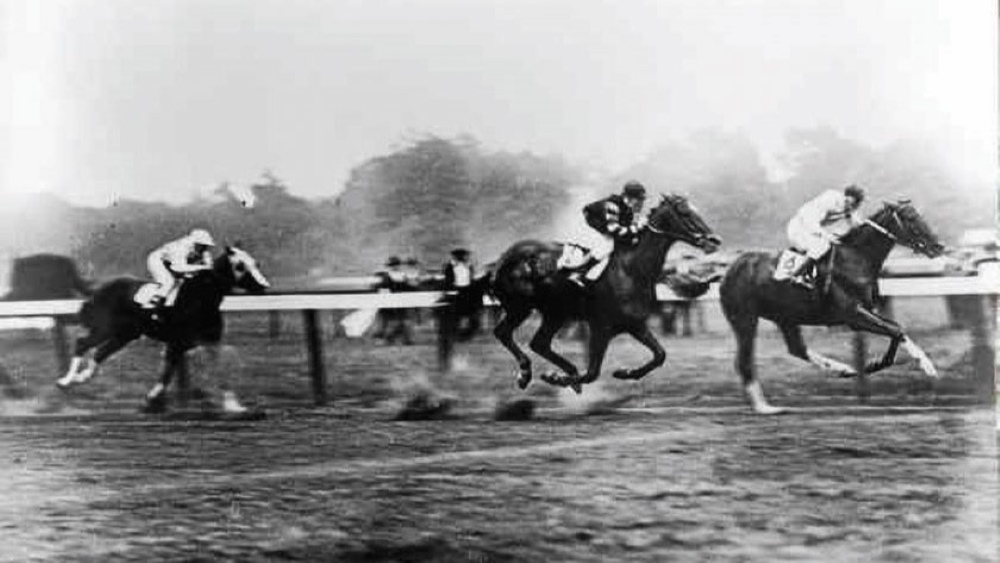
✽ The Worcester County town of Berlin was the home of the famous thoroughbred racehorse Man o’ War (1917-1947). The four-legged champion trained at the GlenRiddle Farm in Berlin and was owned by Pennsylvania businessman Samuel D. Riddle.
✽ American actor, author and artist Fred Gwynn (1926-1993), best known for his portrayals of Herman Munster and Judge Chamberlain Haller in “My Cousin Vinny,” is buried in an unmarked grave in Sandy Mount United Methodist Church Cemetery in Finksburg, near Westminster. The New York native — who also starred in the early 1960s sitcom “Car 54, Where Are You?” — lived for many years in Taneytown in Carroll County.
✽ Located near Bel Air, Tudor Hall is a historic home that was the country retreat of the great Shakespearean thespian Junius Brutus Booth. Among those who grew up there were Booth’s famous actor son Edwin Booth and his infamous actor/assassin son John Wilkes Booth (who is buried inconspicuously in an unmarked grave in Baltimore’s Green Mount Cemetery). Tudor Hall was listed on the National Register of Historic Places in 1973. The house is now the headquarters of the Junius B. Booth Society, whose volunteers guide tours of the residence and property.
✽ Speaking of Lincoln’s assassin, the play “John Wilkes Booth: One Night Only!” will make its world premiere next May at Baltimore Center Stage. Directed by artistic director Stevie Walker-Webb, the play stars Ben Ahlers of HBO’s “The Gilded Age” and was written by Baltimore native and Park School alumnus Matthew Weiner, the Emmy Award-winning creator and director of “Mad Men” and executive producer of “The Sopranos.”
✽ Before its tragic collapse earlier this year, the Francis Scott Key Bridge in Baltimore, with a main span of 1,200 feet, was the second-largest continuous truss bridge in the nation.
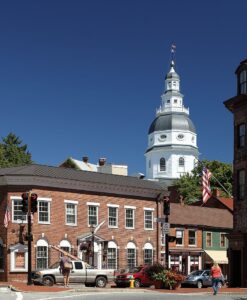
✽ Annapolis was known as the “Athens of America” during the 17th century and once served as the capital of the United States. In December of 1783, Gen. George Washington resigned his commission as commander-in-chief of the Continental Army in the Maryland State House in what is today the state’s capital.
✽ Along with Virginia, Maryland was among the two states that relinquished some of its land in 1790 to help form the nation’s capital, Washington, D.C.
✽ Best known for his mesmerizing work on “Baywatch” and “Knight Rider,” actor David Hasselhoff is a native of Baltimore. The Hoff’s great-great-grandmother Meta emigrated to Charm City from Volkersen, Germany, in 1865.
✽ On its outskirts, Mount Airy is known by locals as the “Four-County Area” because it encompasses Carroll, Frederick, Howard and Montgomery counties.
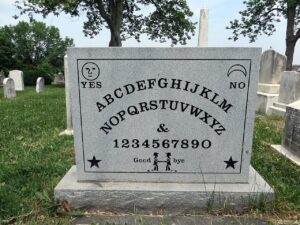
✽ Among the many luminaries buried in Baltimore’s historic Green Mount Cemetery is Elijah Bond, an American lawyer and inventor best known as the first individual to file a patent for the Ouija board. The headstone for Bond, who died in 1921, resembles a Ouija board.
✽ St. Matthew’s Episcopal Church in Oakland, the Garrett County seat, is known as “the Church of the Presidents” because Ulysses S. Grant, James Garfield, Grover Cleveland and Benjamin Harrison attended services there.
✽ In 1830, Nidche Yisroel — now known as Baltimore Hebrew Congregation—became the first incorporated Jewish organization in Maryland and held services in rented rooms over a grocery store at the intersection of Bond and Fleet streets in Fells Point.
✽ One of Major League Baseball’s greatest sluggers, Jimmie Foxx was born on a farm in 1907 in rural Sudlersville on Maryland’s Eastern Shore. He was elected to the Baseball Hall of Fame in 1951.
✽ The National Museum of Civil War Medicine in Frederick is located in a three-story, 19th-century building that was home to an undertaker/embalmer/furniture maker during the “War Between the States.” The museum, at 48 E. Patrick Street, is known as “the most haunted building in Frederick.”
✽ The Baltimore County unincorporated community of Boring, near Reisterstown, received its rather amusing name not because of any characterization of the area but due to its first postmaster, David Boring. The town was originally known as Fairview.
✽ Speaking of odd names, the small, unincorporated town of Crapo in Dorchester County received its nomenclature from the French word crapaud, meaning toad. Located next to the scenic Honga River, Crapo offers an abundant shoreline with toads, crabs and lots of fishing opportunities.
✽ Remnants of early versions of the banjo have been found in Kent, Prince George’s, Dorchester, Talbot, Baltimore and St. Mary’s counties. German-born Baltimore drum maker William Esperance Boucher Jr. is known as the earliest manufacturer of banjos in the United States, starting around 1845.
✽ In 1998, milk was designated Maryland’s official drink. Drink up, Maryland’s got milk!

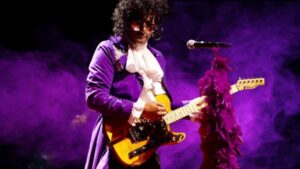
Enjoy some live music this fall, with a range of performances from The Ultimate Prince Tribute to Journey, classical and more.

For Aja Cohen, founder and chief creative officer of Transcendent Active, a modest activewear brand, the company is a reflection of her entire journey -- fashion, faith, movement, motherhood and identity.

Emma Snyder, owner of The Ivy Bookshop, offers recommendations for must-read titles for adults and children.
Marc Terrill talks with Ken Muskat, President for Scenic Group USA and Latin America, about the evolution of the cruise industry, why curated cruise and yacht experiences have become the fastest growing segment of the leisure market, and more.