
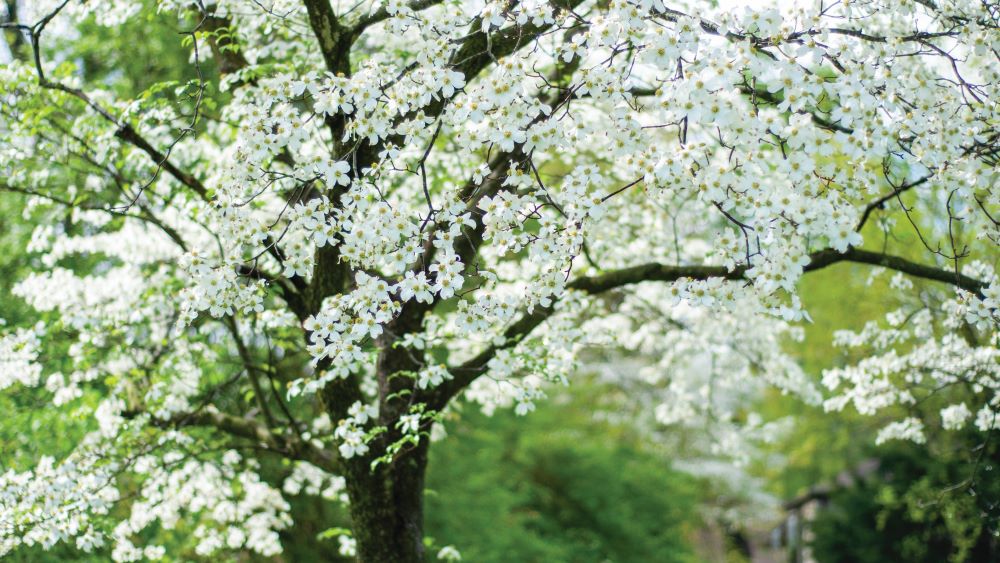
Fall’s cooler temperatures and increased rainfall create the ideal conditions for dogwood trees to take root.
Whether you’re adding native species such as Cornus florida (flowering dogwood) or opting for the non-native Cornus kousa (Chinese/Korean dogwood), planting in the fall ensures your landscape will come alive with blossoms this coming spring.
Here’s how to plant and care for dogwoods now to enjoy their stunning display later.
Four Dogwood Species Commonly Found in Local Nurseries
The Cornelian Dogwood is native to central or southern Europe and western Asia. These dogwoods can be grown in sun or partial shade as a shrub, shrub row or small specimen tree as tall as 25 feet depending on which cultivar is selected.
These shrubs or trees feature yellow flowers in late February or early March before the Forsythia bloom. The leaves are a dark, somewhat shiny green, and the fruit is bright cherry red and just over a half inch long. Although non-native, Cornelian dogwood is both non-aggressive and deer resistant.
The Silky Dogwood, native to the Maryland Piedmont, is a mature, multi-stemmed shrub six to 10 feet in width and height. The stems of the Silky are reddish purple, and its dark green leaves turn red and orange in the fall. The Silkys’ white flowers bloom in late May and early June.
In August, porcelain blue drupes appear and are quickly consumed by birds. The plant prefers partial shade and moist conditions but also performs well in sun and with less moisture.
The Flowering Dogwood (Cornus florida), a small low-branched tree, is native to the Maryland Piedmont and the state tree of Virginia. At maturity, this plant grows wider than taller with a flat top. The leaf color, when unfolding, is bronze green to yellow-green. The flowering dogwood is one of the first trees to change color in the fall, turning eventually a scarlet red. Greenish yellow flowers appear in April to May and are surrounded by white bracts.
Glossy red drupes grow in a cluster, ripen in September and can last into December if not eaten by birds. The tree can reach 20 feet high and is best grown in partial shade with moist soil. When stressed, the tree is susceptible to insect and disease problems. The cultivars, Cherokee Prince and First Lady, have been developed to prevent stem anthracnose, Discula destructive and powdery mildew.
The Cornus kousa, aka Korean or Japanese Dogwood, are also good options. These plants are non-native and non-aggressive but closely resemble the flowering dogwood in habit and flowering. The drupes are larger — an inch diameter pinkish red globes. The advantages of these plants include their resistance to fungal diseases and deer. These plants require a sunny location.
Dogwood Care Tips and Facts
Easy to grow: Dogwoods are generally low-maintenance, with blooms appearing from early to mid-spring and lasting 2-3 weeks depending on the variety.
Preferred conditions: Most dogwoods thrive with some afternoon shade, especially in warmer climates. Mulching helps but avoid piling mulch against the trunk.
Longevity: With proper care, dogwoods can live for 50 years or more, making them a long-lasting addition to your garden.
Space to grow: Dogwoods need plenty of room and should not be planted in confined spaces like between sidewalks and streets. They dislike hot, dryconditions and need good air circulation to resist diseases.
Deciduous trees: Dogwoods shed their leaves in the fall, and depending on the variety, you’ll enjoy a range of fall colors, from deep burgundy to pale yellow, adding seasonal interest to your garden.
Rebecca Brown began her career as a horticulturist more than 30 years ago and studied at the New York Botanical Gardens. She has been a University of Maryland, Baltimore County master gardener for nine years and is a backyard beekeeper.
Norman Cohen is a retired chemist. He has been gardening for 40 years and has been a University of Maryland, Baltimore County master gardener for 16 years. Cohen also provides gardening education to the public at local farmers markets.

The BCO, founded in 1984, will perform the works of Frank Zappa, Beethoven, Mason Bates and Karena Ingram.

Led by local Israel-American cellist Amit Peled, the Mount Vernon Virtuosi aims to inspire people beyond musical enjoyment.
Container vegetable gardening is a terrific option for people with limited space and/or time. Rebecca Brown and Norman Cohen share some tips.

Filmmaker Justin Schein looks at wealth and inequality through the very real story of his late father.