

Her name was Shirel Golan, an upbeat, energetic, beautiful young Israeli woman with a dazzling smile. She and her boyfriend, Adi, were among those who survived the Nova music festival in southern Israel on that horrific day of Oct. 7, 2023.
From all reports, Shirel was a loving, caring person who was quite close with her family. But on her 22nd birthday last Sunday, Oct. 20, Shirel was found dead by her boyfriend in the garden of her parents’ home in the central Israeli town of Porat.
Her family said Shirel, the youngest of five, was scheduled to visit Jerusalem’s Western Wall and the Cave of the Patriarchs in Hebron for her birthday.
Instead, she committed suicide after a year of depression and post-traumatic syndrome disorder, another victim of the butchery of the Hamas bastards.
“He ran outside shouting, ‘Why did you do this?! Why, why, why?!’‘” Shirel’s brother, Eyal, told USA Today, alluding to his sister’s boyfriend after discovering her lifeless body.
According to Shirel’s family, she had become withdrawn and despondent since the tragedy. In their immediate grief, they pointed fingers at the Israeli government for not providing enough assistance and resources to survivors of the massacre.
“They know everyone who is a survivor, who went to the festival, who is alive, who is dead, who was kidnapped, who was wounded like my sister, psychologically, and needs help,” said Eyal Golan. “They didn’t step up. They were passive. They didn’t do any active measures to help. … PTSD is a problem not just in Israel. The problem is worldwide, and we need to stand up.”
Nearly 1,900 of the approximately 3,000 survivors of the Oct. 7 attacks have been referred for treatment as of July, according to a report by the Israeli Knesset. More than 200 completed at least 24 sessions of therapy.
But the program is only available to victims who request assistance. Shirel did not, and no government officials reached out to her, said her brother.
Some survivors have criticized the program as being excessively bureaucratic and complicated.
“I hope that if I can share her story [with] the world, every person who suffers from PTSD will know that they are not alone,” said Eyal Golan.
I don’t know if the Israeli government is solely or partially responsible for Shirel’s death, but I’m proud that The Associated: Jewish Federation of Baltimore and local Jewish congregations are involved in this struggle to help Israelis traumatized by Oct. 7.
At the recent community-wide program at Pikesville’s Beth El Congregation observing the one-year anniversary of the massacre, Rabbi Andrew Busch of Baltimore Hebrew Congregation and Chizuk Amuno Synagogue’s Rabbi Joshua Z. Gruenberg announced the creation of a community emergency campaign to raise funds for the Israel Trauma Coalition Resiliency Center in Ashkelon. Proceeds will support the center’s expanded work since Oct. 7, providing therapy, home visits and intervention services.
The campaign was conceived after Rabbis Busch and Gruenberg and other community leaders visited Israel a month after the Hamas attack. The three-week campaign will conclude this Sunday Oct. 27, with the goal of raising $1 million. One hundred percent of donations will go toward the center in Asheklon, Baltimore’s partner city in Israel, and the Associated will match every gift made up to $500,000.
“The numbers of Israelis suffering mental health issues is massive,” said Rabbi Gruenberg, noting Ashkelon’s proximity to Gaza and rocket fire from Hamas. “We want to support our friends, our family.
“Friends,” he said to the audience of, approximately 1,400, “we can make a huge difference.”
The rabbi is absolutely right. Our brothers and sisters in Israel are hurting and desperately in need of our support. It’s time for us all to stand up.
We cannot afford any more Shirel Golans. May her memory always be for a blessing for her family and among the mourners of Zion and Jerusalem.
For information or to donate, please reach out to your synagogue or go to bit.ly/ashkelontraumarelief.

"A Beautiful Noise" chronicles the singer-songwriter's rise to musical icon.
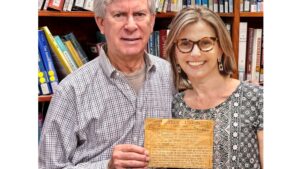
Duke Zimmerman and Lori Gale will talk at Towson University about their new book "People Get Ready" and the role played by Globe Posters in the civil rights movement.

The new exhibition revisits and updates a previous show about ritual hair covering in the observant community.

One of the most competitive local races for public office this political season is for Baltimore County Executive. Jmore recently spoke with four of the candidates about their views on how they hope to enhance life in the county.