
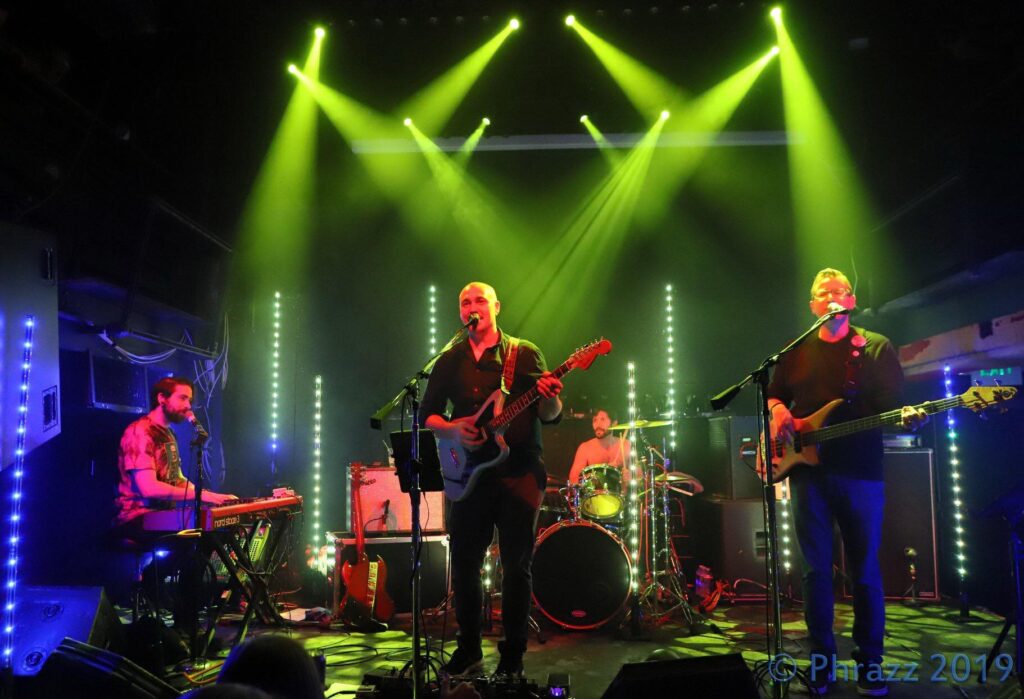
Besides its long shows and genre-bending, improvisational music, the popular jam band Phish is well-known for its fervent Jewish fanbase.
“Phish has been a part of my life for nearly three decades, and it really does feel spiritual at times to be at a Phish show,” said Dori Henry, a local “Phishhead.” “Being from Pikesville, it can also sometimes feel a bit like a high school reunion in the best way.”
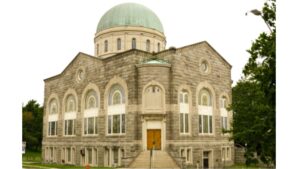
Third Space at Shaarei Tfiloh, a new local center of Jewish learning and learning, will capitalize on that musical and spiritual connection with a special gathering this Thursday, Mar. 6, starting at 5 p.m.
The event – at the former home of the historic Shaarei Tfiloh Synagogue, at 2001 Liberty Heights Avenue — will feature academics Ariella Werden-Greenfield and Oren Kroll-Zeldin, co-editors of the 2023 book “This is Your Song Too: Phish and Contemporary Jewish Identity” (Penn State University Press).
The evening, which will be moderated by Rabbi Jessy Dressin, Third Space’s executive director, will feature a concert by the local Phish cover band Phoam.
The night will start with a lot party, with socializing and food and beer from local vendors. Then, Rabbi Dressin will chat with Werden-Greenfield and Kroll-Zeldin about the intersection between Judaism and Phish.
While Kroll-Zeldin is an assistant professor in Jewish studies and social justice at the University of San Francisco, Werden-Greenfield is the associate director of Temple University’s Myer and Rosaline Feinstein Center for American Jewish History in Philadelphia.
“Phish concerts have powerful potential as moments in time that inspire metamorphic and connective experiences,” said Werden-Greenfield. “For many Jewish fans, because the band plays Jewish music and boasts Jewish members, those experiences can feel profoundly Jewish.”
She called Thursday night’s event “so special in that it brings together so many of the elements of Phish shows, from the lot scene to the live music experience. The event also brings together so many of the people that contributed to ‘This Is Your Song Too.’ I am most looking forward to being in community and to continuing our deep conversations on Jewishness, the live music experience and identity.”
Noted Kroll-Zeldein: “Ariella and I actually went to college together and took many classes together in the religion department at Skidmore College. Then after graduating, we would bump into each other at Phish shows. Many years later, we saw each other at the Association for Jewish Studies conference, surprised to learn that we each had started academic careers. We spoke at length about our dreams of one day doing a project on Phish and Jewish identity, and only made it a reality after the Phish Studies Conference made academic examinations of Phish into a more legitimate field of inquiry.”
Along with Kroll-Zeldin, Rabbi Dressin participated in the first-ever academic conference on Phish in May of 2019 in Oregon. The rabbi also published an academic essay on how the role of pilgrimage, ritual and communal rejoicing during the festivals of Sukkot, Shavuot and Passover correlates to the Phish concert experience.

“A lot of us who grew up going to Jewish summer camp or participating in a Jewish youth group. We likely heard Phish at every talent show, and a Phish song made it onto every mixtape,” Rabbi Dressin said. “At Phish concerts, you see your best friends from camp 30 years later.”
Formed in 1983 in Burlington, Vermont, Phish has a long tradition of a Jewish-heavy fanbase. Two of the band’s members – drummer Jon Fishman and bassist Mike Gordon — are Jewish, and Phish even has its own version of the Avinu Malkeinu prayer.
Furthermore, it’s s not unusual to see T-shirts at concerts with the band’s name printed in stylized Hebrew lettering. Also, during a Madison Square Garden concert last year that coincided with Chanukah, there was a public menorah lighting during a set break.
“I want it to be fun, and I want to rock out the sanctuary, and I am so excited for all the little things that we put together,” Rabbi Dressin said of the Thursday night program. “If you really are a true Phish fan, you should feel that playful magic. How many of us Phish fans have this epic synagogue and a program where we have a book talk and then a concert afterwards and talk about your Jewish identity? It feels just so fun to be able to do it.”

That deep sense of spiritual and communal connection, Jewish learning and accessibility is part of the larger goal of Third Space, she said. Launched last June, Third Space bills itself as “a nonsectarian gathering place for intellectually curious Baltimoreans to explore Jewish wisdom and its deep traditions of communal learning and engagement in a non-dogmatic, inclusive, intellectually open, and inviting space.”
Said Rabbi Dressin: “I want people to see Jewish tradition and Jewish content more as a playground and not a museum. I want people to feel invited into it, to be playful in it, but not at the expense of having an experience where they can walk away and say, ‘Wow, that was really powerful and something meaningful happened there.’
“Third Space sits on this very important corner in Baltimore through which the entire history of Jewish Baltimore, and Jewish and Black relationships in Baltimore, and the need of vulnerable constituencies [converge],” she said. “If we focus on our corner and on each other, then we can mitigate that tendency to otherwise get so overwhelmed that we don’t even know where we can put our focus or put our energy.”
Dori Henry praised Third Space for serving as “an incredible space for community, whether you’re Jewish or Jewish-adjacent or just looking to be around people having important and compelling conversations.”
For information, visit thirdspacest.org or call 410-581-5022.
Anna Lippe is a Washington, D.C.-based freelance writer.
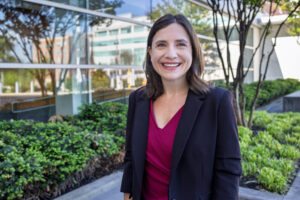
Leslie Simmons, executive vice president and chief operating officer of LifeBridge Health, will serve as interim president of Sinai and Grace Medical while a national search is conducted for Shlossman’s successor.

Emma Snyder, owner of The Ivy Bookshop, offers recommendations for must-read titles for adults and children.
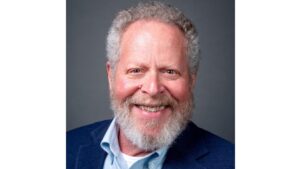
Schwab currently serves as president of Cumberland's historic B'er Chayim Congregation.
A former U. S. Marine, Pat Young has served as a Baltimore County Council member representing District 1 since 2022.