

Every minority adds the richest, juiciest pieces of its tribal culture to the great American mix. That’s what keeps this country so fresh and alive. And if you don’t believe that, you’re in the wrong place, pal.
Once in a while, we get individuals who add more than a sliver to the nation’s vitality. And veteran critic and essayist David Denby has just written a terrific book about four of these shooting stars titled “Eminent Jews” (Henry Holt and Co.)
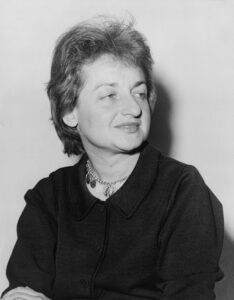
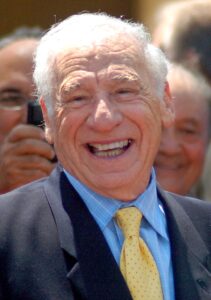
It’s about Leonard Bernstein, Mel Brooks, Betty Friedan and Norman Mailer. Partly, it’s about how they lit a fuse into American culture. And inevitably, it’s about how their Jewish backgrounds influenced them, even when religion itself didn’t play an overt role in their daily lives.
“America poured into them,” Denby writes, “and they, as Jews, poured into America, a happy intermingling made possible by freedoms that Jews had never known before.”
The book arrives at a pretty good time: not only during the Passover/Easter season, but at a dark moment when antisemitism has resurfaced in measures we’d once assumed relegated to the past.
Do we need a recap on these four giants?
Friedan set off the modern wave of feminism when generations of parents were still unconsciously raising their daughters to be second-class citizens. In her book “The Feminine Mystique,” she taught women to fight back against all the forces that had kept them silent and stewing.
And what forces they were. In America of the early 1960s, when Friedan’s book came out, only 3 percent of all doctors were women. Only 4 percent of all attorneys were women. Virtually every member of the U.S. Congress was male. Friedan’s book helped start a revolution to give women a fair shot outside their own kitchens.
Bernstein wrote classical music and Broadway shows, including “West Side Story.” For a generation that came of age when that show (and movie) arrived in their lives, it wasn’t just an entertainment; it stirred our souls, like a public prayer.
Mailer and Brooks? Denby puts it this way: “Norman Mailer freed up American prose, engaged the soul of the country in condemnation and prophecy, and turned intellectual and physical risk into a life-long project of self-transformation.
“Mel Brooks aimed low, grabbing audience not by the throat but by the kishkes, making popular comedy a celebration of the body and an assault on death,” literally so in his best (I believe) movie, “Young Frankenstein.”
In the America in which these four grew up, Jews were taught to know their place: in the shadows, where they wouldn’t risk stirring up any Jew-hatred.
Denby’s book is about the post-war years “of confidence, the breakout period when shame and silence were vanquished,” when these four remarkable people “began as hungry outsiders and ended up as sages.”
A former Baltimore Sun columnist and WJZ-TV commentator, Michael Olesker is the author of six books, including “Journeys to the Heart of Baltimore” (Johns Hopkins University Press) and “Michael Olesker’s Baltimore: If You Live Here, You’re Home” (Johns Hopkins University).
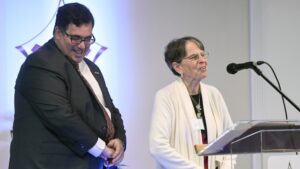
At its annual meeting this year, the Baltimore Jewish Council will honor the late Harford County educator and longtime Holocaust education champion.
The former Colt, who passed away on May 25 at age 93, achieved immortality during a cold December day in 1958, writes Michael Olesker.

A new biography on the creator of "Doonesbury" misses the mark, writes Michael Olesker.
What does it mean to be fully present with each other and the sacred, asks Maryland-born cultural anthropologist Alanna E. Cooper.