
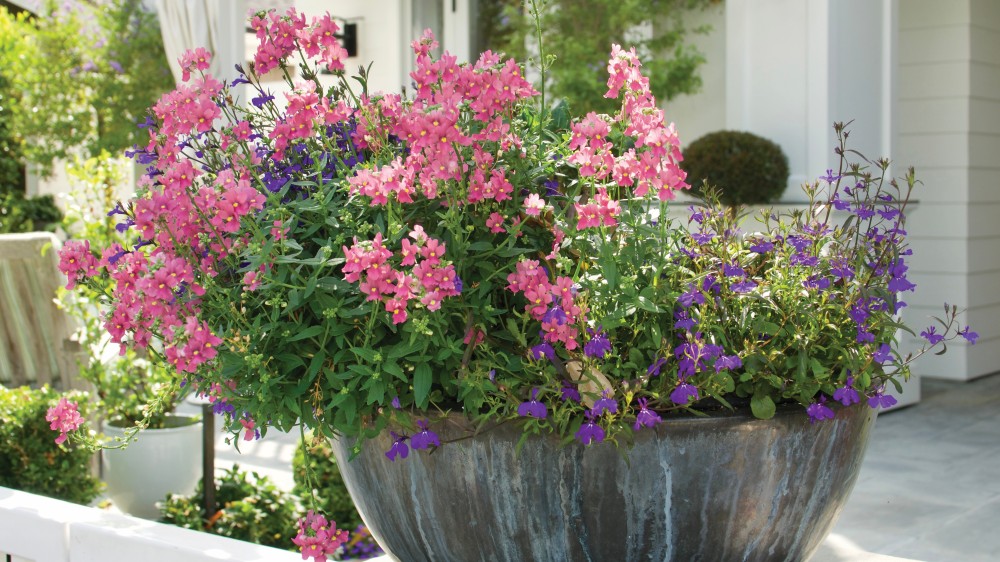
Spring is here, making it the perfect time to embrace the joys of gardening. Whether you’re a novice or a seasoned green thumb, container gardening offers a simple, enjoyable,and aesthetically pleasing way to grow flowers, herbs, and vegetables.
Plus, it’s versatile! Containers can thrive on a deck, balcony, porch, driveway or even within a traditional garden setting.
Sunlight & Placement: Setting Your Plants Up for Success
Vegetables and herbs require at least 8 hours of sunlight, while certain lettuce varieties can thrive with just 6 hours of sun. Flowering plants, on the other hand, have varying light needs. Some prefer full sun, while others flourish in shade or partial sun.
Read and follow plant label directions for best results. The beauty of container gardening is its flexibility; you can position your pots to optimize light exposure.
Choosing the Right Container
When it comes to selecting containers, the possibilities are endless. Options include:
- Plastic, rubber, or metal — lightweight and affordable
- Half barrels and large wooden baskets — rustic charm with great depth
- Glazed fired ceramic and Terracotta — the gold standards, retain moisture and add beauty
- Upcycled items — Get creative! Even a tin coffee can make a great home for parsley. On the more extravagant end, an old claw footed tub can make an interesting raised garden container.
No matter what container you choose, make sure it has drainage holes to prevent water from pooling and drowning your plants.
The Right Soil for Thriving Plants
Your soil choice depends on what you’re growing.
- Annual flowers need lightweight, well-draining potting mix.
- Specialty plants (like cacti, succulents, and African violets) require tailored soil blends.
- Vegetables can be grown in organic or non-organic soils, depending on your preference. Organic soils carry the OMRI (Organic Materials Review Institute) label, ensuring they meet organic certification standards. Non-organic potting mixes may contain polymers for moisture retention and synthetic fertilizers.
Whether you grow organic or non-organic vegetables is a personal choice. Your plants will thrive as long as they receive proper care.
Watering & Feeding: The Secret to Success
Consistent watering and fertilization are crucial for container gardening. Containers should be watered thoroughly every day, and twice daily in the summer—especially when placed on hot driveways. A soaker hose on a timer is ideal for maintaining moisture levels.
For optimal growth, slow-release fertilizers with an Organic Materials Review Institute (OMRI) label is recommended.
- For summer fruits (tomatoes, peppers, eggplant, squash, cucumbers): Use a fertilizer with 4% nitrogen (N), 8% phosphorus (P), and at least 6% potassium (K).
- For leafy greens (kale, cabbage, Swiss chard, lettuce): A balanced 10-10-10 fertilizer works best.
Matching Plants to Containers
Choosing the right container for each plant is key. For example, a tomato plant’s roots can reach 18 inches deep and spread 3 feet wide, requiring a sturdy, large container for support. Hint: Grouping containers together not only simplifies watering and maintenance but also enhances visual appeal.
Final Thoughts: Cultivating Joy in Small Spaces
Container gardening is more than just a practical way to grow plants—it’s an opportunity to bring beauty, freshness, and creativity into your home. With the right containers, soil, and care, your garden will thrive, no matter the size of your space. So go ahead, plant something new this season, and watch your garden—and your love for it—flourish!
Rebecca Brown began her career as a horticulturist more than 30 years ago and studied at the New York Botanical Gardens. She has been a University of Maryland, Baltimore County master gardener for 11 years and is a backyard beekeeper.
Norman Cohen is a retired chemist. He has been gardening for more than 40 years and has been a University of Maryland, Baltimore County master gardener for 17 years. Cohen also provides gardening education to the public at local farmers markets.

Emma Snyder, owner of The Ivy Bookshop, offers recommendations for must-read titles for adults and children.

Schwab currently serves as president of Cumberland's historic B'er Chayim Congregation.

The Jerusalem Orchestra East & West, which arranged the program for young musicians, blends Western orchestral music with Middle Eastern traditions.

Pikesville resident and entrepreneur Luna Rosendorff discusses what she's seeing these days in the world of contemporary interior design.