
By Andrew Lapin
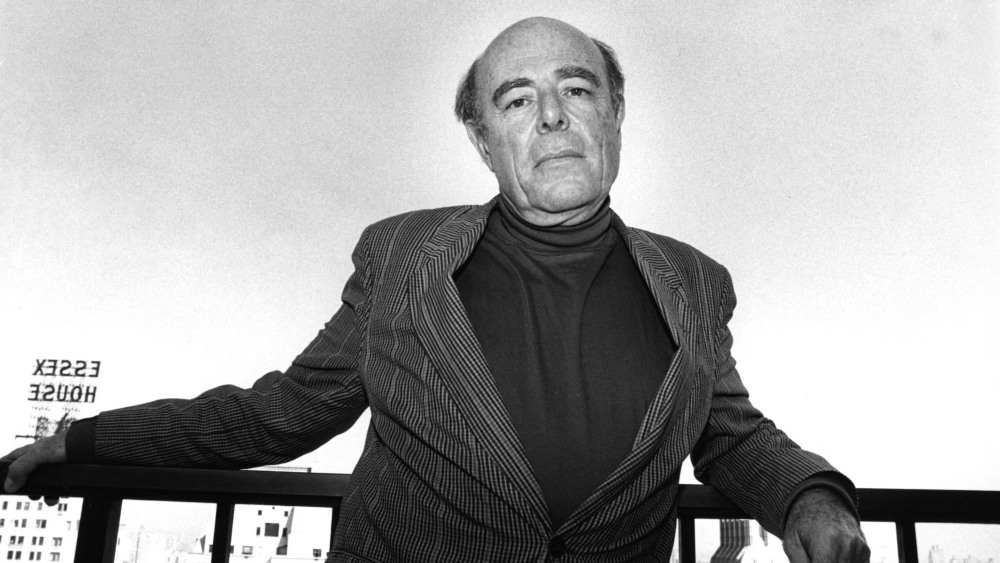
Marcel Ophuls — the renowned Jewish documentary filmmaker whose landmark film “The Sorrow and the Pity” compelled France to confront its collaborationist behavior during World War II — recently died of natural causes at age 97 in the French commune of Lucq-de-Bearn.
Ophuls spent the final years of his life trying to raise the money to complete a documentary that would have critically explored Israel and Zionism.
Over his long life and career, the director made several films exploring historical guilt and complicity, often with a bold and provocative thesis and a willingness to prod his subjects into uncomfortable territory.
He returned often to the subject of Nazi persecution, including with his Oscar-winning 1988 film “Hotel Terminus: The Life and Times of Klaus Barbie,” a biography of the Nazi war criminal.
Born in 1927 in the German city of Frankfurt, Ophuls was born into a show business family. His father Max Ophüls was a celebrated filmmaker and his mother, Hildegard Wall, was an actor.
The family fled Germany for France in 1933 when Hitler and the Nazis came to power. But France under Vichy rule also proved dangerous, and the family spent a year in hiding in 1940 before fleeing for the United States, via the Pyrenees and a brief stay in Spain.
Ophuls spent his teenage and college years in the U.S., primarily in California, where he grew up in Hollywood and attended college at the University of California, Berkeley.
The family returned to France in 1950, where his formative experience in Vichy France would prove a key artistic inspiration after he entered documentary filmmaking.
“The Sorrow and the Pity,” which Ophuls made in 1969, hit French society like a ton of bricks. In tireless detail, the four-and-a-half-hour film explored, in ways previously unknown or unexplored, the extent to which Vichy France played the role of willing Nazi collaborators. The film focused largely on Clermont-Ferrand, a single city in central France.
Not only a chronicle of big military actions, Ophuls also interviewed everyday French citizens, including a pharmacist whose answer to the question of what emotions he felt under Nazi rule provided the film’s title.
Though commissioned for French TV, the film was initially too controversial and barred from air. But it had an impact in theaters and entered the popular lexicon, most famously in Woody Allen’s film “Annie Hall” a few years later, in which the actor-director’s character frequently suggests to his date that they see it.
Ophuls’ other films included the similarly controversial “The Memory of Justice,” which juxtaposed the Nuremberg Trials with American actions during the Vietnam War; and “Munich, Or Peace In Our Time,” exploring the 1938 appeasement agreement between Hitler and Western powers that opened the door for further Nazi invasions.
Before entering documentary work, Ophuls was an assistant for Hollywood legend John Huston and directed a segment of an anthology film for French New Wave legend François Truffaut.
But in the last decade of his life, he sought to tackle the ultimate subject for Jews: the State of Israel. Together with Israeli director Eyal Sivan, Ophuls attempted to crowdfund to make “Unpleasant Truths,” a film that promised to use the 2014 Gaza war to explore Zionism from a critical lens.
French New Wave director Jean-Luc Godard, whose own views on Israel proved polarizing in his life, initially planned to help them make the film before backing out of the project.
In 2016, the pair released some in-progress footage from the film, in which Ophuls journeys to Tel Aviv in the midst of the war to interview Israelis, including West Bank settler leaders, and other pro-Israel visitors who espouse racist views on camera.
On camera, Ophuls said Palestinians are living under “apartheid” and shared his belief that Jews should be “against nationalism.” Explaining his vision for the documentary, Ophuls told Sivan that Jerusalem “should be like Clermont-Ferrand in ‘The Sorrow and the Pity.’”
The film was never finished. 
Andrew Lapin writes for the JTA global Jewish news source.

The Jerusalem Orchestra East & West, which arranged the program for young musicians, blends Western orchestral music with Middle Eastern traditions.

Pikesville resident and entrepreneur Luna Rosendorff discusses what she's seeing these days in the world of contemporary interior design.

Jewish Community Services' upcoming "Future-Ready Workplace" event will feature a keynote address from workplace expert and bestselling author Liz Fosslien.

The BCO, founded in 1984, will perform the works of Frank Zappa, Beethoven, Mason Bates and Karena Ingram.