

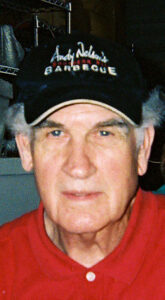
Fifty years after the famous 1958 “Sudden Death” championship football game — the so-called “greatest game ever played” won by the Baltimore Colts, 23 to 17 — Andy Nelson stood in the midst of typical lunchtime chaos at his ribs joint on York Road, and talked about a sliver of a goalpost.
“Got a little reminder of that game the other day,” he said. “Some guys came in here with a piece of the goalpost from that day in Yankee Stadium. Wouldn’t give me any of it, but they did give me a picture.”
“A picture of a goalpost?” I asked.
“Yeah,” Nelson said.
The tattered shred of the goalpost was a little piece of foam rubber. The mere photograph of a piece of cloth from a vanished afternoon was still a keepsake half a century later.
That’s how treasured that ’58 game was.
Never mind that it put the National Football League on the map, and changed America’s sports culture forever. It also made self-conscious, ever emotionally undernourished Bawlamer feel for a little while like America’s darling.
And now Nelson, a great defensive back here for six years, including two world championships, departs us at 92, and lord only knows the memories he held onto from that team and era.
Now, it is believed that only Hall of Famers Lenny Moore and Raymond Berry, and backup halfback Jack Call, remain alive from the ’58 club.
On that busy afternoon 50 years after the “Sudden Death” game, Nelson stood by a wall at his Cockeysville restaurant. On the wall was a large 1958 Baltimore Colts team photograph.
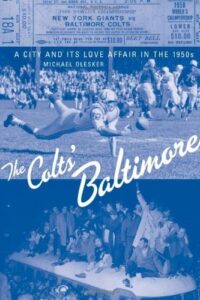
I was there that day in 2008 to talk to Nelson about a 50th anniversary book I was writing, which became “The Colts’ Baltimore: A City and Its Love Affair in the 1950s” (Johns Hopkins University Press.) That’s why Nelson turned to the team photo. He pointed to old teammates and reeled off names of those already departed.
“Don Shinnick,” he said. “Gone. Jim Parker. ‘Big Daddy.’ ‘There’s The Horse.’ And Bill Pellington and Sherman Plunkett. And Unitas. Half the ballclub, gone now.”
“You look at this a lot?” I asked.
“I keep lookin’,” Nelson said in his southern drawl, “’cause they keep disappearing.”
He grew up on a cotton farm around Athens, Alabama, a town with about 5,000 people. There were 33 kids in his high school graduating class. When he arrived at Memphis State for college, there were 3,000 students there.
When he got to Baltimore and got his first look at Memorial Stadium, the place was overflowing — for a summertime Colts intra-squad game.
“It scared me,” Nelson said. “I turned to one of the guys on the team and said, ‘Is it always like this?’ He said, ‘You ain’t seen nothing yet.’’”
When the team went to New York for the first time, Artie Donovan took Nelson to Times Square one night. But he wouldn’t let him open his eyes until the right moment, when he could get the full electric blast.
“Gosh, I couldn’t believe it,” Nelson remembered. “I’d never been to too many places.”
In his retirement, Nelson’s ribs restaurant became a community fixture. And, for decades, Nelson worked there and yet maintained something close to his playing dimensions of six-feet-one, 175 pounds.
“I don’t get it,” I told him. “How does a guy as skinny as you stop a guy like Jim Brown?”
“I was farm strong,” he said. “I was like a piece of wire from all those chores.”
On the Colts, in a sensitive time of race relations, they roomed this Alabama white boy Nelson with Milt Davis, a slender African-American who’d been raised in a Hebrew orphanage. Such a pairing was a rarity for the time.
“No problem,” Nelson said. Alabama was an unfortunate symbol of racial antagonism in that era. But Nelson had known Black people who worked on his family farm and Black ballplayers from sandlot games. He and Davis got along fine.
Later, Nelson roomed with Steve Myhra, who kicked the tying field goal with seven seconds left in the ’58 championship game, to send the contest into Sudden Death overtime.
Myhra, on the best of days, was a nervous wreck. Now, standing on the sidelines as the field goal team rushed onto the Yankee Stadium turf, Nelson silently pleaded with his roommate to steady himself for one pivotal moment in sports history.
He did.
When the Colts’ chartered plane returned to Baltimore that evening, and the players made their way through a delirious crowd of 30,000 fans at the old Friendship Airport, it was the laconic John Unitas who drove home with Nelson in the passenger seat.
“Just the two of you?” I asked Nelson.
“Yup.”
“What was that like?”
“Not much.”
They had just stunned the nation and moved the beating heart of American sporting culture from baseball to football.
“Did you talk a lot?” I asked. “Did you listen to the radio to hear people talking about the game?”
“Nope,” Nelson said. “We rode the whole way in silence. We got to my house, and I got out of the car. And John Unitas turned to me and said, ‘See you tomorrow.’'”
The two of them, Unitas and Nelson, will have a lot to talk about in the great upstairs.
A former Baltimore Sun columnist and WJZ-TV commentator, Michael Olesker is the author of six books, including “Journeys to the Heart of Baltimore” (Johns Hopkins University Press) and “Michael Olesker’s Baltimore: If You Live Here, You’re Home” (Johns Hopkins University).
Meanwhile, the Jewish announcer Andres Cantor will be calling his 12th straight tournament.

Jmore Editor-in-Chief Alan Feiler remembers Temple Emanuel's longtime spiritual leader, who passed away earlier this week at age 91.

Camp and youth group experiences have the ingredients for true, deep, lifelong transformation, writes Rabbi Jessy Dressin.

Proposed legislation in Israel would transfer authority of the entire Kotel to the Chief Rabbinate, writes Rabbi Robyn Fryer Bodzin.