
By Andrew Lapin
Last spring, a children’s museum housed on a military installation near Tacoma, Washington, cancelled a reading event celebrating the life of a pioneering female Jewish bicyclist after the book was flagged under a military-wide ban on “DEI” content.
The stated reason was because the book was about a woman, according to Mary Boone, author of “Pedal Pusher: How One Woman’s Bicycle Adventure Helped Change the World” (Henry Holt & Co.).
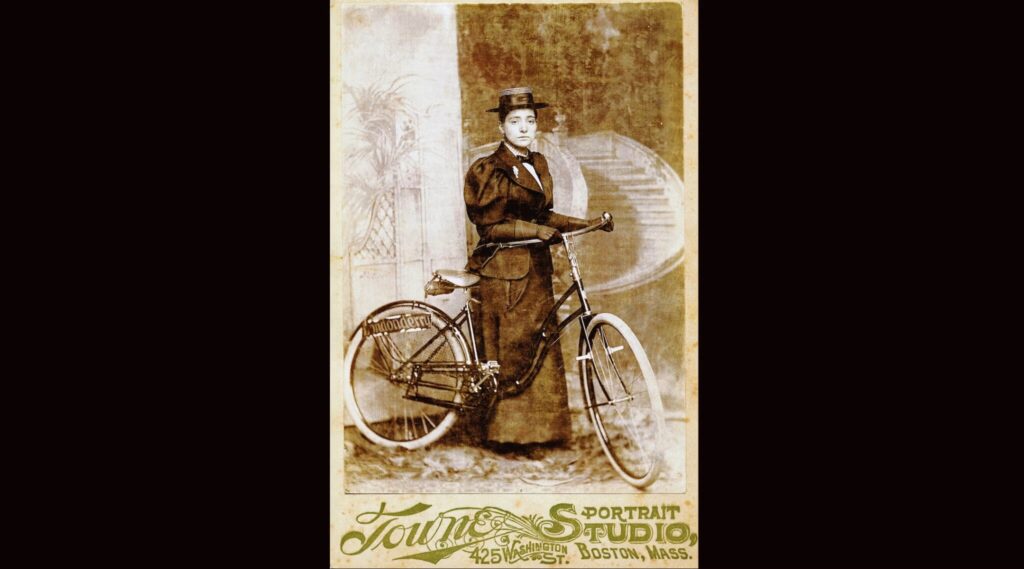
The 40-page picture book — which came out last February and is recommended for children between the ages of 5-9 — is a biography of Annie Cohen Kopchovsky, who in 1895 became the first woman to cycle around the world.

“If they had actually read the book and found out it was about a Latvian Jewish immigrant, it would have been a double whammy,” said Boone, who has taught creative writing at Johns Hopkins University.
The recently revealed reason for the cancellation is the latest example of how a broad crackdown on diversity initiatives throughout the U.S. military, under Defense Secretary Pete Hegseth, has pushed out Jewish representation as well.
Earlier this year, the U.S. Naval Academy in Annapolis removed a display honoring Jewish female graduates ahead of a planned Hegseth visit. The academy also removed several books about Judaism and the Holocaust from its campus library, while leaving others including “Mein Kampf” intact.
In addition, the Pentagon removed content about Holocaust remembrance from its websites, prompting a response from Jewish War Veterans of the USA.
The incidents all occurred last spring, immediately following Hegseth’s anti-DEI order.
That was also when Joint Base Lewis-McChord — home to approximately 110,000 people, including service members and their families — cancelled a planned reading event of “Pedal Pusher.”
The talk featuring Boone was scheduled to be held last March during “Women’s History Month.” A Tacoma resident, Boone revealed the reasons behind the cancellation in a Seattle Times op-ed on Oct. 11, in recognition of “Banned Books Week.”
“Four days before the event, I was told it violated the administration’s executive order restricting so-called ‘radical’ Diversity, Equity, and Inclusion programs across federal institutions,” she wrote. “Someone complained when they saw my story time being promoted. Museum higher-ups appealed to military attorneys, who ruled that the program about a pioneering cyclist was out of bounds.
“Let that sink in: the Commander-in-Chief of the U.S. military had effectively declared a woman on a bike too threatening for children.”
A representative for Joint Base Lewis-McChord declined to comment, citing reduced office functions due to the ongoing government shutdown.
Improbable Journey
A non-Jewish Iowa native whose husband Mitch is Jewish, Boone said she was led to believe someone on the base complained after seeing a poster advertising the reading.
She said she doubts that those objecting to the book actually read it but rather had reacted because “it was a book about a woman.”
A section of the book briefly mentions Kopchovsky’s Jewish and immigrant identity as one reason why her journey, as a mother of three circumnavigating the globe by bike in 1895, was so improbable.
“Annie was a Latvian Jewish immigrant, and this was a time when prejudice toward Jewish people was widespread,” the book reads.
Initially, Boone said she had not planned to include the section in the book, which only runs to 700 words.
“My editor called and said, ‘This is a huge part of her story you left out,’” the author recalled. She said she responded, “I’m not a Jewish writer. Can I tell this? She was like, ‘Yes, you can tell this.’”
Greentrike, a nonprofit that operates the base’s museum as well as a different children’s museum in Tacoma, did not immediately return a request for comment. Another March event featuring Boone at the Children’s Museum of Tacoma went forward as scheduled.
The Seattle Times obtained an email from Greentrike outlining the military’s reasons for the book’s cancellation as part of the op-ed’s fact-checking process.
In March, the museum had initially announced the events “in celebration of Women’s History Month,” saying the readings would be paired with children’s activities including bike safety lessons.
A brief update announcing the military base event’s cancellation only stated that the gathering “will not be taking place at this time and has been removed from the event calendar.”
World Traveler
Back in 1895, Kopchovsky set off on her famous bicycle journey from Boston as part of a wager between two men who had placed bets on whether it was possible for a woman to cycle around the world.
Initially pedaling west, she reached Chicago and almost gave up before ditching her heavy women’s bicycle for a lighter and more practical men’s model.

Then, she set off back east, eventually sailing on to bike in Europe and Asia before heading back to Chicago.
During her travels, Kopchovsky went by the nomenclature of “Annie Londonderry,” not to disguise her Jewish identity but because she had struck a sponsorship deal with the mineral-water company Londonderry Lithia.
She earned $10,000 for her ride and wrote often about it after her return, frequently embellishing her tales of derring-do. Kopchovsky died in November of 1947 at the age of 77.
Children on the base still have received multiple opportunities to hear about Kopchovsky and her exploits. When the story-time cancellation was initially announced, Boone said she was contacted by representatives from two public schools also housed on the base.
She said she wound up speaking at both of them, without any incidents.
Months later, after she went public with the initial cancellation, Boone said she was swarmed with speaking invitations and sales of her book picked up.
Among the new connections she made were to distant relatives of Kopchovsky.
“It’s given me the opportunity to talk about her to a lot more people who are outraged that this book about a woman would be cancelled,” she said.
Andrew Lapin wrote this article for the JTA global Jewish news source.
Duke Zimmerman and Lori Gale will talk at Towson University about their new book "People Get Ready" and the role played by Globe Posters in the civil rights movement.
The new exhibition revisits and updates a previous show about ritual hair covering in the observant community.

The Pikesville resident's latest offering "There's a Dragon in the Tree House and He Won't Come out!" was co-written with her grandsons.
A new biography captures the intensity and magic of the musical theater giant, writes Michael Olesker.