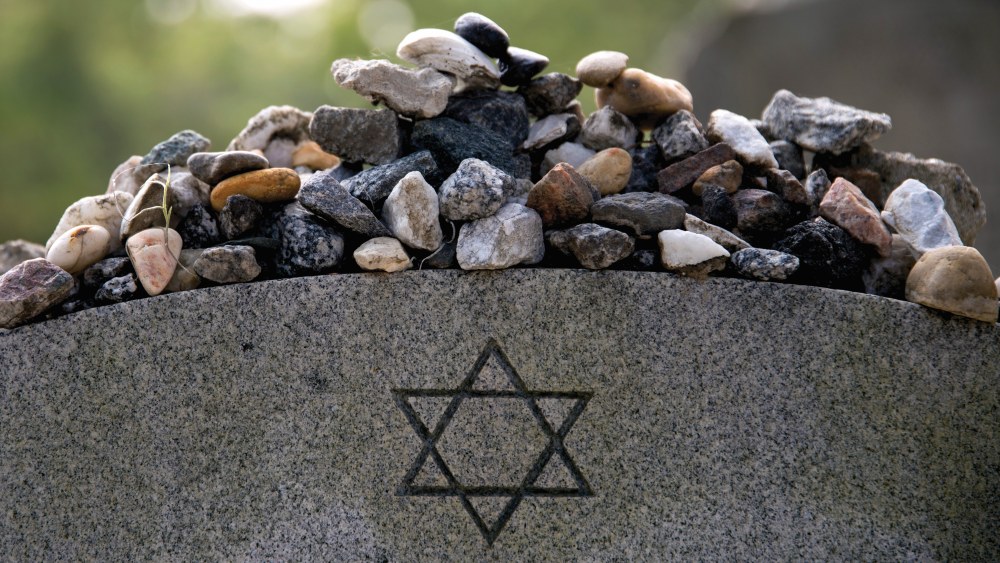
I’ve been spending a lot of time at cemeteries lately in a professional capacity. But the truth is I’ve always enjoyed spending time in cemeteries. They’re usually beautiful, they’re usually quiet, they’re usually interesting, and I usually leave them feeling “better” than when I arrived.
If I have loved ones there, I like to leave a small stone, say hello, catch up with them and run my hand lovingly over their name before I say goodbye. The visit settles my spirit even when I didn’t know that it was unsettled.
Even in a cemetery where I don’t know anyone, I still like to read the tombstones and imagine the lives as hinted at by the inscriptions: turtle lover, uncle, beloved Babba.
In Hebrew we call a cemetery Beit HaHayim, a House of the Living. It is a place the living dwell and the lives of those buried there live on in the loved ones left behind. And cemeteries are living places, with people laughing and planning where to go to lunch, small children playing with their Thomas trains on the pavement next to graves, stones that warm the touch of living hands, and trees and ground that rustle and settle with the change of time.
As Jews, we mostly bury our loved ones beneath the ground in earth made sacred by our prayers and our tears. In my years in the rabbinate, I’ve discovered many things I hadn’t known before, especially many surrounding death and its rituals. Among them, I had never known that graves settle. I had noticed that when I visited old cemeteries that the ground could be uneven in places with tombstones at different heights and angles, but I couldn’t have told you that that was because of the ground settling.
Most people don’t know that graves settle. When they ask why many Jewish cemeteries require a concrete vault even though we highly value burial in the earth itself, they are surprised when rabbis and funeral directors explain that it helps to preserve the cemetery and the graves.
It’s other things we think about settling — marriage prospects, house contracts, stomachs, bills — but the earth settles, too.
What does it look like? The dirt, and grass above it, settles down and contours itself to the ground around it. It looks like the earth is sighing. It’s not particularly unsightly, it’s like seeing an outline beneath something — the challah under its cover on Friday night. It suggests what’s beneath it in an elegant under-stated way.
People are often so unsettled at the cemetery. I often think that they would be comforted to see that the ground itself is unsettled for a period of time, and to know that after months — but really years and decades — the ground around the graves settles into its final resting place.
After Oct. 7th, a friend returned briefly to Baltimore from Israel where she had made aliyah years before. The constant sirens and state of war were creating so much anxiety for her that she wanted a break, and a friend here graciously offered her a place to stay and rest. For the month that she was here, we would meet on Mondays at Druid Ridge, the cemetery closest to both of our homes, and walk and talk.
She knew the route well and took the lead as we meandered through the roads and pathways noting the Jewish names on tombstones and saying hello to the dogs and the people walking them. It seemed an appropriate setting to talk about the “matsav,” the situation in Israel which she had left and to which she would soon be returning.

We noted the leaves changing color and the people visiting with flowers in hand. We were, as most people are in cemeteries, deeply unsettled, and yet all around us the Beit HaHayim promised that in time, we would sigh and relax into the world around us, meeting its contours as we settled back into life.
Debi Wechsler was a rabbi at Chizuk Amuno Congregation for 26 years. She now works as a freelance rabbi at lifecycle events, teaching adult education, writing and coaching rabbis new to the field.
What does it mean to be fully present with each other and the sacred, asks Maryland-born cultural anthropologist Alanna E. Cooper.

As millions mourn the passing of Stephen Colbert from the airwaves, Michael Olesker looks back on the "institution" of late-night TV.

As he gets ready to leave for California, Rabbi Daniel Cotzin Burg looks back on his time in Baltimore and his 10 years writing for Jmore.