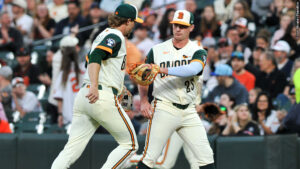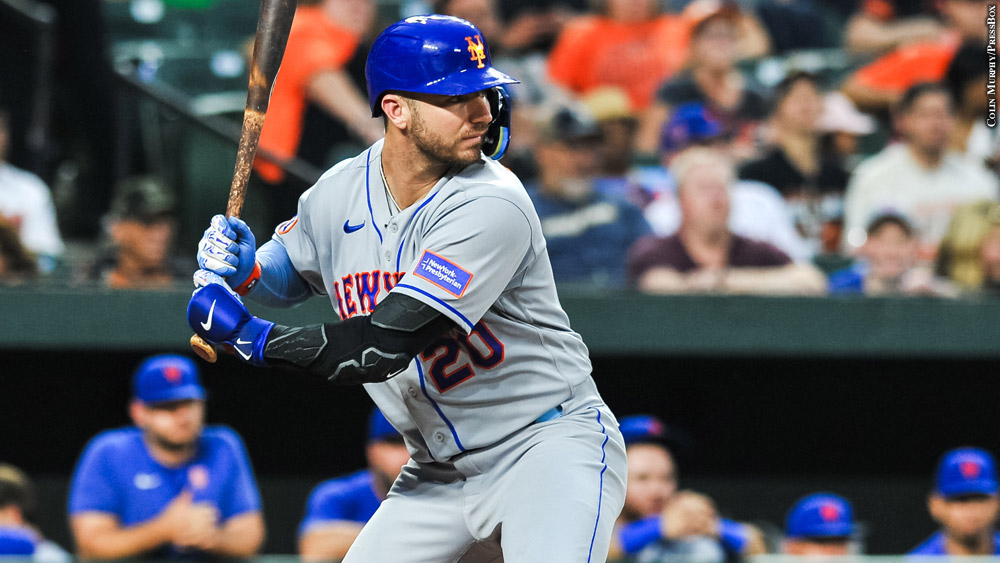
For those awaiting a signal from the gods of baseball that good things are about to happen for the Baltimore Orioles, take note that dem O’s signed the slugger Pete Alonso to a five-year deal last Wednesday, Dec. 10.
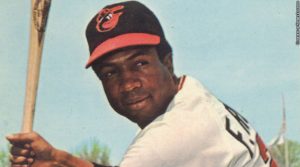
For those not paying attention to symbols, here’s a reminder: That date is precisely 60 years (and a day) from the date — Dec. 9, 1965 — on which the Orioles signed another slugger, named Frank Robinson.
And that deal turned around a franchise with great potential but lacking the star quality and leadership and grand success that Robinson brought here.
What kind of success? For the six years of Robinson’s tenure in an O’s uniform, the club went to the World Series four times. They won two world championships. They were, for a 20-year stretch symbolized by Robinson’s arrival, the winningest team in major league baseball.
As the late philosopher Casey Stengel used to say, “You could look it up.”
Are we implying that Alonso’s signing means something similar to Robinson’s? Nobody can answer that yet. But the sheer amount of money must count for something, or the historically cost-conscious O’s wouldn’t have sprung for the reported five-year, $155 million deal.
Last summer, the Orioles were a major-league embarrassment. Full of hot-shot names sold to fans as the coming of greatness, they flopped. Every one of them under-performed. Maybe it was injuries, maybe it was over-hype. But nobody lived up to advance billing.
Alonso brings not only a powerful bat but a veteran clubhouse presence. He’s known as a good guy. And he’s got big-game experience, including high-pressure moments where he’s come through dramatically.
This is a crucial moment in Baltimore baseball history. For years, the Orioles have been victimized by the same economics that have turned the playing field into an unfair fix favoring the big-market teams with deep pockets.
The great thinkers in the game attempted to level this disparity by adding a luxury tax for any team whose payroll exceeds certain limits. The Yankees for example, have had to pay millions of such “tax” dollars.
But even this attempt becomes meaningless in the modern economic context. The world champion Los Angeles Dodgers, for example, now pay more in those luxury tax numbers than the entire team payrolls of half the teams in major league baseball, according to The Athletic, the New York Times’ sports platform.
For the Orioles to spend $150 million on Pete Alonso is an attempt to compete with the rich guys. They see this hour of history — ironically, six decades since the deal for Frank Robinson – as their window of opportunity, which won’t stay open for long.
By the way, as one measure of how far baseball’s economics have changed since the Robinson signing 60 years ago: Frank’s salary that year was $62,500.

A former Baltimore Sun columnist and WJZ-TV commentator, Michael Olesker is the author of six books. His most recent, “Front Stoops in the Fifties: Baltimore Legends Come of Age,” was reissued in paperback by the Johns Hopkins University Press.
What does it mean to be fully present with each other and the sacred, asks Maryland-born cultural anthropologist Alanna E. Cooper.
As millions mourn the passing of Stephen Colbert from the airwaves, Michael Olesker looks back on the "institution" of late-night TV.
As he gets ready to leave for California, Rabbi Daniel Cotzin Burg looks back on his time in Baltimore and his 10 years writing for Jmore.