I feel sorry for the mayor of Baltimore, Brandon Scott, that he chooses to define “another year of incredible progress for our city” in a year-end police department report on homicides.
It’s true, we aren’t killing each other as much as we used to. For years, the city’s homicides topped 300. In 2024, the number dropped to 194. Last year, 131.

Applause, applause.
But 131 is still far too many.
And more to the point, I’d like to live in a city where a mayor defines “another year of incredible progress for our city” by more than its body count — because we judge ourselves in so many ways that are uncountable by number but depressing beyond expression.
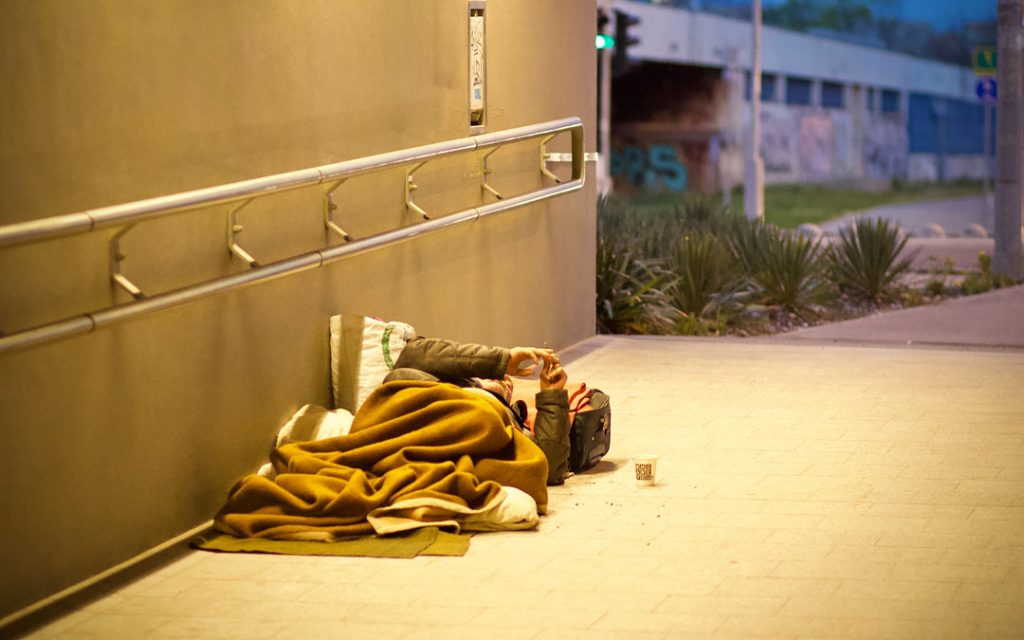
Such as the other day, three days into the new year, when I park my car Saturday on East Franklin Street, not far from Tio Pepe’s Restaurant with its fine food and genteel atmosphere behind a narrow front entrance, and begin walking the block and a half to the Enoch Pratt Central Library.
And in the afternoon’s biting cold and wind, I find myself walking along a line of blankets on the sidewalk, and inside the blankets are human beings who have found no place better to go.
At this moment, the sun is shining along Franklin Street, so maybe that helps. But there’s a guy who’s struggled to his feet, and he’s standing over the fellow next to him who’s lying there wrapped in layers of blankets, and he’s trying to see if the guy’s actually alive.
“You OK, bunk?” the guy asks.
No response.
“Hey, bunk, you OK?”
I’m pausing for a moment, because you can’t simply walk away if that’s a dead man lying at your feet. After a few seconds, and a little jostling, the guy on the sidewalk opens his eyes and grunts so we know he’s alive.
But dead or alive, how does anyone — how does any city — walk away from such scenes, and such human beings, as lie in front of our eyes on streets scattered all over town?
Along Franklin Street, there are more bodies wrapped in blankets, and vagrant wads of trash blowing around. Where does all this trash come from? It comes from years of not seeing what’s right in front of us or not caring.
As I reach the Pratt Library, in the 400 block of Cathedral Street, there are more blankets along the ground wrapped around apparently living human beings. And these aren’t the most pathetic figures here.
Just outside the library’s big front doors, two women are going after each other. They’re gray-haired, and their pale faces are deeply lined, and they stand there wrapped in blankets above layers of shabby clothing.
The people lying on the ground don’t get up from their blankets at such a scene. But a small crowd of apparently homeless people watches as the two women swing their arms wildly at each other and scream curses.
They’re fighting over possession of a single cigarette.
I go into the library because I want to remember what civilization feels like. The library, Tio Pepe’s around the corner — they’re reminders of what brings people to downtown Baltimore across generations.
But the library’s got security officers the moment you walk in the front door, and the restaurant’s got that heavy front door as symbolic stop sign to all those who sleep on sidewalks.
The new year arrives, but I still hear echoes of the past several years from people who once lived in the city, or at least relished its delights.
“I don’t go downtown anymore,” they say.
It’s not just the homicide numbers that keep people away. We’ve got people sleeping on our sidewalks, and old ladies trying to pulverize each other for a cigarette, and trash blowing around across entire years.
Each is just a tiny reminder of how this mayor can talk all he wants about the “incredible progress” Baltimore is making because “only” 131 people killed each other last year.
But we measure this city in other ways as well.
A former Baltimore Sun columnist and WJZ-TV commentator, Michael Olesker is the author of six books. His most recent, “Front Stoops in the Fifties: Baltimore Legends Come of Age,” was reissued in paperback by the Johns Hopkins University Press.
What does it mean to be fully present with each other and the sacred, asks Maryland-born cultural anthropologist Alanna E. Cooper.

As millions mourn the passing of Stephen Colbert from the airwaves, Michael Olesker looks back on the "institution" of late-night TV.

As he gets ready to leave for California, Rabbi Daniel Cotzin Burg looks back on his time in Baltimore and his 10 years writing for Jmore.