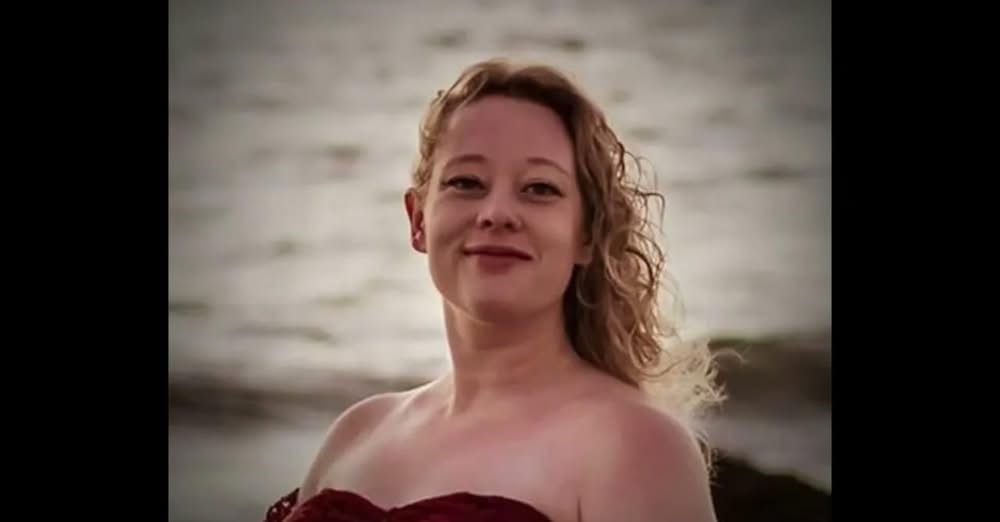
On the morning after he saw the TV footage of Renee Nicole Good’s killing in Minneapolis, Dr. Jay Himmelstein awoke haunted by Bob Dylan’s musical rendition of Hattie Carroll’s killing more than a half-century ago in Baltimore.
On Jan. 7, Good, 37, lay lifeless in the front seat of her SUV from an ICE agent’s shooting, which has set off a week of massive street demonstrations in American cities.
Hattie Carroll’s death, and the pathetic six-month sentence handed to her politically well-connected assailant, moved a young Bob Dylan in 1963 to write “The Lonesome Death of Hattie Carroll.”
And now that song has inspired Himmelstein to write “Ode to Renee Nicole Good 1988-2026,” set to the “Hattie Carroll” melody.
You can now find Himmelstein’s chilling rendition on YouTube. It will bring back some of the pain of half a century ago when Dylan wrote his classic, and it rekindles the raw emotion of Good’s life and death last week.
Dylan was writing of the 51-year-old Black woman, Hattie Carroll, who was a “maid in the kitchen.” She suffered a fatal heart attack on Feb. 9, 1963, after she was called a racist name and beaten with a cane at the city’s old Emerson Hotel. Her assailant, 24-year-old William Devereux Zantzinger, son of wealthy tobacco farmers in Charles County, received a six-month sentence.
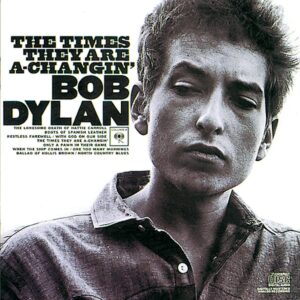
Dylan wrote: “William Zanzinger [sic] killed poor Hattie Carroll/With a cane that he twirled around his diamond ring finger/At a Baltimore hotel society gatherin’/And the cops were called in, and his weapon took from him …”
In “Ode to Renee Nicole Good,” the 37-year-old mother of three was gunned down seconds after she smiled and told an ICE agent, “I’m not mad at you.” Himmelstein writes:
“When the ‘absolute power’ meets the weight of the truth/
And the ‘imminent threat’ was just a mother in youth/
They’re closing the record with the evidence sealed/
While the scars of the street are left never to heal/
And a six-year-old waits for a ride at the gate/
For the justice he needs may come far too late.”
From his home in Worcester, Mass., Himmelstein, a Baltimore native, says, “My heart aches, and I’m afraid, and I’m hoping that this song, reincarnated, might raise consciousness in some as Dylan’s original did for me and so many others in the ‘60s.”
Himmelstein grew up in Northwest Baltimore’s Cheswolde neighborhood, graduated Baltimore City College in 1969 as a two-sport varsity athlete and president of the Student Government Association, went to Johns Hopkins and Harvard and the University of Maryland. After getting his medical degree, he taught at the University of Massachusetts Medical School.
Along the way, he was medical advisor for former Massachusetts Gov. Michael Dukakis and Sen. Edward M. Kennedy.
His musical “education” came much earlier.
He found inspiration in Dylan, Peter, Paul & Mary, and other folk singers of the ‘60s. Then, “I took my bar mitzvah money to a local pawn shop and, with my mom by my side, purchased my first real guitar,” which “still hangs battered and worn on my office wall.”
In 1964, when he heard Dylan’s album “The Times They Are A-Changin’,” he discovered the Hattie Carroll tribute, recorded mere weeks after the Zantzinger sentencing.
Himmelstein found it “a story of violent discrimination, economic inequality and justice denied. But to me, it was when the music stopped being entertainment and became a calling to sing out if I had something to say.”
The killing of Renee Nicole Good gave him a lot to say. He’s said it with passion, and with pain, in “Ode to Renee Nicole Good.”
A former Baltimore Sun columnist and WJZ-TV commentator, Michael Olesker is the author of six books, including “Journeys to the Heart of Baltimore” (Johns Hopkins University Press) and “Michael Olesker’s Baltimore: If You Live Here, You’re Home” (Johns Hopkins University)
What does it mean to be fully present with each other and the sacred, asks Maryland-born cultural anthropologist Alanna E. Cooper.
As millions mourn the passing of Stephen Colbert from the airwaves, Michael Olesker looks back on the "institution" of late-night TV.

As he gets ready to leave for California, Rabbi Daniel Cotzin Burg looks back on his time in Baltimore and his 10 years writing for Jmore.