
By Asaf Elia-Shalev
The Anti-Defamation League recently launched a nationwide legal service to connect victims of antisemitism with lawyers who are able to take their cases on a pro-bono basis.
The initiative comes as the ADL has increasingly turned to litigation as a tactic. The group says it has filed more lawsuits and legal complaints in the last years than in its previous 110 years combined.
The ADL Legal Action Network comes out of a partnership with Gibson, Dunn & Crutcher, one of the largest law firms in the country. In total, more than 40 firms have agreed to participate, collectively tapping a pool of 39,000 attorneys.
The network will accept online submissions involving discrimination, intimidation, harassment, vandalism or violence and use artificial intelligence to evaluate them. Tips that make it through the system will be referred to partner firms or the ADL’s in-house litigators.
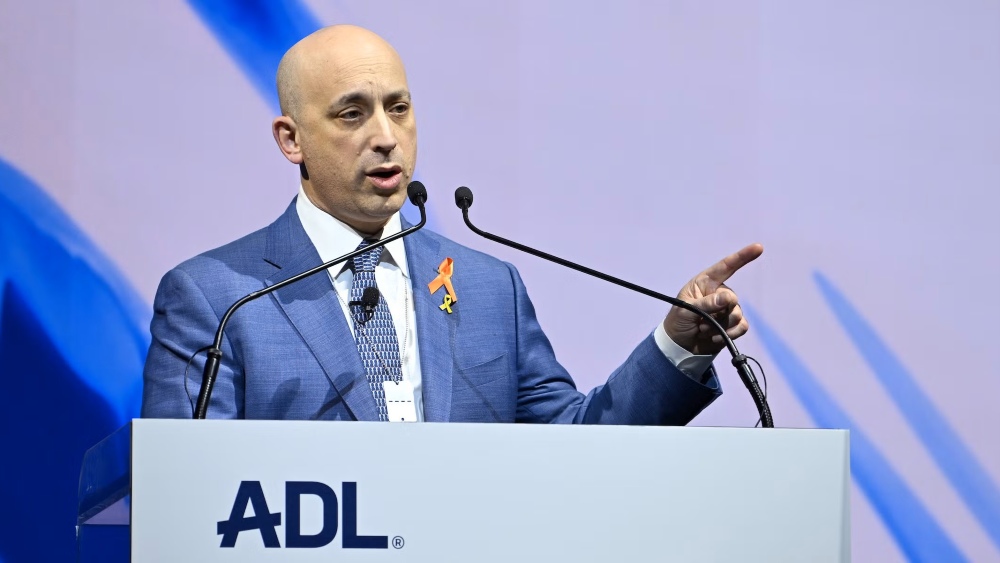
“For decades, victims of antisemitism have come to ADL to receive frontline services,” ADL CEO Jonathan Greenblatt said in a statement. ”We are now dramatically expanding our capabilities to support more Jewish Americans by helping to provide direct access to legal support anywhere in the country.”
Gibson Dunn partner Orin Snyder called the network an “unprecedented legal firewall against antisemitism, extremism, and hate.”
The initiative comes as the ADL retreats from some of its traditional advocacy and educational work while facing an onslaught from the right, including the cutting of longstanding ties to the FBI after the agency’s director, Kash Patel, said the ADL has been “functioning like a terrorist organization.” (The group has also faced criticism from the left.)
The group recently eliminated an online resource known as the Glossary of Extremism and Hate, which counted more than 1,000 entries after accusations of bias by conservatives. It has also, for example, eliminated a signature anti-bias training for students and schoolteachers that included a focus on racism and LGBTQ issues.
Greenblatt has said he is intentionally retooling the organization to prioritize countering antisemitism as American Jews report increased harassment and discrimination.
The legal network formalizes and expands the Campus Antisemitism Legal Line, which Gibson Dunn launched with the ADL, Hillel International and the Louis D. Brandeis Center in 2023. The ADL says CALL has received nearly 1,000 reports from 230 campuses and helped spur civil rights complaints and criminal cases.
The new system extends that model beyond higher education to workplaces, public accommodations and allegations involving extremist organizations and individuals.
Directing the expanded network is James Pasch, who was tapped in 2023 to head a new litigation division for the organization.
Pasch said the ADL’s litigation team has grown into “like a boutique litigation firm inside ADL,” with roughly seven litigators plus support staff, while most large matters proceed with support from outside law firms. The expansion comes amid skyrocketing fundraising, which topped $170 million in annual donations, according to its most recent audited financial statements — a $65 million increase over its best year.
Pasch said settlements, or even the threat of a filing, can lead to immediate impact and set standards for other institutions.
The initiative comes as many large firms reportedly recalibrate their pro bono work under pressure from the Trump administration, which has elevated antisemitism as a signature priority. To avoid becoming targets over more politically sensitive matters such as immigration and asylum, some firms are reportedly steering clear of those cases. Partnering with Jewish organizations on antisemitism claims lets the firms align with an issue the administration has endorsed.
Pasch said he welcomes federal efforts but added that increased government action is no reason for civil society to let up the legal pressure.
“This is a moment that will take an all-of-society approach from the government, to NGOs, to private business,” he said. “In legal cases, the Justice Department generally does not represent private individuals who are victims of antisemitism, but ADL along with our partners in firms have the ability to bring those cases to the forefront.”
The increase in legal activity comes amid a broader debate about how to balance civil rights enforcement with free-speech protections. As part of settlement negotiations, the ADL has demanded that school districts and universities formally adopt what’s known as the IHRA definition of antisemitism.
But civil liberties groups and Palestinian-rights advocates have criticized the use of Title VI complaints tied to the IHRA definition because they say aggressive enforcement can stifle political discussions about Israel. The ADL and its partners counter that the cases target conduct — harassment, threats, discrimination — not viewpoints, and that filings have already yielded concrete changes on campuses and in districts.
In explaining how he selects what cases to pursue, Pasch said the criteria include whether a filing would disrupt harmful activity, strengthen or establish law, and give victims a full voice.
“We can’t heal the injured and we can’t bring people back from the dead,” he said. “But we can provide a voice and some semblance of relief for victims, whether that be policy change or monetary relief.” 
Asaf Elia-Shalev wrote this article for the JTA global Jewish news source.

Schools in Montgomery County have recently experienced a wave of antisemitic incidents.

This year’s Community Block Party at the JCC of Greater Baltimore will feature classic cars, giant inflatables, games, a rock-climbing wall and roller skating rink, and strolling entertainers.
Marc Terrill talks with Michael Bresler, CEO and President of Broadheights, an AI consulting group, about the opportunities and challenges of artificial intelligence.

For 35 years, the late Deborah Brodie, aka Bubbie Cookie, amassed a collection of over 200 Jewish ritual objects, which she used to teach her Hebrew school students with special needs.