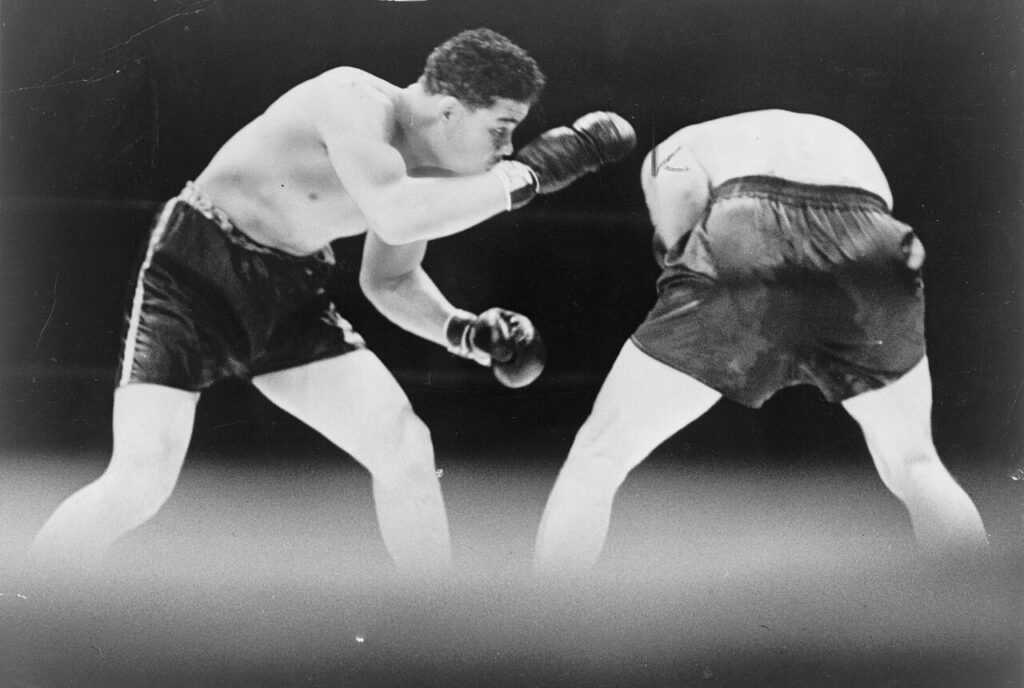
On Sept. 15, 1963, the Cleveland Browns football club arrived in Washington, D.C., to play the team then known as the Redskins. The nickname is now considered deplorable but worse was the team policy, owing to the bigotry of owner George Preston Marshall.
No Black players on his team.
At that time, 17 years since the integration of professional baseball and football, Shirley Povich was about halfway through his remarkable 75-year run as sports columnist for the Washington Post.
He was in the press box that Sunday watching as the Browns, featuring the great fullback Jim Brown, a Black man, defeated the Redskins, 37 to 14, and Brown scored three touchdowns.
Or as Povich described it, “Jim Brown, born ineligible to play for the Redskins, integrated their end zone three times yesterday.”
Povich also described the Redskins’ team colors as “burgundy, gold and caucasian.”
All of this is recalled in the aftermath of last week’s bloodbath at the Washington Post in which nearly half of their newsroom’s 800 journalists were downsized and the sports section was killed entirely.
The actions felt like a body blow to all who read that once-treasured sports section — and recalled a time in America when many believed the sports pages were the very heart of a daily newspaper.
Those pages drew us together as communities. We had war and politics on the front page, and zoning disputes and muggings on the local pages. But on the sports pages, we found common ground, cheering or jeering.
For many of us coming of age, the sports pages were our initiation into the world of adults. We were graduating from a strict diet of the comics to what some called the newspaper’s “toy department.”
But there were enough “toys” for everyone. In Baltimore, the Orioles and the Colts were covered — and so were City and Poly, and Forest Park and the Howard Park Little League as well.
The sports pages were the home pages.
They were also the place where writers could have fun with the English language. After all, they weren’t writing about war and peace, just balls and strikes. Here you found the poets of the paper and the comics as well.
Here’s Red Smith, in the old New York Herald Tribune, writing, “There was a day last August when Solly Hemus, manager of the Cards, soared to dizzying heights of eloquence, stating his views of the professional competence, physical charms, personal habits, ancestry, spiritual attributes and conditions of birth of Stan Landes, an umpire.”
Here’s Jimmy Cannon, in the old New York Post: “Baseball, as practiced by Ty Cobb, was a ceremony of deceit and brutal recklessness. He slashed the other people with his spikes and fought them with his hands. But his precise skills were neglected when Babe Ruth permanently altered baseball with the home run. It was as if a violin virtuoso attempted to compete with a brass band on the same stage.”
Here’s Vic Ziegel in the New York Times: “Marathon races are the well-known personality disorder … in which thousands of deluded victims scramble in a frenzy through city streets wearing nothing but numbered underwear until they collapse from exhaustion or are interviewed on the 6 o’clock news.”
To read the sports pages — when they were at their best — was to reflect on life off the playing field as well. When appropriate, the best writers connected the games with human beings facing moments of intense pressure, with the effects of aging on the human body, and with society’s cultural values.
Sometimes the sports pages told us stuff the big boys writing editorials never quite mentioned.
After all, it was a sportswriter, Jimmy Cannon, who wrote, in a sensitive era, “Joe Louis is a credit to his race — the human race.”
The old Washington Post sports pages were a credit to a great newspaper — in fact, to any newspaper anywhere.

A former Baltimore Sun columnist and WJZ-TV commentator, Michael Olesker is the author of six books, including “Journeys to the Heart of Baltimore” (Johns Hopkins University Press) and “Michael Olesker’s Baltimore: If You Live Here, You’re Home” (Johns Hopkins University).

What does it mean to be fully present with each other and the sacred, asks Maryland-born cultural anthropologist Alanna E. Cooper.
As millions mourn the passing of Stephen Colbert from the airwaves, Michael Olesker looks back on the "institution" of late-night TV.

As he gets ready to leave for California, Rabbi Daniel Cotzin Burg looks back on his time in Baltimore and his 10 years writing for Jmore.