
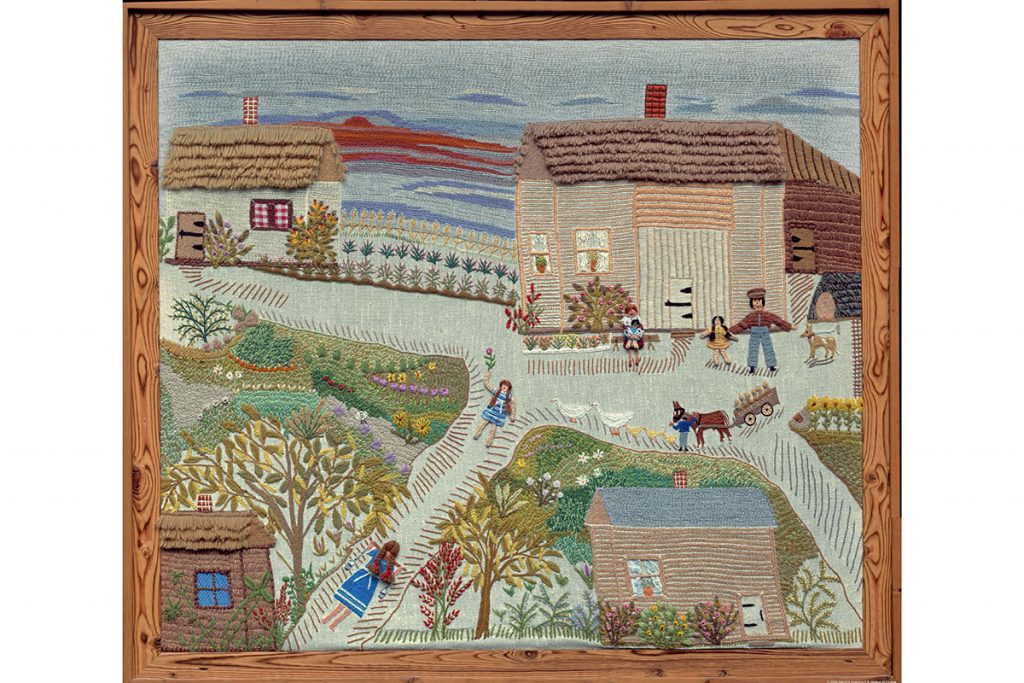
In 2001, when Baltimore’s American Visionary Art Museum first exhibited the 36 hand-embroidered collages created by Holocaust survivor Esther Nisenthal Krinitz, visitor response was overwhelmingly positive.
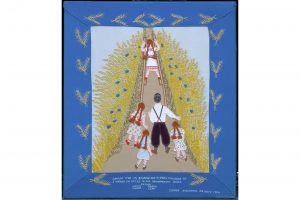
The collages, made by Krinitz between 1977 and 1999, tell the amazing and tragic story of the late Polish-born artist and her Jewish family’s attempts to escape from the Nazis during the Shoah. They were displayed again in 2019 as part of an expanded exhibition titled “Esther and the Dream of One Loving Human Family.”

At that time, Rebecca Hoffberger, the museum’s founder (and currently its interim artistic director), told Jmore the expanded exhibition’s goal was “to juxtapose the power of Esther’s work and story with the experience of other innocent victims of cultural genocide.”
To that end, the exhibition includes works by artist and humanitarian Lily Yeh, whose works depict life in Rwanda prior to, during and after the 1994 genocide there; pen-and-marker drawings by Rwandan survivor Niyonsaba Esperane; and reproductions of documents such as the 1807 “Mother’s Day Proclamation” by abolitionist and poet Julia Ward Howe.
Although the exhibition was slated to close in February of 2024, Gage Branda, the AVAM’s development and curatorial coordinator, said it is now expected to run for at least another year.
“[Krinitz’s] work has been a fan favorite,” said Branda. “We showed her in 2001, and when we announced we were bringing it back in 2019, everyone was super-excited. It kind of just makes sense to keep it up.”
Branda noted that the AVAM works closely with a Washington, D.C.-based nonprofit called Art and Remembrance, which is led by many of Krinitz’s family members to use “art and personal narrative to recognize individual courage and resilience, and to foster understanding and compassion for those who experience injustice.”
Said Branda: “Art and Remembrance lent us the artworks and we are still doing workshops with them. Like in October, we did a collaboration with them on [a program titled] ‘Creating Art, Creating Change: Art as a Tool for Social Justice.’ We brought in Stoop Stories to tell some stories; explore the connections between racism and antisemitism; and the transformative power of art and story to counter hate and build a thriving democracy.
“So we have programming that’s built around this [exhibition] and the general idea of tolerance that we still want to continue to play out. It is helpful to have art up that is representative of that pretty directly.”
Though the decision to extend the exhibition predates the Oct. 7 terrorist attacks in southern Israel and the ongoing war between Israel and Hamas in Gaza, Branda acknowledged that “Esther and the Dream of One Loving Family” is more relevant than ever.
“We opened the exhibition in 2019,” said Branda, “to deal with issues of intolerance that, unfortunately, have only become more visibly relevant.”
The AVAM is located at 800 Key Highway in Federal Hill. For information about the AVAM and “Esther and the Dream of One Loving Family,” visit avam.org.
Filmmaker Justin Schein looks at wealth and inequality through the very real story of his late father.
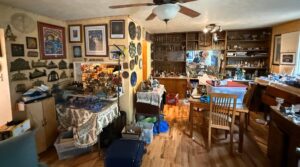
For 35 years, the late Deborah Brodie, aka Bubbie Cookie, amassed a collection of over 200 Jewish ritual objects, which she used to teach her Hebrew school students with special needs.
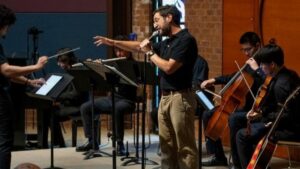
Conceived by Columbia resident Benjamin Kintisch, "Life Review: The Hospice Musical" offers a thought-provoking and occasionally amusing perspective on mortality.
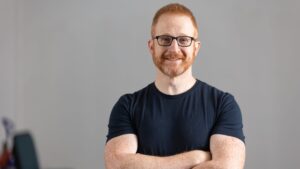
Steve Hofstetter, who will perform at Soundstage next week, recently made headlines for his social media post ridiculing some fans' warnings about Charm City's safety.