
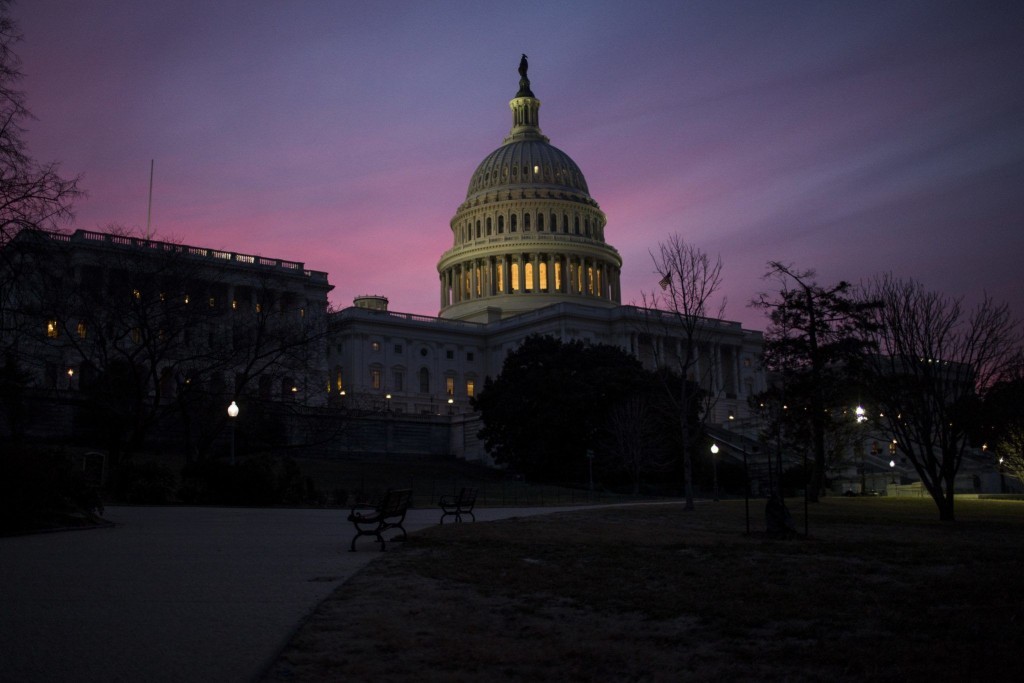
Last Saturday, Jan. 18, two days before Donald Trump’s presidential inauguration, we drove to Washington, D.C., but found images of yesteryear’s East Berlin instead.
From the top of Capitol Hill stretching for 30 miles all around, we were shadowed by black-and-gray, eight-foot-high, no-scale metal fencing on every street. The nation’s capital, the heart of freedom and democracy, felt like a military camp.
East Berlin had its famous wall, which symbolized decades of the Cold War; for the moment, Washington has its fencing, which seems a chilling preview of America at war with itself.
The fencing surrounded the U.S. Capitol, Lafayette Square, the Treasury Department, the Smithsonian museums and many more government buildings. Police were splayed about. Reportedly, 25,000 law enforcement people were on their way.
All of this was security for the Jan. 20 inauguration, although plans were changed when the incoming president looked at weather forecasts and announced the ceremonies would be moved indoors.
On Saturday, there were six of us who’d driven to Washington. We wanted to see the exhibit on French Impressionist painters at the National Gallery of Art. The paintings were gorgeous, though the waiting line to see them was 90 minutes long.
While we waited, we pondered the thousands of metal chairs lined up on the mall outside, stretching from the U.S. Capitol to the Washington Monument. They were there to make inauguration spectators comfortable.
Recalling Trump’s petulance eight years ago over crowd size at his first inauguration, some were speculating he’d ordered this inauguration inside because he feared seeing rows of empty seats after the anticipated Sunday snowfall.
The six of us, remembering a time when visits to Washington seemed sunlit and open and welcoming, found the miles of fencing depressing — and yet appropriate.
Trump reenters the White House with Americans’ nightmare memories of his last big event at the U.S. Capitol — the violent insurrection he unleashed four years ago — and the ensuing lies about his election loss, the promises of “retribution” against anyone who has crossed him, and his promises of immigrant round-ups that might evoke images of another time in Berlin.
It’s anticipated that all these miles of steel fencing will come down soon. In the meantime, depressing as they are, they seem a metaphor for the country’s mood and a harbinger of confrontations to come.
A former Baltimore Sun columnist and WJZ-TV commentator, Michael Olesker is the author of six books, including “Journeys to the Heart of Baltimore” (Johns Hopkins University Press) and “Michael Olesker’s Baltimore: If You Live Here, You’re Home” (Johns Hopkins University).

The Orioles' weak defense plays a major role in the nightly carnage, writes Michael Olesker.

Jmore Publisher Scott Rifkin, M.D., reacts to President Donald Trump's latest poll numbers and the real force behind the growing decline of the Trump movement.

For 35 years, the late Deborah Brodie, aka Bubbie Cookie, amassed a collection of over 200 Jewish ritual objects, which she used to teach her Hebrew school students with special needs.

Last weekend's Flower Mart once again demonstrated that there's nothing to fear about downtown Baltimore, writes Michael Olesker.