
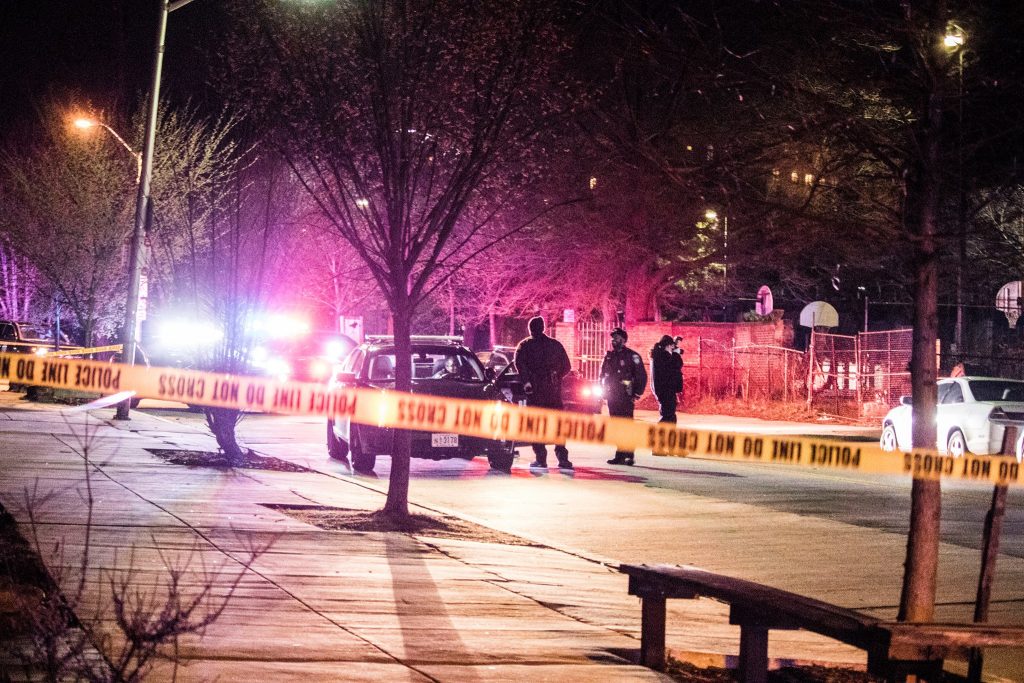
Big deal, we’ve got a few politicians who dutifully lined up to applaud Baltimore Mayor Brandon Scott’s new plan to cut street crime.
Now let’s await reaction from the people who actually matter in that struggle: those who still live in the neighborhoods of the city, and those who live in the counties and say they’re too damned scared to venture back into the city they used to call home.
The last decade has taken a lot out of Baltimore — not only about 3,000 lives cut short by gunplay but a sense that this was a city of charm and vibrancy, a city where it was safe to move around, a city with a future.
It’s hard to sustain that kind of image when the daily news coverage contains so much carnage.
The city’s population, once nearly a million, has dropped to roughly 600,000. But that’s just a number. Since the 2015 Freddie Gray rioting, which was burned into everyone’s emotions via relentless TV coverage, I hear friends who live in the suburbs saying they’ll never go downtown again.
They sound like the suburbanites of the 1968 post-riot years, scared to death until they saw the Baltimore renaissance fueled by feel-good annual City Fairs, ethnic festivals, neighborhood revivals and the glory years of Harborplace.
Now they mention neighborhoods that have always been considered safe — neighborhoods that are, in fact, doing quite nicely — and say they’re afraid to go there.
Some of these neighborhoods have had isolated, aberrant but highly publicized moments of crime. Others haven’t had any heart-stopping troubles, but they’re branded anyway just because they’re inside city limits.
How do you change that brand?
That’s a big part of the problem facing not only Mayor Scott but all those who want to believe the city’s heart still beats from more than reflex. What’s important is not only crime but perceptions of crime, and perceptions that somebody’s actually starting to get some control over it.
How do you convince people that the city’s safe when the primary message pounded into our brains each day says otherwise?
Communities get their self-image by what’s reported each day in its mass media. But what’s happened to our old mass media?
There was a time when the daily newspapers were fat and happy, and had space to run stories reinforcing Baltimore’s sense of life and energy and funky idiosyncrasies.
But who reads the daily newspaper today? The Sun’s print circulation is roughly one-sixth of what it was just 15 years ago. And those who still read it see a skeletal version of its former self, so scaled down that there’s barely room for much local coverage beyond the routine cops-and-courts coverage.
And those who still watch local TV news — whose audiences have shrunk to about one-fifth of what they were barely a decade ago — are still finding the old adage is true: “If it bleeds, it leads,” night after bloody night.
So how does Baltimore change the perception that it’s a city on the skids?
It’s nice that this mayor has offered a thoughtful plan to fight crime. It’s nice that several political leaders have lined up to praise the effort.
But now comes the real fighting — to actually tame crime. And, somehow, to convince people that the big change has finally arrived, and it’s safe to venture into the city once again.

A former Baltimore Sun columnist and WJZ-TV commentator, Michael Olesker is the author of six books. His most recent, “Front Stoops in the Fifties: Baltimore Legends Come of Age,” was reissued in paperback by the Johns Hopkins University Press.

A new biography on the creator of "Doonesbury" misses the mark, writes Michael Olesker.
What does it mean to be fully present with each other and the sacred, asks Maryland-born cultural anthropologist Alanna E. Cooper.
As millions mourn the passing of Stephen Colbert from the airwaves, Michael Olesker looks back on the "institution" of late-night TV.

As he gets ready to leave for California, Rabbi Daniel Cotzin Burg looks back on his time in Baltimore and his 10 years writing for Jmore.