At the close of World War II, as the boys began marching home, Baltimoreans were still marching off to movie theaters. We had 105 of them in the city, which blinked their lights for the last time and went dark one by one after the arrival of a new appliance called television.
Who needed to spend money at a theater when Uncle Miltie and Howdy Doody were free in our living rooms?
Today, in the city of Baltimore, we’re left with a literal handful of movie theaters, newly reduced by one with the announcement the other day that the historic Parkway Theatre, at North Avenue and Charles Street, is closing its doors for the foreseeable future.
Blame it on COVID this time. And then blame ongoing anxiety among movie-goers about gathering in close quarters even with the end of the pandemic’s restrictions on crowd capacity.
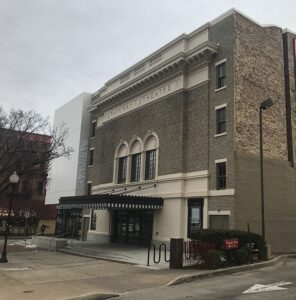
The Parkway’s one of the grand old ladies of entertainment venues around here. Built as a vaudeville and movie house in October of 1915, the theater pre-dated talkies.
We’re talking serious history here, folks.
But this won’t be the first time the Parkway’s had to go dark. By the early 1950s, the Parkway was part of the lengthy death march of American movie houses.
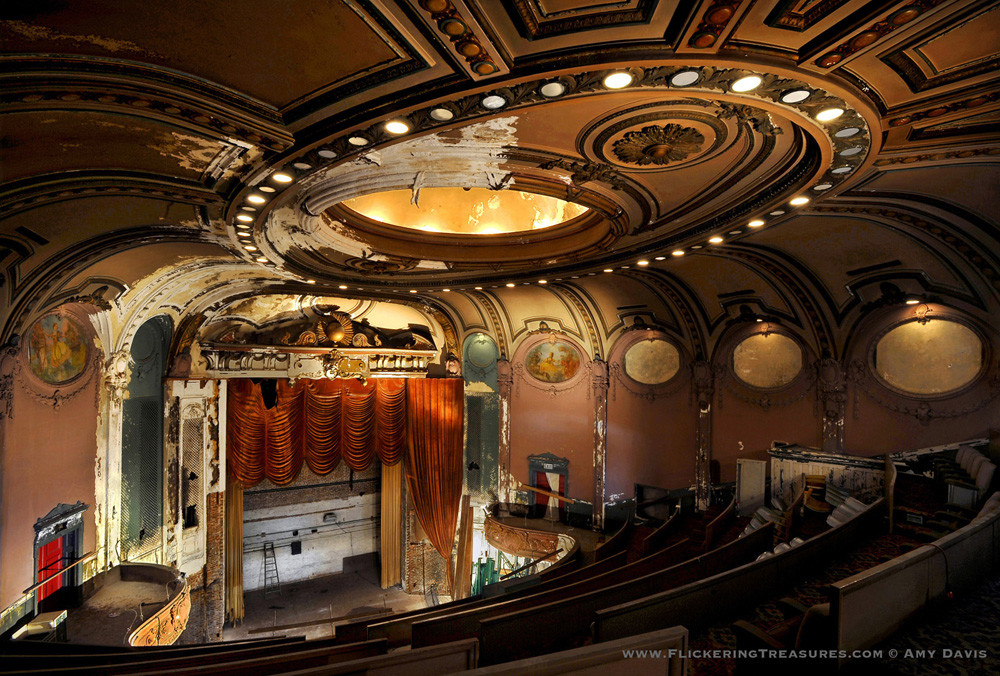
In her terrific photo-and-text book, “Flickering Treasures: Rediscovering Baltimore’s Forgotten Movie Theaters” (Johns Hopkins University Press), photo-journalist Amy Davis writes:
“The arrival of television and the growth of the suburbs after World War II delivered a double wallop to city theaters. … But the downtown palaces and the neighborhood movie houses had functioned as cultural anchors, communal destinations, and economic magnets in their communities.”
Those 105 city theaters at war’s end steadily disappeared. By 1970, the number was down to 51. By 1980, there were 25. Then, a dozen by 1990 and just eight by 2000.
Think of the ghostly, shuttered theaters of Northwest Baltimore alone: the Ambassador and the Crest, the Uptown and the Avalon, the Gwynn and the Forest.
But the Parkway kept coming back. Closed in 1952, it reopened in 1956 under a new name, the Five West. Its opening film was “The Lady Killers,” one of that era’s great British black comedies, starring Alec Guinness and a young Peter Sellers.
In 1978, the theater closed again, and then reopened for a couple of years specializing in African-American films.
Then, as Davis described it, “For the next 16 years, the only sound heard inside was the occasional thud of falling plaster.”
Then came the Maryland Film Festival, a dedicated champion of independent movies. They rehabbed the interior and reopened the Parkway in 2017 at a cost of $18 million, “restored her to her original polish, wearing her chic patina of decay like the royal vestments of a cinema princess … a fairy tale’s happy ending,” writes Davis.
Well, not quite.
The intentions were great, but not the timing.
As leaders of the Maryland Film Festival’s board of directors said in a prepared statement last week, “After a difficult few [COVID] years, we fully reopened the Parkway theater in 2022, excited about the promises of audiences returning and our future as a vibrant hub for film and media.
“The slow economic recovery, challenges and changes in the film industry, and shifts in movie-going habits have thwarted our efforts. … We have brought moving art and a community service in a beautiful venue to the people of Baltimore, with people who are from, and of, Baltimore.”
Hopefully, the Parkway will breathe fresh air again. We could use a few happy endings in the movie business, where the curtain is falling all over town, and all over America.
Michael Olesker’s latest book, “Boogie: Life on A Merry-Go-Round,” was recently published by Apprentice House. It’s the life story of Baltimore legend Leonard “Boogie” Weinglass, an original “Diner” guy who grew up to create the Merry-Go-Round clothing chain and contribute millions to charity.
What does it mean to be fully present with each other and the sacred, asks Maryland-born cultural anthropologist Alanna E. Cooper.
As millions mourn the passing of Stephen Colbert from the airwaves, Michael Olesker looks back on the "institution" of late-night TV.

As he gets ready to leave for California, Rabbi Daniel Cotzin Burg looks back on his time in Baltimore and his 10 years writing for Jmore.