

“You shall count from the eve of the second day of Pesach, when an omer of grain is to be brought as an offering, seven complete weeks. The day after the seventh week of your counting will make fifty days, and you shall present a new meal offering to God.” (Lev. 23:15-16)
During the Counting of the Omer — the 49 days between the observances of the holidays of Passover and Shavuot — it is customary to study a chapter of Pirkei Avot, or Ethics of the Fathers, each week.

In the spirit of that tradition, Beth Tfiloh Synagogue’s Rabbi Dr. Eli Yoggev has written a series of columns on Pirkei Avot for each of the six weeks of the Omer, from the conclusion of Pesach through Shavuot. (See also: Sacred Dust and Avoiding Toxicity)
Rabbi Yoggev is the author of “Ethics of the Soul: Uplifting and Relevant Commentary on Ethics of the Fathers.”
Beware of Judging Others Based on Their Public Persona
(2:5)
הִּלֵל אֹומֵר: ַאל ּתִפְר ֹׁש מִן הַּצִּבּור, וְַאל ּתַאֲמִין ּבְעַצְמְָך עַד יֹום מֹותְָך, וְַאל ּתָדִין אֶת חֲבֵרְ ָך עַד ׁשֶּתַּגִיעַ לִמְקֹומֹו. וְַאל ּת ֹאמַר ּדָבָר ׁשֶאִי אֶפְׁשָר לִׁשְמ ֹעַ, ׁשֶּסֹופֹו לְהִּשָׁמַע. וְַאל ּת ֹאמַר לִכְׁשֶאִּפָנֶה אֶׁשְנֶה, ׁשֶּמָא ֹלא תִּפָנֶה.
Hillel said: Do not separate yourself from the community, do not trust in yourself until the day of your death, and do not judge another until you have reached their place. Do not say something that cannot be understood [trusting] that in the end it will be understood. Say not: “When I shall have leisure I shall study;” [because] perhaps you will not have leisure.
The Meiri explains the final part of the first statement in a creative way: don’t judge others until you see how they act in their home (“their place”) and away from the public eye.
You can never really know someone based on how they present themselves to others in public. For instance, many people can be very stressed out around large groups. Maybe they say silly things or become very quiet in these settings. Or maybe the opposite happens. Refrain from judgment at these and similar times. Get to know people on a personal level. You may find they are completely different from what you originally thought!
2:9
Don’t Hold on to the Good Solely for Yourself
רַ ּבָן יֹוחָנָן ּבֶן זַּכַאי קִּבֵל מֵהִּלֵל ּומִּשַּׁמָאי. הּוא הָיָה אֹומֵר: אִם לָמַדְּתָ תֹורָ ה הַרְ ּבֵה, ַאל ּתַחֲזִיק טֹובָה לְעַצְמְָך, ּכִי לְכְָך נֹוצָרְ ּתָ.
Rabban Yochanan ben Zakkai received [the oral tradition] from Hillel and Shammai. He used to say: If you have learned much Torah, do not claim credit for yourself [lit., do not hold onto good for yourself], because for such a purpose were you created.
The first part of our mishnah teaches that if one “learned much Torah,” they shouldn’t take credit for it. Why not? The mishnah’s answer is: “For such a purpose you were created!” Some understand this as referring to a debt we all owe Hashem. Hashem created, sustains, and supports us. In return, we demonstrate allegiance through learning Hashem’s Torah.
Our mishnah says we shouldn’t take credit for learning much Torah because this is just us paying back our debt to Hashem. It’s the equivalent of someone who owes money to a store owner. Upon returning their debt, they shouldn’t take credit because they paid what they owed. Similarly, we shouldn’t take credit for our expanded Torah learning because we were just doing what we were created to do!
The Mesillat Yesharim, in its discussion on humility, takes this in another direction. The words אל תחזיק טובה לעצמך, translated above as “taking credit for oneself,” are explained literally as “do not hold (אל תחזיק) onto good (טובה) (solely for yourself (לעצמך) .” Based on this reading, we are being urged to share our blessings with others and to not hold on to them for ourselves.
One who possesses an honest intellect, even if they have merited to become a great sage and truly distinguished, when they look and contemplate, will see that there is no room for haughtiness and pride. For behold, one who possesses high intelligence, who knows more than others, merely does what it is their nature to do. They are like a bird which flies upward because of its nature or an ox which pulls with its might because of its nature. So, too, for one who is wise. This is because their nature brings them to this. But for another person who is currently not as wise if they had possessed natural intelligence would also have become just as wise. Hence, there is no room to elevate and pride oneself in this.
Rather, if one possesses great wisdom, behold, they are under duty to teach it to those in need of it, similar to the statement of Rabbi Yochanan ben Zakkai: “If you learned much Torah, do not hold onto it for yourself since for this you were created!” (Mesillat Yesharim, ch. 22)
This excerpt from Mesillat Yesharim appears to be offering an alternative interpretation to the ending of the statement: “Because for this you were created.” We were each created differently by Hashem, some with more intellectual capacities than others. Why? So that we can offer our services to others. This is such a beautiful teaching. There is no room for haughtiness because our skill level and talents were all decreed by Hashem. Indeed, we should do the opposite of being haughty! We must use these blessings to make others’ lives better — “since for this were we created” with this talent!
For information about “Ethics of the Soul,” click here.
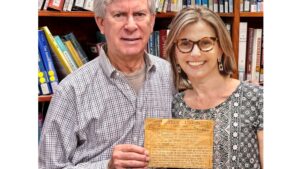
Duke Zimmerman and Lori Gale will talk at Towson University about their new book "People Get Ready" and the role played by Globe Posters in the civil rights movement.

One of the most competitive local races for public office this political season is for Baltimore County Executive. Jmore recently spoke with four of the candidates about their views on how they hope to enhance life in the county.

A former U. S. Marine, Pat Young has served as a Baltimore County Council member representing District 1 since 2022.
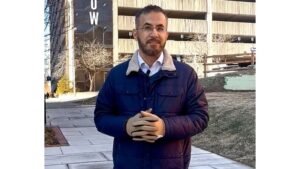
Mansoor Shams is known for carrying around a sign proclaiming, “I’m a Muslim and a U.S. Marine. Ask anything.” Now the Baltimore County Department of Recreation and Parks community engagement and outreach officer is running for Baltimore County Executive.