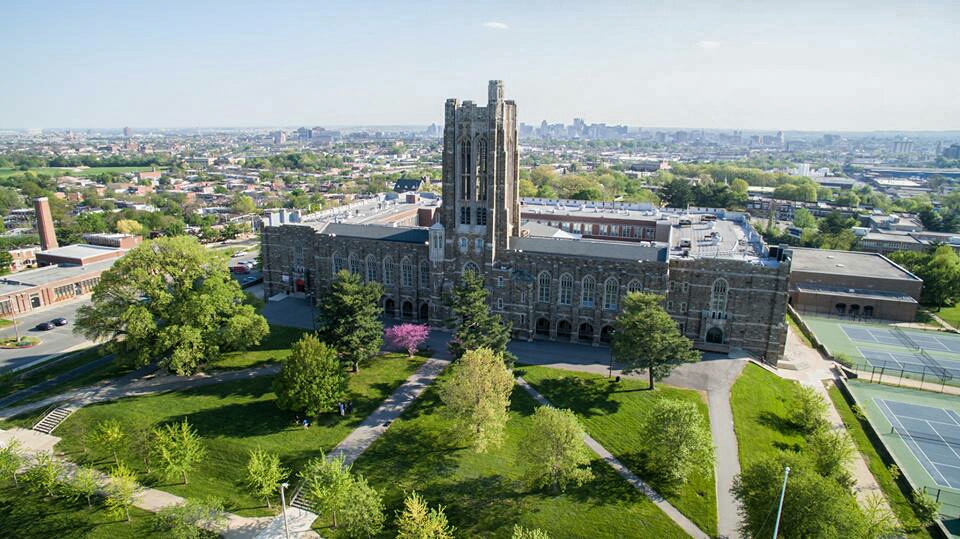
I approached my high school reunion the other day filled with sunny nostalgia and thinly veiled sorrow. There were many old classmates I wanted to see, but many more forever absent with not a single note from any mothers.
Their deaths measure the passage of time — 60 years — since we finished our high school days at Baltimore City College, across 33rd Street from a ballpark called Memorial Stadium, next door to the old Eastern High School.
Now Memorial Stadium’s long gone, and so is Eastern High. And out of 756 students (all male in those days) from City’s class of ’63, there are more than 200 who have run the full length of their lives.
Where do the years go, and where do the friends go who once brightened our run?
My class entered City in the twilight of the Eisenhower years and exited just before the curtain descended on John F. Kennedy’s “Camelot.”
Most of us took two cross-town buses to get to school. Student bus passes were a dime until one day the old Baltimore Transit Company decided to raise the price to an unconscionable 15 cents.
That very afternoon, the bus home from City broke down. And there came a bellow from the rear of the bus: “Sure, now raise the price another nickel!”
On our first day of school, we heard a principal named Henry T. Yost greet us with words that have stood the test of time: “Gentlemen, you have passed your first intelligence test by choosing City College as your high school.”
And we heard a track and cross-country coach, Jerry Nathanson, tell us, “The hell with race or religion and all that stuff. You’re either a man or you’re not.”
At a school that drew teenage boys from every corner of town, and every kind of background, those were healing words and felt like an official declaration of brotherhood– and that sentiment lingered at the heart of our reunion 60 years later.
That Class of ’63 produced a remarkable 12 finalists in the National Merit Scholarship competition (none from my homeroom, but I heard rumors) and also helped City win a stunning 14 varsity athletic championships over three years.
That year’s class has distinguished itself in many ways over the years. There’s U.S. Rep. C.A. “Dutch” Ruppersberger. And Tony Hawkins, whose leadership helped bring us the original Harborplace. And Alex Gabbin, a professor at James Madison University so revered that the school named a building after him.
Anybody else out there had a building named after you lately?
In my time at City, we had some remarkable students. One semester, Jay Berzofsky’s A-Course grade point average was 99.2. (When my mother heard about this, she asked, “Why can’t you get a 99.2 average?” “Mom,” I explained, “I can’t even get my temperature to go to 99.2.”)
Berzofsky graduated with an overall 98.46 average. And there was Stephen Margulies, at 96.2. And Victor Lieberman, who was editor of The Collegian in his junior year, president of the Student Government Association as a senior and still had an A-Course average in the mid-90s.
Cindy Harcum attended the Class of ’63 reunion. She’s been City’s principal for more than a decade now. These are not the happiest of times in the public schools of the city of Baltimore. But the story’s a remarkable one at City, which is now 60 percent female.
Each student there has to pass an entrance exam, and they take international baccalaureate courses. This year’s graduating class was offered more than $30 million in college scholarships. Roughly 98 percent of the school’s grads go to college — 92 percent of them at four-year schools.
That’s wonderful news for families across the city of Baltimore, hungry for a respectable public school system to educate their children.
Sixty years ago, we left City College knowing we’d held high the traditions at the nation’s third-oldest public high school. It’s wonderful to know that the kids at City are doing the same.
Michael Olesker’s latest book, “Boogie: Life on A Merry-Go-Round,” was recently published by Apprentice House. It’s the life story of Baltimore legend Leonard “Boogie” Weinglass, an original “Diner” guy who grew up to create the Merry-Go-Round clothing chain and contribute millions to charity.
What does it mean to be fully present with each other and the sacred, asks Maryland-born cultural anthropologist Alanna E. Cooper.
As millions mourn the passing of Stephen Colbert from the airwaves, Michael Olesker looks back on the "institution" of late-night TV.

As he gets ready to leave for California, Rabbi Daniel Cotzin Burg looks back on his time in Baltimore and his 10 years writing for Jmore.