

What makes Jews still want to be Jews in an environment and era when they don’t really have to be? After all, you can easily get by “being” Jewish without knowing how to daven or all the tunes from “Fiddler.” Maybe you don’t even know where to get a decent bagel in town or never watched “The Marvelous Mrs. Maisel.”
American Jewry has grappled with this issue of Jewish identity and community retention for decades. But with a generation coming up with a completely different perspective on so many things, that conundrum is more profound than ever.
On Jmore’s website, Associate Editor Simone Ellin recently interviewed Sandra Fox, a Brooklyn-based Jewish academic and author of “The Jews of Summer.” The book explores how the summer camp phenomenon shaped American Jewry of the 20th century, but also offers potential glimpses into the community’s future.
One thing clear from the interview with Fox is that the old notions and conventional wisdom are simply not going to float for this generation of young Jews, who tend to think more progressively and universalistically when it comes to matters Jewish and otherwise.
For instance, when asked if Jewish summer camps can promote community continuity — which many leaders have advocated for generations — Fox expressed her doubts. Part of the reason is because historically, the community has always gauged “success” by intermarriage rates and commitment to Israel.
“I think this is maybe my point of view as a millennial. … More and more, as I see friends of mine who are Jewishly involved marry people who aren’t Jewish and still raise Jewish kids, it just feels so outdated to think that is the sign of success,” Fox said. “What was the historical process that led you to think of rates of intermarriage or supporting Israel [as] signs of where the Jewish community is? Where did those ideas come from and how did that expectation impact young Jews personally? In terms of their Jewish identities, I think it can actually lead to a lot of harm.”
That might sound like heresy to some, considering the community’s emphasis on supporting Israel, warts and all, combatting antisemitism and general aversion to intermarriage (despite its prevalence). But I’ve heard similar viewpoints expressed by other young Jews regarding their lack of concern for Israel and indifference about the faith of their future spouse. That might upset some people, but generally speaking it’s the reality.
In the Jewish community and elsewhere, we do a pretty good job of alienating, belittling and underestimating young people, especially with some of our strongly held beliefs that may have outlasted their shelf life. We’re dealing with a generation quite comfortable with concepts largely unheard of — like gender dysphoria and environmental equity — when many of us were coming up.
From my perspective, young Jews — like young Americans of all faiths — don’t want to assimilate everything that previous generations have handed down to them. They want to think critically and consider all the perspectives and dimensions of a situation, without baggage or biases.
I have a friend whose young adult kid espouses a decidedly different political viewpoint. He’s often surprised when people ask how his kid came to such a radically opposing perspective on issues of the day.
“Isn’t that how we’re supposed to raise them,” my friend says, “to think for themselves and not just parrot what we say and think?”
He makes a good point. We’d do well to listen carefully to what younger members of our community have to say. We might even learn something.
Sincerely,
Alan Feiler, Editor-in-Chief

The Orioles' weak defense plays a major role in the nightly carnage, writes Michael Olesker.

Jmore Publisher Scott Rifkin, M.D., reacts to President Donald Trump's latest poll numbers and the real force behind the growing decline of the Trump movement.

Last weekend's Flower Mart once again demonstrated that there's nothing to fear about downtown Baltimore, writes Michael Olesker.
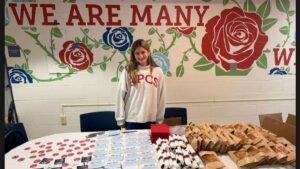
A junior at Roland Park Country School, Katie Grossman writes about a recent experience that spurred her to take action to fight antisemitism.