
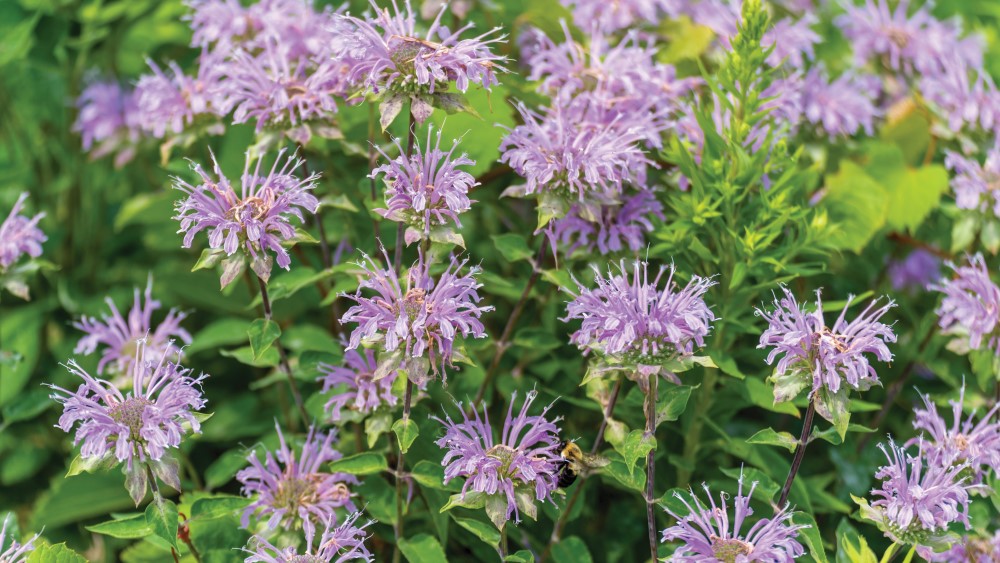
Native plants are the unsung heroes of the garden, embodying a region’s natural heritage.
Simply put, native plants are those that have evolved in a specific region over thousands of years, so are perfectly adapted to its climate, soil and wildlife. These plants have a special relationship with the local ecosystem, providing essential habitat and sustenance for native wildlife while requiring minimal maintenance from gardeners.
From promoting environmental sustainability to creating vibrant and resilient gardens bursting with life and color, there are myriad benefits to incorporating native plants into your landscape.
Digging Taxonomy
To understand native plants, it’s helpful to understand a bit about taxonomy (the categorization of biological organisms such as native plants) in Maryland.
Between 1748-1750, the famous Swedish botanist Carolus Linnaeus and his student Peter Kalm, named and described many native plants in the Old-Line State. In fact, Linnaeus named the flowering Kalmia plant after Kalm. Taxonomy continued through 1910 and culminated in the excellent publication “The Plant Life of Maryland” published that same year.
Flash-forward to the early 1990s and taxonomy utilized DNA in the identification of plants.
Baltimore Natives
Plants do not follow the political boundaries that define our states, so matching ecological boundaries with political ones can be difficult. It’s important to note that Baltimore County and City are in the coastal plain and piedmont physiographic regions. A plant which is grown outside those regions, is not considered indigenous even though it has the same Latin binomial of genus and species.
Likewise, when growers attempt to change the characteristics of a plant’s height, color or disease resistance by cross pollinating plants of the same species, they can no longer be considered native. One example of this is in the case of the Panicum virgatum, switchgrass, a native perennial.
Growers altered this species to create a plant with deeper burgundy leaves and pinkish flower spikes that they named Panicum virgatum ‘Shenandoah.’ In another example, growers crossed C. florida, a native species with C. kousa (Kousa Dogwood) to produce a new cultivar which has the best traits of each species. The DNA of the cultivar is no longer considered a native plant.
Buying Native
One way to ensure that you’re buying a true native plant, is by taking along the U.S. Wildlife Service’s reference guide, “Native Plants for Wildlife Habitat and Conservation Landscaping: Chesapeake Watershed.” Before purchasing, be certain the plant is a straight species, not a cultivar or a variety and inquire about the plant’s origin and source.
Referring to plants by their Latin binomial instead of their common names will also help to clarify that you mean to buy a straight species or native plant.
Happy gardening!
Rebecca Brown began her career as a horticulturist more than 25 years ago and studied at the New York Botanical Gardens. She has been a University of Maryland, Baltimore County master gardener for six years and is a backyard beekeeper.
Norman Cohen is a retired chemist. He has been gardening for 40 years and has been a University of Maryland, Baltimore County master gardener for 14 years. Cohen also provides gardening education to the public at local farmers markets.

Emma Snyder, owner of The Ivy Bookshop, offers recommendations for must-read titles for adults and children.

Schwab currently serves as president of Cumberland's historic B'er Chayim Congregation.

The Jerusalem Orchestra East & West, which arranged the program for young musicians, blends Western orchestral music with Middle Eastern traditions.

Pikesville resident and entrepreneur Luna Rosendorff discusses what she's seeing these days in the world of contemporary interior design.