
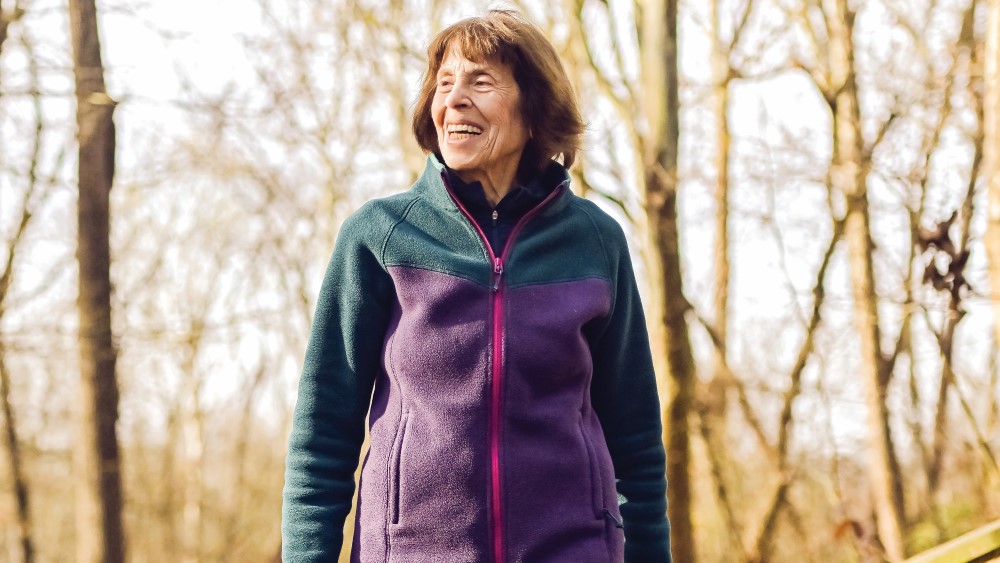
Perpetual movement is a big part of Joyce Wolpert’s existence.
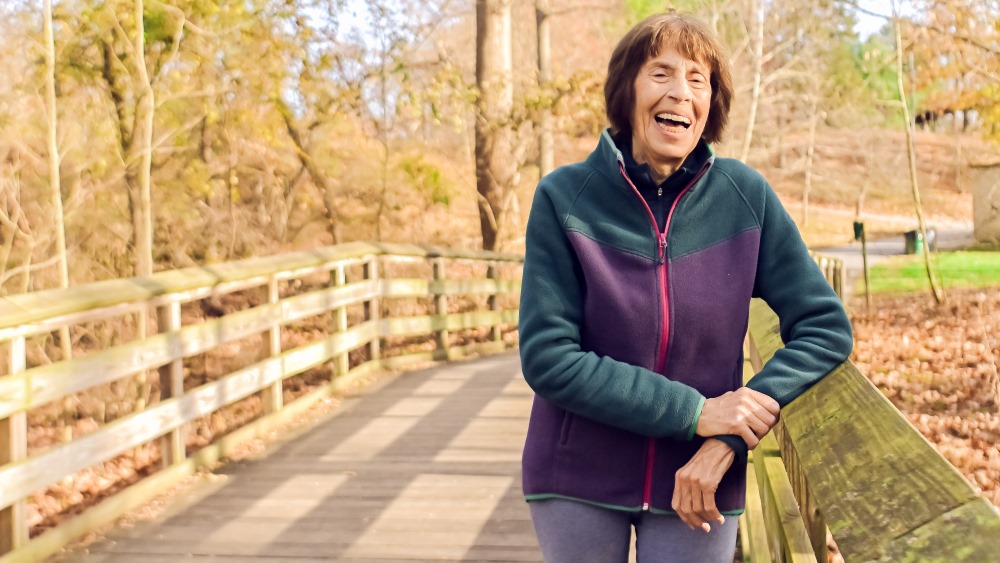
Most weekends, you can find the 80-year-old Wolpert, a dance therapist, creative writer and holistic counselor, hiking several miles along the leafy trails of Lake Roland, Patapsco Valley and Gunpowder Falls state parks, or Shenandoah National Park in Virginia.
And during the week, she’s constantly on the move, too, whether it’s tending to work commitments or personal appointments, visiting friends and family, or strolling around her community.
“I’m not a hermit. I try to move and be active,” says Wolpert, a slender Park Heights resident who’s frequently told she looks much younger than her age. “I love my routine — yoga, Pilates, weight lifting, walking a mile or two every day and taking major hikes on weekends. I never feel more whole than when I’m outside or in the woods.”
It’s a way of life she tries to impart to her peers. Besides being a senior herself, Wolpert has worked and taught for many years at local senior centers, nursing homes and assisted living facilities, including the Edward A. Myerberg Center and Levindale Hebrew Geriatric Center and Hospital.
Among the classes she has taught is one titled “Meaningful Movement,” which could be considered her life’s credo.
“It’s not just about being active, but what is your purpose? That’s something defined by each person,” Wolpert says. “You have to want to go from here to there. It takes a lot of energy. Otherwise, you’re just sitting in a rocking chair and thinking about your body falling apart. Everyone needs a sense of purpose in their lives.”
A Northwest Baltimore native, longtime vegan and licensed clinical professional counselor, Wolpert wholeheartedly embraces the concept of “aging gratefully” and counts her blessings.
But at the same time, she feels that our culture often negates, misunderstands or marginalizes the needs of seniors.
“Aging is a mixed bag,” she says. “You want to feel good and strong and there are a lot of activities for you, but some days you’re just not up to it. You get exhausted more easily and need to sleep more.”
The straight-talking Wolpert considers herself an advocate for the elderly. She notes that there are many excellent programs and resources in the community, but more needs to be available for seniors. For example, she suggests more mental health services, and her personal crusade is working toward the repairing of broken or cracked sidewalks in her own Park Heights community to prevent pedestrian injuries.
“Falling is the major cause of accidental deaths among seniors,” Wolpert says. “Everyone says it’s not in their purview [to repair sidewalks] ,or that they’ll do something and don’t. The words come out, but the actions don’t always follow.
“Some people think I’m a thorn because I’m always complaining,” she says with a chuckle. “But I like to think I’m right. Ageism is real and it’s invisible. My experience is that people don’t pay attention to you [when one is older]. You’re not heard, and people conclude that you’re inferior — in technology, in driving and other things. They think you’re not up to par and don’t want to follow what you have to say. People don’t want to look at what it’s really like to be older.”

(Photo by David Stuck)
Working for decades on improving the lives of seniors, Wolpert says she has witnessed firsthand how her efforts and those of her colleagues in the caregiving community have enhanced and prolonged lives. An example she gives was working with a dementia patient at a local memory care facility and watching her remember the hula dance moves she was taught months earlier.
Wolpert readily admits there are benefits to getting older. She calls the aging process “a horizontal growth.”
“The difference between being an adult and a senior is that you are able to see things with a wider vision and not just working toward a goal,” she says. “When you’re a senior, you can navigate a sense of wholeness for yourself. When you’re younger, you’re usually caught up in other demands, like making a living and other responsibilities of life.”
Nonetheless, Wolpert says people should not view getting older through rose-colored glasses.
“As older adults, we have to reconcile what I call our ‘shadows’ — traumas, losses, shame, getting a sense of resolution,” she says. “Otherwise, you wind up angry and anxious for the rest of your life. … There are tons of programs out there for seniors to keep them busy, but the personal needs are not being met. You want to give them a sense of wholeness. We have to talk to them as a person, not just talk down to them or simply give them medicine. I find in general that the mental health of older people is just not addressed.”
‘Do Your Homework’
Despite family assistance and the plethora of community services, seniors have to be self-starters, says Wolpert, who first became involved in elder care during her parents’ later years.
“When it all comes down to it, you’re on your own,” she says. “You can get help, but you’re basically on your own. No one is going to do it for you. You have to decide what you want for yourself and really know yourself. There are a lot of resources out there, but you have to do your homework.
“I’m very grateful for a lot of the medical advances that weren’t there for my parents, and for Medicare and the many groups who want to help,” Wolpert says. “But I’m angry about [the state of] caregiving. It’s such a source of anxiety for so many seniors. Anything can change, nothing is foolproof and prices are through the roof. No matter how well you take care of yourself, things come up. It’s scary. Planning for yourself or a parent or spouse is a lot.
“Some older people don’t like to talk about advocacy or reporting things. It’s hard for people to speak out, and they sometimes feel invisible. Also, they don’t want the pressure of being in the spotlight.”
In her classes, Wolpert, who has a master’s degree in dance/movement therapy from Goucher College, tries to show seniors how the process of movement can enhance their bodies, minds and spirits.
“Dance therapy is a powerful thing,” she says. “You have to get people to loosen up and not be self-conscious. Often, the spirit takes over. Sometimes when you’re not feeling 100%, another part of your body takes over. It’s an inspiring thing.
“Our bodies can be a healing resource as well as a source of pain,” she says. “I’ve been doing yoga since I was 25, and I’ve taught yoga to people from 2 years old to 102. To me, if there was only one subject taught at every school, it would be yoga. It’s body, mind and spirit, and it creates a receptacle to process and work things out.”
Mental As Well As Physical
With physical limitations and mental deterioration, succumbing to depression and loneliness is common among seniors, Wolpert says.
“When you’re younger, you feel like you can fix things,” she says. “But when you’re older, depression is a big part of it all. So it all comes down to energy and rhythm, doing your own dance. The world tells you what you should be, you have to decide what you want to be.”
That extends to quality of life. Wolpert notes that her 104-year-old aunt participates in a peer book club over Zoom, “which she calls a literary circle. They research a book and plot and author. It keeps their minds active and sharp. She also gets a lot of visitors because she’s very fun to be with and doesn’t lecture people.”
Besides staying active, Wolpert recommends that seniors constantly focus on their self-care, including their diets, exercise regimens, financial well-being and health care providers.
Also, she says maintaining a positive but balanced attitude is crucial. “In my experience, feeling like you’re part of something is really important — a belief, even if it’s not as part of a group,” Wolpert says. “For me, Judaism is very important. I truly believe in what the Talmud says, that if you save one life you’ve saved a world.”
The key to self-care among seniors is self-acceptance, she says.
“You just have to keep trying to do your best and live your best life,” Wolpert says. “And you have to accept who you are if you’re going to have any quality of life.”

The 16-year-old sophomore succumbed to injuries sustained in a car crash last week in Cockeysville.
Schools in Montgomery County have recently experienced a wave of antisemitic incidents.
CCBC Honors scholars are discovering a level of academic rigor and opportunity typically associated with elite four-year institutions.
Filmmaker Justin Schein looks at wealth and inequality through the very real story of his late father.