

Unless you live under a rock, you’ve likely noticed that Greenland has been in the news a lot lately, courtesy of the commander-in-chief.
But does the remote Arctic island of approximately 57,000 inhabitants — most of whom are members of the indigenous Inuit ethnic group — have anything resembling a Jewish history?
Here are seven Jewish factoids and tidbits about Greenland — which has officially been part of the Kingdom of Denmark since 1953 — that you might not know.
1. Jews have maintained a presence of some sort in Greenland since the 16th century, writes Icelandic-born historian Dr. Vilhjálmur Örn Vilhjálmsson in his 2019 book “Antisemitism in the North.” The author writes that industrious Jewish seafarers were among the first whalers who came to Greenland from The Netherlands to ply their trade.
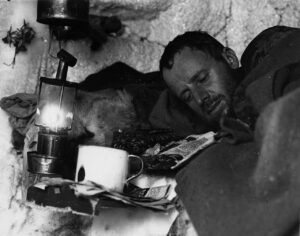
2. In the late 1920s, Berlin-born Jewish polar explorer and meteorologist Dr. Fritz Loewe was among a group of scientists who came to Greenland to study the island’s brutal weather patterns and icy terrain. While trying to reach the center of the island for exploration, Loewe got frostbite and two of his colleagues had to amputate his toes with scissors and a pen knife. In 1932, Loewe – no doubt a glutton for punishment — returned to Greenland with his wife and a German film crew to make a movie about his polar expedition experiences. “S.O.S. Eisberg” came out the following year, starring celebrated German filmmaker and actress Leni Riefenstahl. After losing his position at the Royal Prussian Aeronautical Observatory near Berlin and being denounced as a Jew by a colleague, Loewe fled Nazi Germany and spent the remainder of his life in England and Australia.
3. During World War II, American Jewish military personnel stationed in Greenland received pastoral visits and spiritual guidance from rabbis, courtesy of the National Jewish Welfare Board. One example was Rabbi Julius Amons Leibert, a Lithuanian-born U.S. military chaplain, who conducted High Holiday services in 1942 at bases in Greenland, Iceland and eastern Canada’s Labrador province
4. According to the website aish.com, Greenland in the mid-1950s was home for a while to a nurse named Rita Scheftelowitz, an observant Jew who grew up in Denmark. During World War II, she was saved by her teacher, Gerda Valeniner, a Dutch Resistance activist who in 1968 was recognized as a “Righteous Gentile” by Yad Vashem, Israel’s national Holocaust museum and memorial. Scheftelowitz relocated to western Greenland in 1955 and managed to keep kosher, surviving largely on fish caught off the island’s coastline. In addition, supplies were delivered twice a month, dropped from an airplane, including packages from her mother, containing items such as matzah. After her year in Greenland, Scheftelowitz moved to Israel and met her husband on a kibbutz, but eventually returned to Denmark.
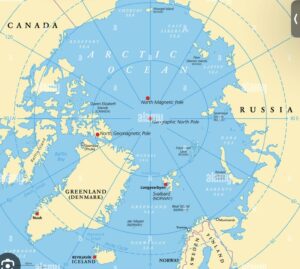
5. At what was then known as Thule Air Base (now Pituffik Space Base) on the northwestern coast of Greenland, a group of U.S. airmen in the 1950s established a makeshift synagogue for worship and services on the installation. Jokingly, they called it “B’nai Thule.” As a result, Dr. Vilhjálmur Örn Vilhjálmsson wrote that Thule at that time enjoyed “the northernmost minyan in the world.” In 1955, more than 50 Jewish service members reportedly attended a Passover seder there.
6. Believe it or not, there is not a Chabad center in Greenland. The closest one is Chabad of Iceland, in the Icelandic capital of Reykjavik. There are also currently no synagogues or minyanim in Greenland.
7. Today, the only known Jewish inhabitant of Greenland is Wisconsin native Paul Cohen, who has lived in the southern Greenland town of Narsaq (population 1,248) since 2001 and works as a translator. He and his German-born wife, Monika, also run a property rental business. “Being a Jew … certainly puts me in a unique position here in this country,” Cohen recently told the Forward. “When I read about the history of World War II in Germany and how countries just fell like dominoes, it’s definitely given me a foundation for understanding some of the forces that are at play here.” But most Greenlanders prefer avoiding the topic of politics and the Trump administration, he said. “You talk about the weather, and you talk about what the fishing is like,” he said, “and it seems like the world around us is sort of going up in flames or something” In another Forward article from 2023, Cohen described living in Greenland in the following manner: “Sometimes, the ice recedes a bit and you find yourself walking on land that hasn’t been exposed for thousands of years. There are days when I feel not only like I’m the only Jew in Greenland but maybe the last person on Earth.”
Information for this article was culled from a number of different media sources.
Duke Zimmerman and Lori Gale will talk at Towson University about their new book "People Get Ready" and the role played by Globe Posters in the civil rights movement.

One of the most competitive local races for public office this political season is for Baltimore County Executive. Jmore recently spoke with four of the candidates about their views on how they hope to enhance life in the county.

Leslie Simmons, executive vice president and chief operating officer of LifeBridge Health, will serve as interim president of Sinai and Grace Medical while a national search is conducted for Shlossman’s successor.

An ambitious new educational initiative seeks to emphasize personalized learning and strengthen Israeli society.