

Though author and marketing professional Kylie Ora Lobell lives in Los Angeles, she wore a Ravens sweatshirt during our recent Zoom interview.
Lobell, in fact, spent her childhood in Charm City. Her memoir, “Choosing to Be Chosen: From Being an Atheist Non-Jew to Becoming an Orthodox Jew” (Wicked Son), traces her journey and points to the role Baltimore’s Jewish community played in her conversion.
Jmore recently spoke with Lobell, 36, whose memoir was published this month and is currently available on Amazon and Barnes & Noble.
What are your connections to Baltimore?
I’m originally from Carney [in eastern Baltimore County]. When I was in high school, my family moved to Mount Washington. We lived off Smith Avenue, near where the golf course used to be before it was developed into housing.
I went to Carver Center for high school, and loved it. A big part of who I am really comes from that experience.
What was that transition like for you?
It was huge. I came from public schools on the east side — places like Pine Grove [Elementary] — and suddenly I was at Carver. It felt like [the TV show] ‘Freaks and Geeks.’ On my first day, there was literally a girl running around with a fake tail. I actually put that story in the book.
Was that when you first encountered Jewish culture?
Yes. It was the first time I knowingly met Jewish people. All my friends were Jewish and lived in Owings Mills, Reisterstown and Pikesville. They were very different from my family — in a good way. My family was quiet and reserved, and we didn’t talk about feelings or say, ‘I love you.’ These kids were loud, expressive, warm and very emotionally open. I felt like I could finally be myself. After being bullied earlier in my life, that feeling — finding my people — was incredible.
Were you raised religious at all?
My [maternal] grandmother was a devout Catholic and tried to baptize us in her kitchen sink. She had images of Jesus suffering on the cross everywhere, which terrified me as a child. I was told I’d go to hell if I wasn’t baptized, and even bedtime prayers focused on death.
On my dad’s side, religion was mostly cultural — Christmas, Easter, that sort of thing.
How did you decide to convert?
My first boyfriend in high school was Jewish, and I attended my first Passover seder at 16 — with only the ‘Rugrats’ Passover episode as background knowledge. I was an atheist, after my grandmother died and my parents divorced, despite praying desperately that neither would happen. I struggled with anxiety and depression through high school and college and had a lot of existential fear, especially about death. I didn’t have anything grounding me.
Throughout college, I kept gravitating toward Jewish friends, but none of them were religious so I wasn’t learning much. Then in my senior year, I met my husband, who had grown up observant but was secular by the time I met him.
Was there a watershed moment?
Early in our relationship, we were broke. I literally had $6 in my bank account. [Her husband] suggested we go to a Chabad dinner for free food and say I was Jewish. That Friday night dinner changed my life. I felt warmth in my chest and stomach I’d never felt before. I suddenly knew — without logic or reasoning — that God existed. That moment set me on the path.
What was the conversion process like?
It took about five years. I started learning in New York through Orthodox spaces, sometimes unintentionally. Every synagogue I stumbled into seemed to be Orthodox. Eventually, we moved to Los Angeles, and continued there. I ended up converting twice because my first conversion wasn’t recognized in Israel. I went to the mikvah again when I was eight months pregnant with my first child. I joke that I’m ‘double kosher.’
We moved into a Jewish neighborhood, lived within an eruv, kept kosher and built our lives around the community. We got engaged at the Kotel in Jerusalem and spent time learning at a seminary and yeshiva there.
How did your family react?
Surprisingly well. My mom understood immediately. It made sense to her that I was seeking community. My sisters are very supportive. When I visit Baltimore, they order me kosher Chinese food.
What inspired you to write this book?
I’d been writing about my journey for years for the [Los Angeles] Jewish Journal, and earlier for online platforms. People kept telling me that my story gave them hope. After Oct. 7th, that felt even more urgent. Antisemitism has intensified and people need strength and reassurance. I wanted Jews to feel proud of who they are, and non-Jews to understand us better.
What do you hope readers take away?
Hope. I call myself a ‘timeline cleanser.’ I want to cut through constant negativity and division. I want people, especially Jews, to feel proud, grounded and less alone. I also want to challenge misconceptions about Orthodox life and explain why people are drawn to it. For me, Judaism was logical, grounding and life-affirming.

Container vegetable gardening is a terrific option for people with limited space and/or time. Rebecca Brown and Norman Cohen share some tips.
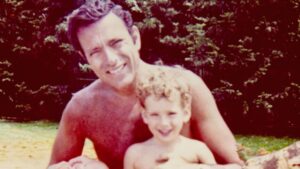
Filmmaker Justin Schein looks at wealth and inequality through the very real story of his late father.
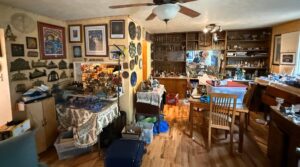
For 35 years, the late Deborah Brodie, aka Bubbie Cookie, amassed a collection of over 200 Jewish ritual objects, which she used to teach her Hebrew school students with special needs.
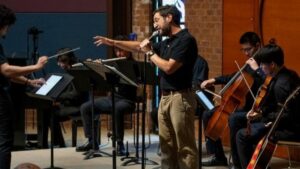
Conceived by Columbia resident Benjamin Kintisch, "Life Review: The Hospice Musical" offers a thought-provoking and occasionally amusing perspective on mortality.