
By Dan Fellner
More than a century ago, Galveston, Texas, welcomed so many European immigrants — including approximately 10,000 Jews —it earned the nickname “the Ellis Island of the West.”
Today, the remaining descendants of Jewish immigrants from that time period still living in the busy Gulf Coast port are determined to preserve the story of the “Galveston Movement,” a pivotal chapter in Jewish-American history.
An island-city of 53,000 residents, Galveston is the nation’s fourth-busiest cruise port and the birthplace of the Juneteenth holiday, commemorating the end of slavery in the United States. With 32 miles of brown sand beaches, a charming historic district with numerous well-preserved Victorian-era homes and some 80 festivals held year-round, the island annually attracts 8 million tourists.
It also offers visitors several sites related to the “Galveston Movement” and what was once a robust Jewish community that produced five mayors, prominent business leaders and two highly renowned rabbis.
The “Galveston Movement” was a humanitarian effort operated by several Jewish groups to bring Jewish immigrants from Czarist Russia and Eastern Europe through the port of Galveston between 1907 and 1914. Most arrived on steamships from Bremen, Germany.
A recent book by English historian and journalist Rachel Cockerell — “Melting Point” (Farrar, Straus and Giroux) — has helped reignite interest in the “Galveston Movement.”
“As soon as I started reading about the ‘Galveston Movement,’ I down a rabbit hole from which I didn’t emerge for three years,” Cockerell said. “I was totally transfixed by this amazing story of Jewish immigration in the early 20th century.”
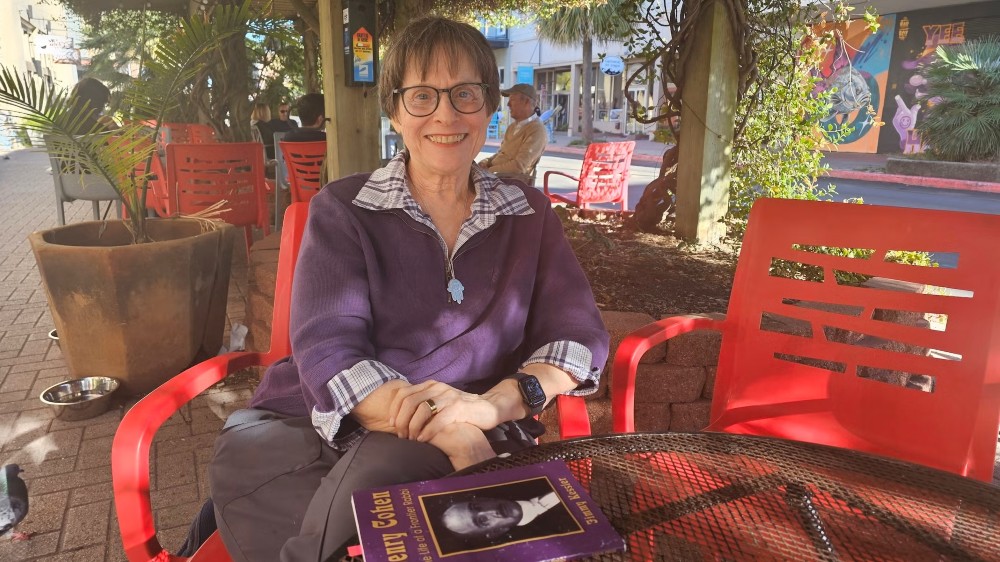
Shelley Nussenblatt Kessler estimates she is one of 25 to 30 “BOIs” —“Born on the Island” — still living in Galveston who are descendants of the Jewish immigrants who came as part of the program. Her grandmother and grandfather immigrated from what is now western Ukraine in 1910 and 1911.
(Photo by Dan Fellner via JTA)
“Not only am I very proud to be a descendant of two of these immigrants, but I can’t help but think of how lucky I am to be here,” said Kessler, 74. “I’m in awe of what my grandparents did and how they got here, and the sacrifices they made.”
By the late 1880s, thousands of Jews began fleeing their homes in the Russian Empire to escape antisemitic policies and violent pogroms. Many immigrated to New York and other East Coast cities, resulting in overcrowding and poverty.
Jacob Schiff, a New York banker and philanthropist, financed the “Galveston Movement” as a way to blunt an anticipated wave of antisemitism on the Eastern seaboard. Schiff sought to find suitable alternative destinations in the American South for the influx of Jewish immigrants.
“The purpose of Galveston was to channel the immigrants into other parts of Texas and up the middle of the country west of the Mississippi,” said Dwayne Jones, CEO of the Galveston Historical Foundation.
Jones said there was another key reason Galveston was selected: There already was a well-established Jewish community there. In fact, Galveston had elected its first Jewish mayor — Dutch-born Michael Seeligson — in 1853.
“It was a more tolerant community with a depth of diversity you didn’t see in other places,” Jones said.
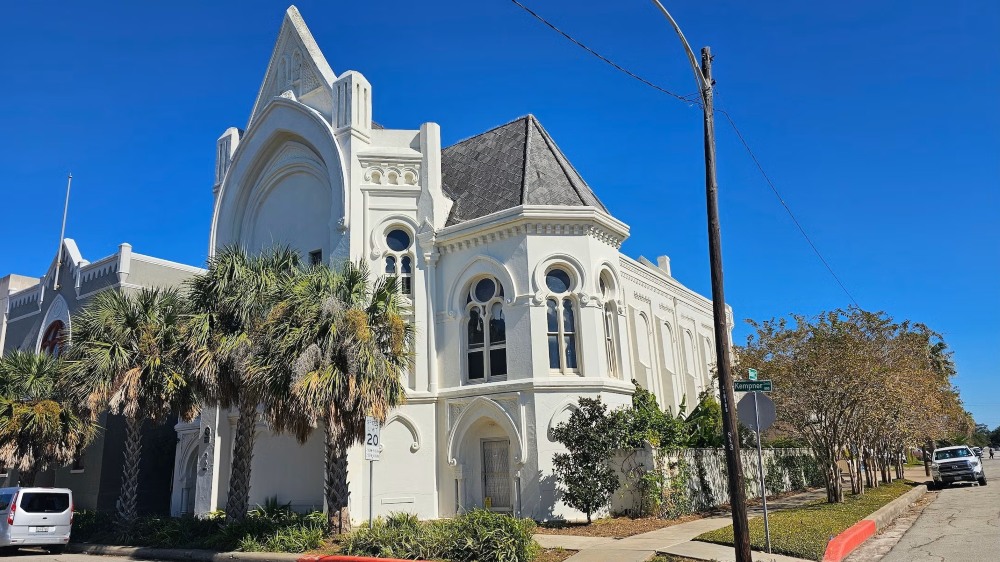
The first Reform congregation in Texas, Galveston’s Congregation B’nai Israel, was established in 1868. Twenty years later, London-born Rabbi Henry Cohen became the congregation’s spiritual leader. He led the shul for 64 years until his death in 1952. It’s believed to be the longest tenure of a rabbi at the same congregation in U.S. history.
In 1900, Galveston was decimated by “the Great Galveston Hurricane.” It remains the deadliest natural disaster in American history, with an estimated 8,000 fatalities, about 20% of the city’s population.
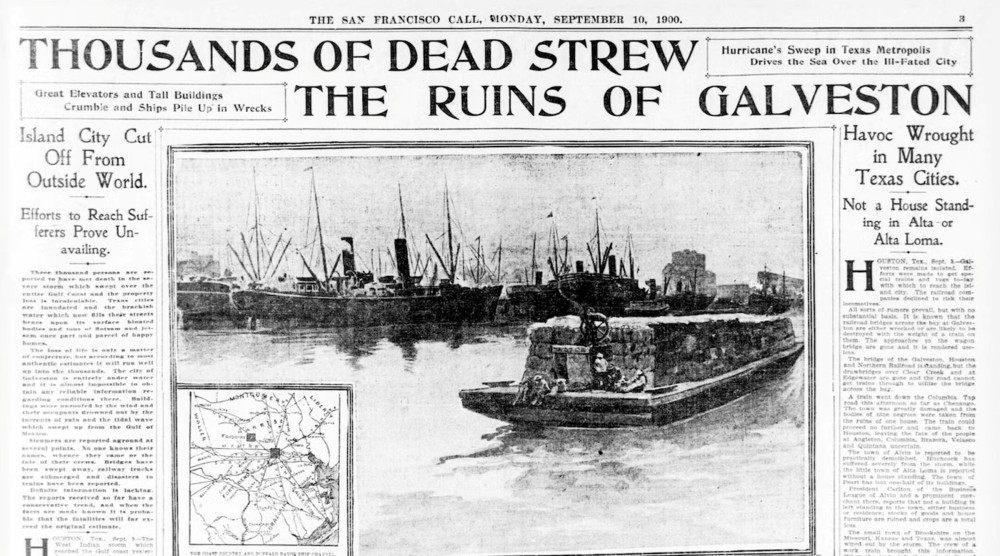
Rabbi Cohen and other Jewish leaders played a major role in relief and reconstruction efforts. “Jewish leadership took a really powerful role in rebuilding the island,” said Jones. “Without that leadership, I don’t think Galveston would have come back as it did.”
Seven years after the hurricane, the first ship that was part of the Galveston Movement arrived with 86 Jewish passengers. The arrivals were processed at the Jewish Immigrants’ Information Bureau headquarters in Galveston, which gave the immigrants rations and railroad tickets to more than 150 towns in Texas and other places west of the Mississippi River.
By 1914, declining economic conditions and a surge in nativism and xenophobia brought an end to the “Galveston Movement.”
Shelley Kessler’s late husband Jimmy was a key figure in Galveston’s Jewish history. Jimmy Kessler served as B’nai Israel’s rabbi for 32 years until his retirement in 2014. He also was founder and first president of the Texas Jewish Historical Society.
Jimmy Kessler wrote three books about the area’s Jewish history. The street on which B’nai Israel is located was renamed “Jimmy Kessler Drive” in 2018.
“I’m married to a street,” joked Shelley Kessler. “Jimmy, with what he did to preserve Texas Jewish history, kept all of this in the forefront.”
Robert Goldhirsh, former president of B’nai Israel and another descendant of immigrants from the “Galveston Movement,” has been the caretaker of the Hebrew Benevolent Society Cemetery for the past three decades. He says despite perceptions of deep-rooted intolerance in Texas, he’s encountered little to no antisemitism in Galveston.
“Most of the people I know, it makes no difference that I’m Jewish,” said Goldhirsh, 75. “We’re just Galvestonians.” 
Dan Fellner is a freelance travel journalist and photographer based in Scottsdale, Arizona.
The Trondheim Synagogue in Norway, one of the northernmost synagogues in the world, marks its 100-year anniversary in October of 2025.

Israelis and other tourists are finding a warm welcome in Albania, which ranks among the world’s fastest-growing tourist destinations.

Maryland is a lot more than cornhole and Old Bay. From Aberdeen to Zihlman, there's plenty to check out in the "Old Line State."
Did you know ... From the state feline to the Maryland town once known as the Marriage Capital of the East Coast, test your state knowledge with these tidbits.