
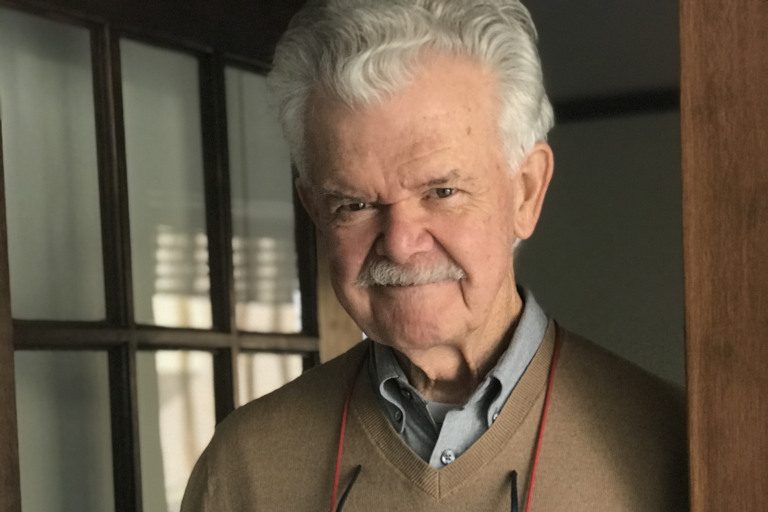
On the night Richard Nixon avoided impeachment by resigning his presidency 45 years ago, I was a young reporter at The News American, where we labored deep into the evening to produce a special edition for the next day.
Somewhere around midnight, a bunch of us went to the old Burke’s Restaurant at the corner of Light and Lombard, to have a drink and congratulate ourselves on our efforts. The city editor, a beefy, sensitive fellow named Lou Linley, lifted his beer and muttered into it a lament for the future.
“My fear,” he said, “is that I’ll tell my grandchildrenabout this night, and they’ll say …’”
“They’ll say, ‘Who wasRichard Nixon?’” I interjected.
“Nah,” Linley said. “They’ll say, ‘What’s a newspaper?’”
The moment comes back to me now because this was the week of Donald Trump’s impeachment, with its Nixonian overtones, and because millions more might ask the Linley question today.
And so, just in time, C. Fraser Smith’s new memoir “The Daily Miracle” (Otter Bay Books) arrives here to remind us how much we’re missing as America’s newspapers lose readers and advertisers, and shrink in size and staff, and disappear from their former position at the heart of the nation’s culture, even as the Trump impeachment drama consumes so many of us.
Smith’s the right one to tell tales of his old profession.He broke into the newspaper business more than half a century ago at the Jersey Journal, moved to the Providence Journal, and then spentabout three decades here at The Sun.
Along the way, he also wrote books about the overdose deathof college basketball’s Len Bias, “Lenny, Lefty and the Chancellor;” “WilliamDonald Schaefer: A Political Biography;” and a history of the state’s troubledrace relations, “Here Lies Jim Crow: Civil Rights in Maryland.” He alsobroadcast commentaries at WYPR-radio for much of a decade.
In Smith’s time at The Sun, the paper was one of the nation’s finest, and he was one of its standouts. Back then, The Sun was fat with readers and ads. The newsroom had hundreds of employees. There were bureaus in Washington, and in major foreign capitals.
Today’s Sun doesn’t even have a Baltimore County bureau, much less any reporters around the world. The paper still carries its head high with professionalism, with solid reporting and analysis, but circulation’s shrunk dramatically, and so has advertising. Meanwhile, the newsroom staff has shrunk to a small fraction of its previous self.
Smith’s memoir is a memory of better times. It resounds withgreat characters, big stories, laughter and grace under pressure.
The young Smith was two months into his career when the newsflashed from Dallas on Nov. 22, 1963. He went to Washington, not as a reporter butas a citizen, standing much of the chilly night in an endless line of thegrieving to pay final respects at the U.S. Capitol to the martyred John F.Kennedy.
When he got back to the paper, the rookie Smith wrote a piece about the experience. This is where heroes are made in the movie version, correct? But this ain’t the movies, it’s real life. Smith’s editor pulled the story apart, pointing out all its shortcomings and the piece never sees the light of day.
Welcome to the education of a real reporter in a toughbusiness.
When he gets to Baltimore’s Sun, he winds up covering City Hall. Meets a mayor named Schaefer “who screwed up his face as if something foul had landed in his mouth.”
Welcome to Bawlamer, hon.
And comes to learn that City Hall in those days, “was acharacter magnet,” including one veteran “who may actually have lived there. Hewas reportedly seen once padding down a hall in shower clogs.”
And another City Hall denizen whose desk was locateddirectly below the City Hall dome. What did he do? As former Mayor Tommy (TheYounger) D’Alesandro blithely explained, “He’s there to watch the dome. If itstarts to fall, he’s to call me immediately.” That is, if the fellow wasn’tworking at his second job, playing trombone at one of The Block’s stripteasebars.
It wasn’t all fun and games. Smith distinguished himself as the reporter who exposed the so-called Shadow Government, the “quasi-government” or “parallel government” set up by Schaefer to get things done quickly and, what the heck, to look for ways around laws and regulations if necessary.
In a week in which Donald Trump’s impeachment recalls Richard Nixon’s downfall, Fraser Smith’s book “The Daily Miracle” reminds us of a time when we turned to newspapers for the heart of every story – the sad ones, the funny ones, the ones that changed all our lives.

A former Baltimore Sun columnist and WJZ-TV commentator, Michael Olesker is the author of six books. His most recent, “Front Stoops in the Fifties: Baltimore Legends Come of Age,” was reissued in paperback by the Johns Hopkins University Press.
The former Colt, who passed away on May 25 at age 93, achieved immortality during a cold December day in 1958, writes Michael Olesker.
A new biography on the creator of "Doonesbury" misses the mark, writes Michael Olesker.
What does it mean to be fully present with each other and the sacred, asks Maryland-born cultural anthropologist Alanna E. Cooper.
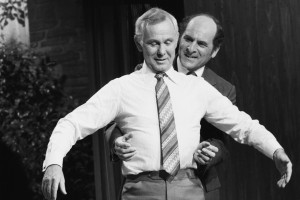
As millions mourn the passing of Stephen Colbert from the airwaves, Michael Olesker looks back on the "institution" of late-night TV.