
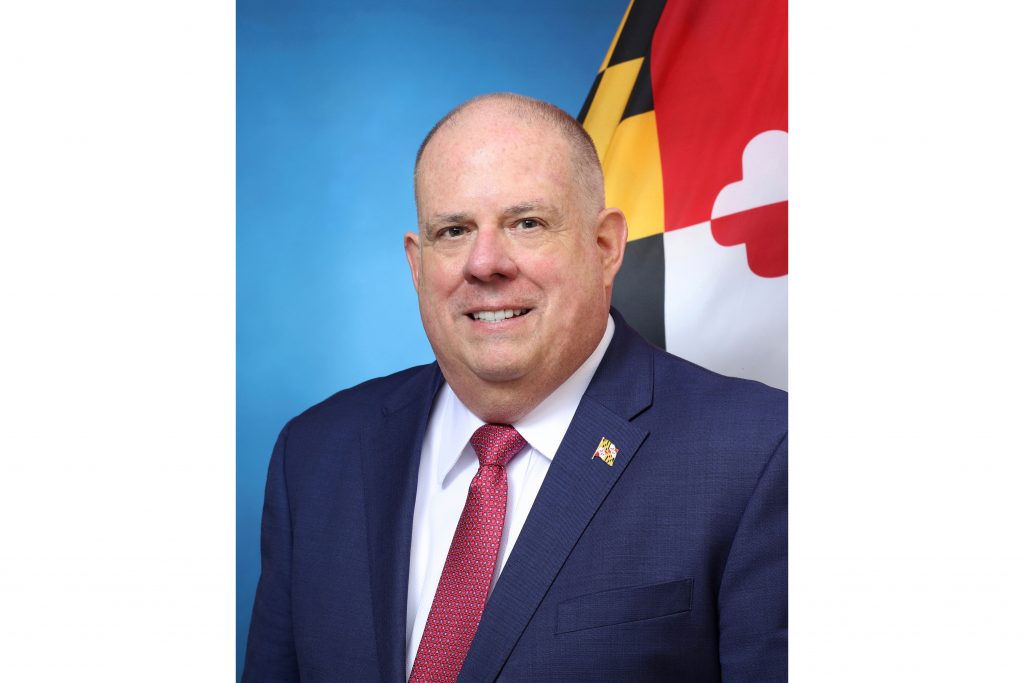
In the fat and sassy post-war years, when Baltimore was the sixth largest city in the nation and its population reached nearly 1 million people, the opening of the annual legislative session in Annapolis was a time for flexing some serious political muscle.
But that was literally another century ago, and figurativelyanother world ago.
As legislators make their way toward the state capital for the opening of the 90-day General Assembly session on Jan. 8, the city’s population is just over 600,000. Where Baltimore once bulged with roughly 40 percent of Maryland’s population, the city now comprises roughly 10 percent of it.
So here’s a question for the day: with so many important issues awaiting debate and money waiting to be spread around, how much muscle does the heavily Democratic city have – particularly with a Republican governor, Larry Hogan, who knows how to count vote and whose heart lies instinctively with Montgomery and Prince Georges counties?
But it’s not just Hogan’s heart. He knows the D.C. suburbshave the kind of political muscle that used to be Baltimore’s. MontgomeryCounty’s the biggest subdivision in the state now, and Prince George’s issecond. Combined, they represent roughly one-third of the state’s population.
Baltimore city isn’t even in third place anymore. That’s Baltimore County, which now has over 200,000 more people than the city. And at last count, Anne Arundel County’s within about 25,000 of the city’s total.
What all of this means is less bargaining power forBaltimore.
When William Donald Schaefer was mayor, he dreaded trips toAnnapolis. He said he felt like a beggar seeking alms for his poor city.
Baltimore was already bleeding population and the D.C. suburbs were expanding like crazy, but at least Schaefer had an old Baltimore guy, Marvin Mandel, serving as governor much of that time. And the two of them had Bawlamer in their hearts and spread money accordingly.
When Kurt Schmoke was mayor, he and Schaefer famouslyfeuded. Schaefer was governor by then. But Schmoke always maintained that, whenthe smoke cleared, Schaefer came through for his old town.
Mayor Bernard C. “Jack” Young won’t have a governor who understands the city’s special needs nor worries terribly much about its voting power. The best Young’s got going, power-wise, is the brand new incoming senate president, Bill Ferguson, about whom Baltimore legislators are placing a lot of hope.
Ferguson, 36, is, by all accounts, a bright young man who’s got a background teaching in the public schools. This comes at a time when the legislature’s about to debate sweeping changes in public schools across the state.
That includes questions of money. Baltimore’s schools have been under-performing for the last several decades. Does the state throw more money at them, or does a Republican governor, along with the increasingly strong D.C. suburb contingent of legislators, flex their muscles?
The coming weeks will show just how much strength the city has lost over the years.

A former Baltimore Sun columnist and WJZ-TV commentator, Michael Olesker is the author of six books. His most recent, “Front Stoops in the Fifties: Baltimore Legends Come of Age,” was reissued in paperback by the Johns Hopkins University Press.

The former Colt, who passed away on May 25 at age 93, achieved immortality during a cold December day in 1958, writes Michael Olesker.
A new biography on the creator of "Doonesbury" misses the mark, writes Michael Olesker.
What does it mean to be fully present with each other and the sacred, asks Maryland-born cultural anthropologist Alanna E. Cooper.
As millions mourn the passing of Stephen Colbert from the airwaves, Michael Olesker looks back on the "institution" of late-night TV.