
In my distant Neanderthal youth, maybe the worst whispered insult one schoolyard jock ever gave another was, “He throws like a girl.”
No explanation was needed. It meant the kid threw with thewrong foot forward, and extended his arm with a mincing motion. It also meantyou didn’t want to pick this nerd for your team.
In those mid-20th century days, the schoolyard games were played almost exclusively by males. Who knew what the girls were doing while we were out there running and throwing and imagining cheering crowds?
We imagined the girls were cloistered in their bedrooms,reading Nancy Drew or, worse, studying.
Belatedly, this gets me back to “throws like a girl.”
The phrase is dead. It’s been dead at least since the Title IX federal legislation that gave equal importance to women’s sports, and it’s been buried deeper with each passing year.
Because now the girls not only throw “like boys,” but they often do it with more grace, more intelligence and more unselfishness than the boys.
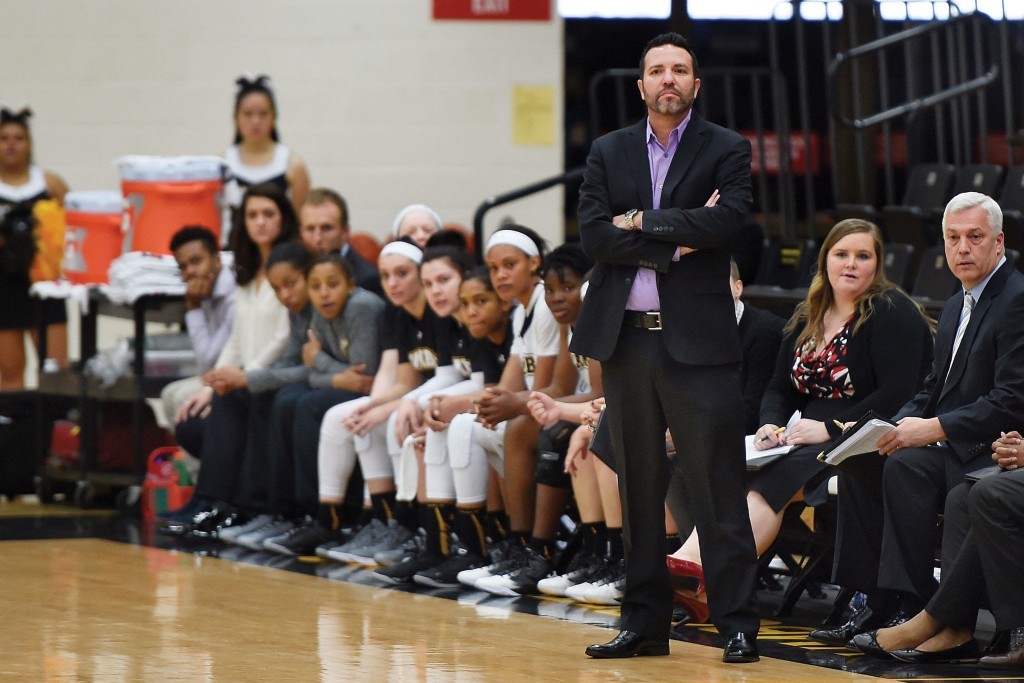
I write this after our annual trek to College Park, to meetup with old friends from our college days and watch the University of Marylandbasketball team.
Last Sunday, Feb. 9, the Lady Terps defeated Rutgers by 30 points, which is the least important part of the story.
Year after year, we marvel at the cultural changes behind the games. In our time at Maryland –- the 1960s -– there were no organized women sports (nor even disorganized, as far as I can recall.)
For the guys, there were the usual NCAA varsity sports, plus organized intramural games in various fraternity, dormitory and independent football, basketball and softball leagues.
It was our last gasp at imagining ourselves soaring with thegods of sport while broadcasters shouted our names and adoring crowds roared.
If that makes the males among us sound childish, it shouldn’t, because it’s nice to dream and it’s nice to have healthy role models, and it’s nice to have spent our growing-up years extending ourselves and testing our physical limitations.
In that sense, I always thought girls got cheated, but thankfully no more.
What’s lovely to see, every time we watch these women play basketball is the teamwork, and the strength and grace and sheer joy they take in the game. Unlike the men, who tend to get their biggest thrills out of dunks and three-point shots, the women pass the ball beautifully, they look for the open shot, they understand that basketball’s a team sport and not a collection of five selfish shooters.
But there’s something even more impressive.
It’s the surrounding cast -– the young girls up in the stands who have found role models the way boys always have, which sets up the kind of sweet dreams the boys have always enjoyed; and the girls from elementary and middle school who come out during breaks to show us their gymnastic skills and hear the crowd cheering them on.
These games are a reminder that the culture has changed in some very healthy ways over the years. Now, if we ever hear, “He throws like a girl,” we can think, “Hey, sounds good.”

A former Baltimore Sun columnist and WJZ-TV commentator, Michael Olesker is the author of six books. His most recent, “Front Stoops in the Fifties: Baltimore Legends Come of Age,” was reissued in paperback by the Johns Hopkins University Press.

The former Colt, who passed away on May 25 at age 93, achieved immortality during a cold December day in 1958, writes Michael Olesker.

A new biography on the creator of "Doonesbury" misses the mark, writes Michael Olesker.

What does it mean to be fully present with each other and the sacred, asks Maryland-born cultural anthropologist Alanna E. Cooper.

As millions mourn the passing of Stephen Colbert from the airwaves, Michael Olesker looks back on the "institution" of late-night TV.