

With the war raging in Ukraine over the past year, one might assume the two exhibitions now on display at the Jewish Museum of Maryland were planned in response to current events.
But the decisions to present “Power of Protest: The Movement to Free Soviet Jews” and “My Odessa: Paintings by Yefim Ladyzhensky” were made just prior to Russia’s invasion of Ukraine, said Sol Davis, the JMM’s executive director.
A JMM original exhibition, “My Odessa” came to be staged at the museum “through a series of chances that grew in meaning over the course of 2022,” he said.
“While considering presenting ‘Power of Protest: The Movement to Free Soviet Jews’ to commemorate 35 years since ‘Freedom Sunday’ — the mass mobilization of mostly Jewish Americans in support of Soviet Jews that took place on the Mall in [Washington] D.C. in December 1987 — our staff was exploring exhibitions that would complement the presentation,” Davis said. “As soon as we began considering the work of Ladyzhensky, we were both enamored and enthusiastic about how these two exhibitions would be in dialogue with one another and museum visitors.”
Odessan Odyssey
Born in Odessa in 1911, Ladyzhensky was the son of a fish salter. He began his visual arts career as a film and theatrical designer in Moscow. In 1949, Ladyzhensky emigrated to Siberia, where he continued to work as a designer.
Seven years later, he returned to the Russian capital and began painting. His series “Growing Up in Odessa,” based on his childhood, was painted during the 1960s.
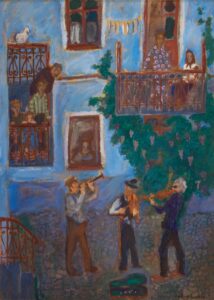
The paintings in that series are not emblematic of Ladyzhensky’s typical work, said Leora Ostroff, the JMM exhibition curator.
“Ladyzhensky actually had a range of styles, most of which are not represented in this exhibition,” she said. “He was a masterful draftsman, meaning that he could draw realistically from life. He tended to work in series, and his ‘Growing Up in Odessa’series — part of which is presented in this exhibition — has what some have described as a ‘folk’ style.
“The compositions are flattened,” said Ostroff. “The foreground sits right below the background. He used simple, usually real-life or ‘local’ colors. This style was born out of his work as a theater set designer and painter. He used tempera paint, rather than oil, and constructed rigid compositions that are evocative of a theater.”
The paintings in the exhibition depicting life in 1920s-era Odessa can appear deceptively “sweet and simple,” she said.
“We see intimate scenes in the home, neighbors, markets, theaters. But what did it mean to the artist to paint these memories of his youth, and what secrets do these richly detailed scenes contain?” Ostroff said. “When I came upon his memoirs — only one of which had ever before been fully translated into English from Russian — I began to understand more clearly both the artist and his work as complex, layered and emotional.”
Ladyzhensky was a state-supported artist and a longstanding member of the Union of Soviet Artists, so he was permitted to exhibit some of his work in the former Soviet Union. However, works deemed critical of the Soviet regime by authorities — including many of Ladyzhensky’s renderings of his childhood in Odessa — were excluded from government-sanctioned exhibitions.
A Tortured Soul
In 1978, Ladyzhensky left the Soviet Union because he felt censorship of his work was interfering with his recognition as an artist. Prior to joining his daughter in Israel, he destroyed thousands of paintings because he could not afford customs costs of shipping them from the Soviet Union to Israel.
After making aliyah, Ladyzhensky exhibited at two major art shows in Israel: one at the Israel Museum in Jerusalem in 1979 and another the following year at the University of Haifa’s New Gallery.
Despite these accomplishments, he remained bitter and despondent about what he perceived as a lack of recognition.
“I do not believe [Ladyzhensky] is well-known anywhere, and that is part of what tormented him,” said Davis. “I know of only a small handful of instances when his work has been shown in the U.S., and we are excited to bring greater attention to it both through the show in our gallery and the virtual gallery, which we intend to host as an ongoing invitation for engagement with his art. “
In April of 1982, Ladyzhensky took his own life at the age of 70. Ostroff said she believes his depressed state of mind can be seen and felt in the paintings from the “Growing Up in Odessa” series.
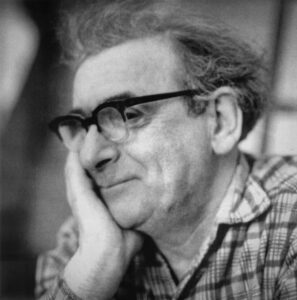
“I would argue that all of his paintings of the Odessa of his youth were an expression of his emotional state,” she said. “However, he also foretold his suicide by hanging in a handful of works, including his triptych titled ‘The Past is Always With Me’ presented in this exhibition. Painted after Ladyzhensky immigrated to Israel, this triptych provides critical context for understanding what motivated the artist to portray so many scenes from his memories of Odessa and the deep inner turmoil from which these lively, often light-hearted scenes arose.”
In addition to Ladyzhensky’s paintings, “My Odessa” includes anecdotes written by the artist about his childhood.
“Just like his paintings, his writing draws us into the fragrant, colorful, bustling world of 1920s Odessa,” said Ostroff. “Some stories describe particular paintings or survey the city according to a particular sense, like smell. Ladyzhensky’s humor winds through every reminiscence and turn of phrase. But many of these stories are punctuated by a disquieting or ominous reflection on his life as an artist or as a Jew.”
“My Odessa” is complemented by a musical selection curated by Mark Gunnery, the JMM’s director of communications and content. Davis said the playlist features “Soviet jazz, songs from Soviet musicals, popular songs from Odessa and klezmer music mostly from the 1920s and 1930s.” The music plays in the gallery and can be downloaded from the JMM’s Spotify page.
An exhibition of the Weitzman National Museum of American Jewish History in Philadelphia, “Power of Protest: The Movement to Free Soviet Jews” is on display in the JMM lobby through this Sunday, Feb. 5. “My Odessa: Paintings by Yefim Ladyzhensky” is on display at the JMM through Sunday, Feb. 19.
The Jewish Museum of Maryland is located at 15 Lloyd St. in East Baltimore. For information about the exhibitions or the JMM, call 410-732-6400 or visit jewishmuseummd.org.
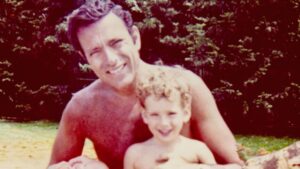
Filmmaker Justin Schein looks at wealth and inequality through the very real story of his late father.
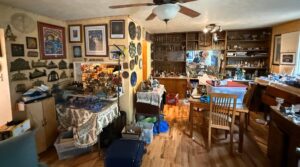
For 35 years, the late Deborah Brodie, aka Bubbie Cookie, amassed a collection of over 200 Jewish ritual objects, which she used to teach her Hebrew school students with special needs.
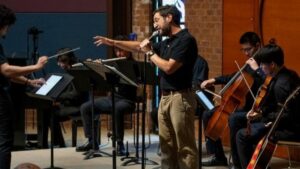
Conceived by Columbia resident Benjamin Kintisch, "Life Review: The Hospice Musical" offers a thought-provoking and occasionally amusing perspective on mortality.
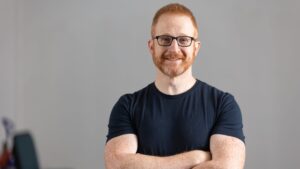
Steve Hofstetter, who will perform at Soundstage next week, recently made headlines for his social media post ridiculing some fans' warnings about Charm City's safety.