

“You shall count from the eve of the second day of Pesach, when an omer of grain is to be brought as an offering, seven complete weeks. The day after the seventh week of your counting will make fifty days, and you shall present a new meal offering to God.” (Lev. 23:15-16)
During the Counting of the Omer — the 49 days between the observances of the holidays of Passover and Shavuot — it is customary to study a chapter of Pirkei Avot, or Ethics of the Fathers, each week.

In the spirit of that tradition, Beth Tfiloh Synagogue’s Rabbi Dr. Eli Yoggev has written a series of columns on Pirkei Avot for each of the six weeks of the Omer, from the conclusion of Pesach through Shavuot. (See also: Beware of Judgmentalism and Haughtiness and Sacred Dust and Avoiding Toxicity)
Rabbi Yoggev is the author of “Ethics of the Soul: Uplifting and Relevant Commentary on Ethics of the Fathers.”
Universalism, Nationalism and Religiosity
3:18
הּוא הָיָה אֹומֵר: חָבִיב ָאדָם ׁשֶּנִבְרָ א בְצֶלֶם. חִּבָה יְתֵרָ ה נֹודַעַת לֹו ׁשֶּנִבְרָ א בְצֶלֶם, ׁשֶּנֶאֱמַר
)בראשית ט(: ּכִי ּבְצֶלֶם אֱֹלהִים עָׂשָה אֶת הָָאדָם. חֲבִיבִין יִׂשְרָ אֵל ׁשֶּנִקְרְ אּו בָנִים לַּמָקֹום.
חִּבָה יְתֵרָ ה נֹודַעַת לָהֶם ׁשֶּנִקְרְ אּו בָנִים לַּמָקֹום, ׁשֶּנֶאֱמַר )דברים יד(: ּבָנִים אַּתֶם לַה’
אֱֹלהֵיכֶם. חֲבִיבִין יִׂשְרָ אֵל ׁשֶּנִּתַן לָהֶם ּכְלִי חֶמְּדָה. חִּבָה יְתֵרָ ה נֹודַעַת לָהֶם ׁשֶּנִּתַן לָהֶם ּכְלִי
חֶמְּדָה ׁשֶּבֹו נִבְרָ א הָעֹולָם, ׁשֶּנֶאֱמַר )משלי ד(: ּכִי לֶקַח טֹוב נָתַּתִי לָכֶם, ּתֹורָ תִי ַאל ּתַעֲז ֹבּו.
He used to say: Beloved are humans for they were created in the image [of God]. Especially beloved are those to whom it was made known that they have been created in the image [of God], as it is said: “For in the image of God He created humanity” (Gen. 9:6).
Beloved are Israel in that they were called children to the AllPresent. Especially beloved are those to whom it was made known that they are called children of the All-Present, as it is said: “You are children to the Lord your God” (Deut. 14:1). Beloved are Israel in that a precious vessel, the Torah, was given to them. Especially beloved are those to whom it was made known that the desirable instrument, with which the world had been created, was given to them, as it is said: “For I give you good instruction; forsake not my
teaching” (Prov. 4:2).
A few questions arise upon reading this mishna. What is the significance of something “being made known” to us? What is the difference between the three layers mentioned in the mishna: humanity, Israel, and the reception of the Torah? And how are these three interconnected?
In this fascinating entry, Rabbi Kook appears to be discussing the three elements mentioned in our mishna:
Three forces are wrestling now in our camp… The Holy, the Nation, and Humanity—these are the three major demands of which all life, our own and every person’s, is composed…[I]t is impossible to find a permanent form of human life that is not composed of these three elements. This goes for
both the individual and the community. (Shemonah Kevatzim 3:1)
This text is a bit difficult. The bottom line is that the nation of Israel, and our own communities, as well, consist of three “forces” that are constantly at odds with one another. The first is a religious drive, “the Holy.” The second, a national drive, “the Nation.” The third is a more universal drive, “humanity.” Examine any point of public debate, and you will find people advocating from these three vantage points.
Take the immigration debate in the U.S. Some see it as a religious issue; others as a national one; and others stress the universal aspects. Those seeing the issue through a religious lens will quote scripture or discuss ethics and divine mandates. Those approaching the issue from a national perspective may discuss stronger borders. The universalist approach may highlight the humanitarian plight of the individual who crossed or is trying to cross over the border. Many combine these different approaches, advocating for a national approach expressed in the Torah, for example, or for a more universal Torah perspective.
I am not getting into politics here. I am simply highlighting the fact that the three perspectives listed above are present in most debates. (An interesting exercise is seeing which political parties in Israel promote which of these three agendas or a combination thereof.) Later in this source, Rabbi Kook recommends that upon personally developing our own approach, we should take all three into consideration, even if in our final assessment one takes precedence over the other.
This may be what Rabbi Akiva is telling us. Our mishna lines up well with these three “forces.” It opens by talking about the universalist force: all of humanity is created in the image of God. It then speaks of the national: all of Am Yisrael are children of Hashem. It concludes with the religious force: the Torah given to Am Yisrael. It’s important that all three of these “become known to us.” Perhaps it is so that we consider the other sides of an argument even as we hold on tightly to our own.
Oftentimes, when we look really hard, we will find the other side is speaking from a certain value. When we see that, we can have more respect for the other and perhaps even find a way to incorporate their values into our own approach. We have much to gain through understanding another side, even if we completely disagree. This is the secret of us being “especially beloved” when all three elements are “made known” to us.
For information about “Ethics of the Soul,” click here.

At Congregation Shearith Israel, members know that Rabbi Adam Roffman's spiel is the real deal.
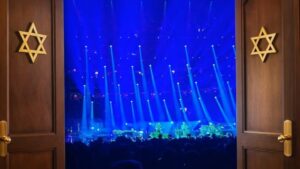
Can synagogues learn from the transcendent power of the jam band Phish? Rabbi Jonathan Leener shares the unexpected lessons he took away from a recent concert.

Though ancient, Jewish liturgy still speaks to our most contemporary struggles, writes Rabbi Jessica Fisher.

An Atlanta native, Rabbi Friedman was most previously spiritual leader of a synagogue in Philly's Center City district.