

Even if you’ve lived here your entire life, there’s still plenty to discover about the Old Line State. Did You know …
• Harford County’s Havre de Grace missed being named the capital of the United States by the First Congress by only one vote in 1789? Today known as “the decoy capital of the world,” HdG frequently appears on national magazine lists of best small towns in America.
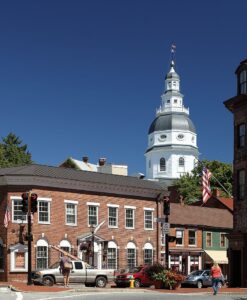
• The Maryland State House in Annapolis is the oldest state capitol building in continuous legislative use in the country and the only state house ever to have served as the nation’s capital. It was built in 1779.
• During the War of 1812, St. Michaels in Talbot County acquired its nickname as “the town that fooled the British.” That’s because residents there, having received advance notice about an impending attack, cleverly hoisted lanterns into the trees above the town and fooled the Brits into overshooting, leaving St. Michaels virtually unscathed.
• No, the town of Garrett Park is not located in Garrett County but in Montgomery County. In 1982, it was declared the first nuclear-free zone in the United States, reaffirming the town’s reputation as a peaceful place. In 1898, Garrett Park’s leaders passed legislation outlawing the harming of trees or songbirds within the town limits.
• Sixteen of Maryland’s 23 counties border on tidal water. The combined length of the state’s tidal shoreline, including islands, is 4,431 miles.
• St. Mary’s City is the state’s oldest city and its first capital. The former colonial town was founded in 1634 and is the home of St. Mary’s College of Maryland.
• The first individual to reach the geographic North Pole was Matthew Henson, a native of the Charles County village of Nanjemoy and the son of Black sharecroppers.

• A resident of the Garrett County town of Accident is known as an “Accidental.” The origins of the town’s quirky name remain shrouded in mystery.
• The Ouija board — that classic parlor game and alleged divining tool enjoyed by generations of Americans — got its start in Baltimore. Today, a historical plaque — in the entranceway of a 7-Eleven convenience store at 529 N. Charles St. — marks the spot where, according to legend, the term “Ouija” was coined in April of 1890 in what was then a boardinghouse.

• Since 2008, Smith Island Cake has been officially recognized as Maryland’s state dessert. Traditionally, the cake consists of eight to ten layers of yellow cake with chocolate frosting between each layer and slathered over the whole. Smith Island Cake dates back to the 19th century when inhabitants would send the desserts to watermen out on the autumn oyster harvest.
• Chestertown’s St. Paul’s Cemetery is considered one of the state’s most haunted places, according to paranormal buffs. Among the individuals buried in the graveyard — which dates back to the 1700s and is the final resting place of many soldiers of the Revolutionary and Civil wars — is actress Tallulah Bankhead. Folklore claims that you can hear her famously husky voice if you place your ear on the slab covering her grave. (Who knows, maybe you can even hear Tallulah utter her trademark, “Dah-ling“?)
• Maryland has a law on the books outlawing the eating of food while swimming in the ocean. The origins of this law are unknown (and probably should remain that way).


Filmmaker Justin Schein looks at wealth and inequality through the very real story of his late father.

For 35 years, the late Deborah Brodie, aka Bubbie Cookie, amassed a collection of over 200 Jewish ritual objects, which she used to teach her Hebrew school students with special needs.

Conceived by Columbia resident Benjamin Kintisch, "Life Review: The Hospice Musical" offers a thought-provoking and occasionally amusing perspective on mortality.

Steve Hofstetter, who will perform at Soundstage next week, recently made headlines for his social media post ridiculing some fans' warnings about Charm City's safety.