
By Hen Mazzig
When rapper and singer Bad Bunny took the stage at the Super Bowl last week, the world didn’t just see a global superstar. We witnessed a masterclass in the psychology of belonging.
As a member of the Jewish community — a group that has spent generations navigating the delicate dance of integration and identity — I realized that the Puerto Rican icon was demonstrating a lesson that every minority community in America desperately needs to relearn.
For far too long, the “minority experience” has been framed as a negotiation. Whether you are Latino, Black, Asian or Jewish, the unspoken rule has often been the same: to belong, you must first prove that you are “safe.” You must demonstrate your utility, minimize your differences, and, above all, politely ask for a seat at the table.
We have been conditioned to believe that acceptance is a gift granted by the majority in exchange for our docility or our trauma.
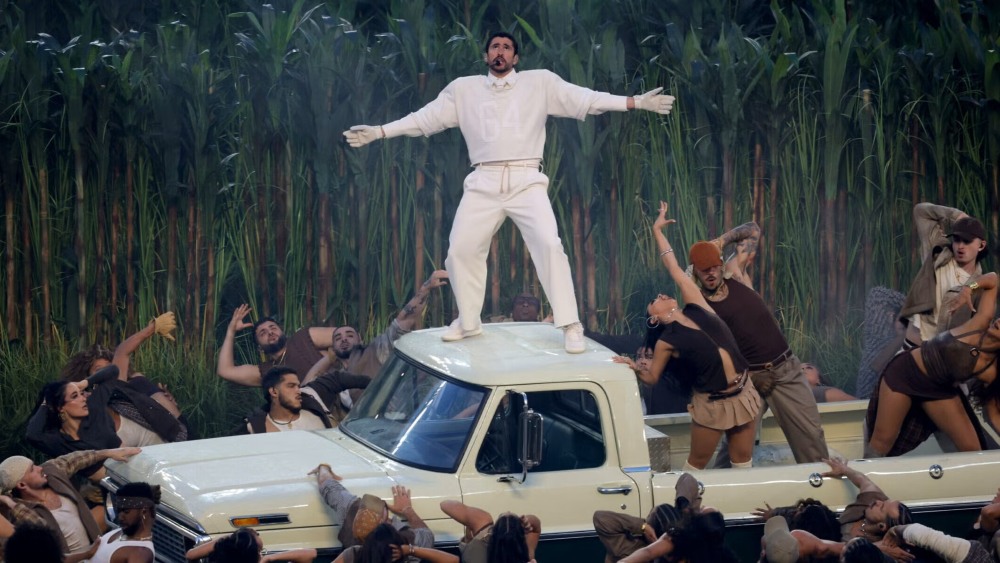
But look at how Bad Bunny occupied the Super Bowl stage — during a 13-minute celebration of Puerto Rican culture all in Spanish and featuring the island’s iconic sounds and dances and imagery that alluded to its colonial history, its vivid street culture and even its historic challenges (like its overtaxed electrical grid).
Bad Bunny — who was born Benito Antonio Martinez Ocasio — didn’t ask for permission. He didn’t ask for pity. He didn’t frame his community as a project to be fixed, a political talking point to be debated, or a tragedy to be mourned.
Instead, he led with culture. He led with language. He led with an unapologetic, infectious joy that didn’t pause to translate itself for those who didn’t understand. He performed as if he already belonged — not because he had been graciously invited but because his presence was an objective, immovable fact.
Contrast that for a moment with Robert Kraft’s “Blue Square” ad against anti-Jewish hate that aired during the same Super Bowl. I am not here to join the chorus of critics who have picked apart its aesthetics or its reach. I am interested in the psychology behind it.
On one hand, you had a vibrant, loud celebration of contribution. On the other, a polite, minimalist request for the world to be afraid on our behalf.
One was a refusal to cower; the other was a plea for protection. One said, “Look at what we bring to the world,” while the other said, “Look at what the world is doing to us.”
This is precisely where we lose people.
Belonging is not a debt you pay or a favor you beg for. It is a reality you demonstrate. When any community — but particularly the Jewish community right now — builds its public identity around its fragility, it inadvertently reinforces the idea that we are perpetual outsiders looking in.
When we lead with our victimhood, we are essentially asking for a shield. But when we lead with our confidence, we demand that the world meet us where we stand.
There is a profound difference between advocacy that asks for tolerance and advocacy that asserts presence. Tolerance is passive; it’s a neighbor deciding not to complain about your music. Presence is active; it’s the music itself.
Bad Bunny’s brilliance lies in his refusal to be a “victim” of the American mainstream. By refusing to be “palatable,” he became undeniable.
As Jews, we should pay close attention. Our history in this country — and indeed, the history of almost every immigrant group — is not a series of apologies or a list of grievances. It is a saga of immense, disproportionate contribution.
We have built industries, shaped the legal landscape, and defined the American cultural imagination. We are not a “problem” to be solved or a vulnerability to be managed. We are a vital, structural thread in the fabric of this society.

I saw this dynamic firsthand while developing my YouTube show, “And They’re Jewish.” Over the course of interviewing dozens of Jewish celebrities and creators, a striking pattern emerged. Almost every time I reached out to book a guest, they would ask — almost reflexively — if we were going to talk about antisemitism. They were prepared for it; they had their talking points ready.
But as the name of the show suggests, my goal was the exact opposite. I wanted to focus on their craft, their vision, and their brilliance. I wanted to remind the world of how much this community has contributed to the culture, rather than how much the culture has taken from us.
When we focus our energy on showing the world how much we are suffering, we are playing a game of diminishing returns. Sympathy is a finite resource, and it rarely translates into genuine respect. Respect is earned through the manifestation of strength and the refusal to let others define the terms of your existence.
In the fight for a truly inclusive world, we don’t win by highlighting our fragility. We don’t win by convincing people that we are weak enough to deserve their protection. We win by affirming our humanity and our power. We win when we show that we are here to stay– not because we were let in, but because we are part of the foundation.
This is the shift in advocacy we need right now: a move from the “Blue Square” of anxiety to the “Bad Bunny” of pride. It is an assertion that our right to occupy space is not contingent on the headlines of the day or the shifting winds of public opinion.
Our identity is an inheritance, not a political stance, and it carries a dignity that requires no apology.
The lesson is simple, yet revolutionary for those of us used to fighting for crumbs of acceptance: Stop asking for a seat. Own the room. Our presence is not a debate to be won; it is a reality to be lived.
When we lead with our humanity and our strength, we stop being a target for pity and start being a force for inspiration. If you want to see what the future of inclusion looks like, be a little more like Bad Bunny.

Hen Mazzig is an Israeli author and founder of TLVi.org, a non-profit dedicated to combating hate and misinformation online.
This article was provided by the JTA global Jewish media source.

The former Colt, who passed away on May 25 at age 93, achieved immortality during a cold December day in 1958, writes Michael Olesker.

A new biography on the creator of "Doonesbury" misses the mark, writes Michael Olesker.

What does it mean to be fully present with each other and the sacred, asks Maryland-born cultural anthropologist Alanna E. Cooper.

As millions mourn the passing of Stephen Colbert from the airwaves, Michael Olesker looks back on the "institution" of late-night TV.